An old furnace is not automatically a bad furnace. Plenty of units from the 1960s and 1970s still light every morning. The real question is two questions, asked in order: is it safe, and does keeping it still make financial sense?
- Typical gas furnace lifespan
- 15–20 yrs
- Repair ceiling on a furnace under 15 years
- 50%
- Efficiency (AFUE) of an old natural-draft furnace
- 70–75%
- Installed price of a new furnace, 2025 quote
- $3,700+
Sources: Carrier, Petro Home Services, Dunham Service, Fire & Ice Home Services (central Ohio, 2025).
Safety first, then money
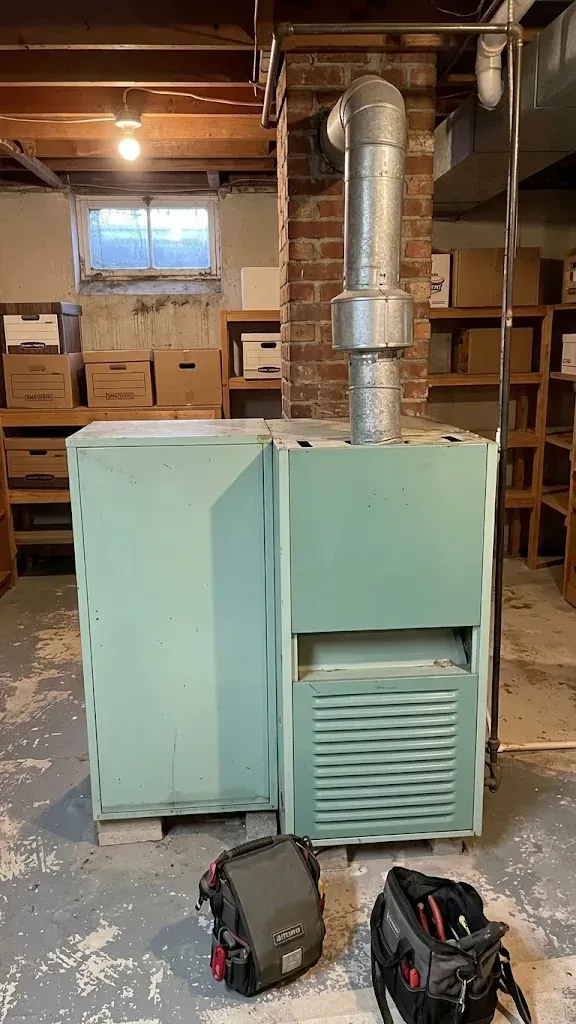
Every repair-or-replace decision comes down to two checks, in this order.
- Safety. Is the heat exchanger intact, does the flue carry exhaust out of the house, and does the burner flame look right? If any answer is no, the decision is made for you.
- Money. If the furnace is safe, weigh what it costs to keep running (repairs, fuel, more repairs) against what a new one costs and saves.
Skip the first check and you end up putting a $1,300 gas valve on a furnace with a cracked heat exchanger. Skip the second and you replace a perfectly safe furnace because a salesperson pointed at the date on the label.
When an old furnace is no longer safe
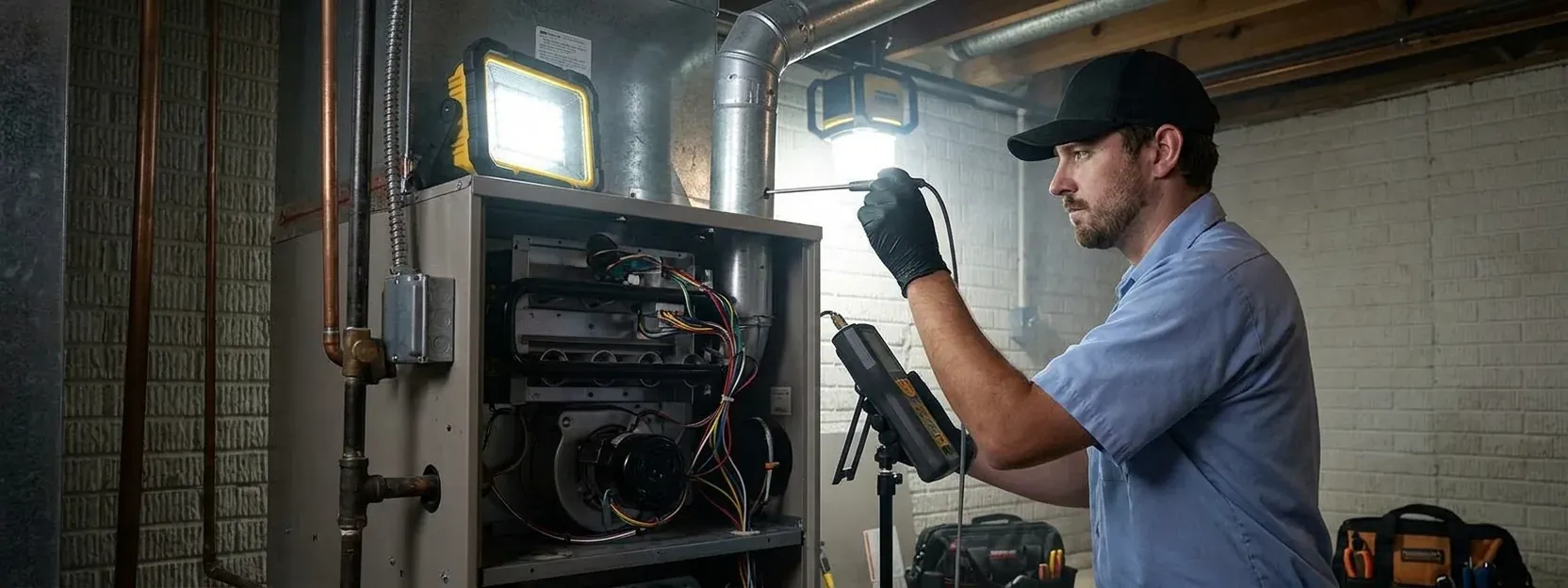
Two failures turn an old furnace from a money question into a safety one. Neither can be diagnosed by eye: both need a technician with a combustion analyzer.
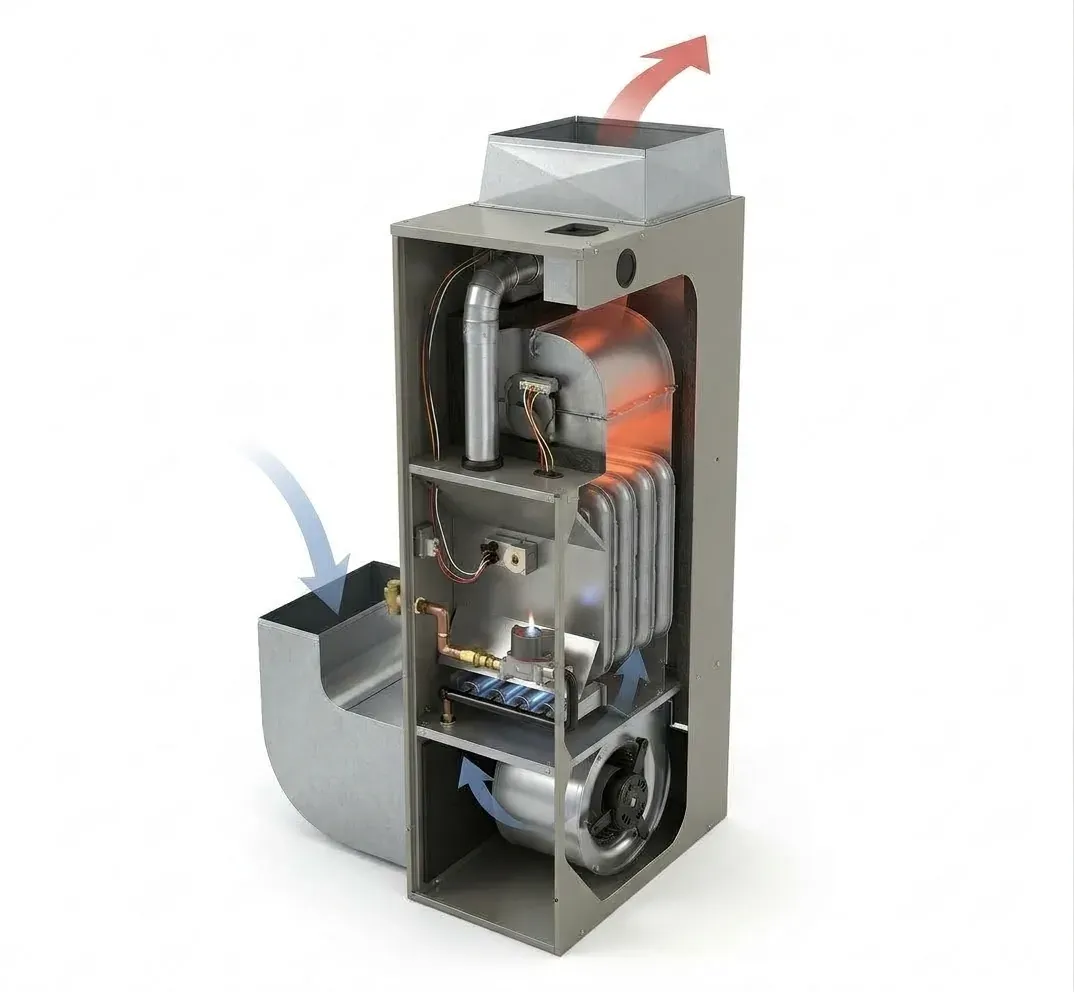
A cracked heat exchanger. The heat exchanger is the steel chamber that keeps combustion gases on one side and the air you breathe on the other. Decades of heating and cooling cycles fatigue the metal until it cracks, and a crack can let carbon monoxide into the airstream. On any furnace old enough to be out of warranty, a cracked heat exchanger means replacement, not repair.
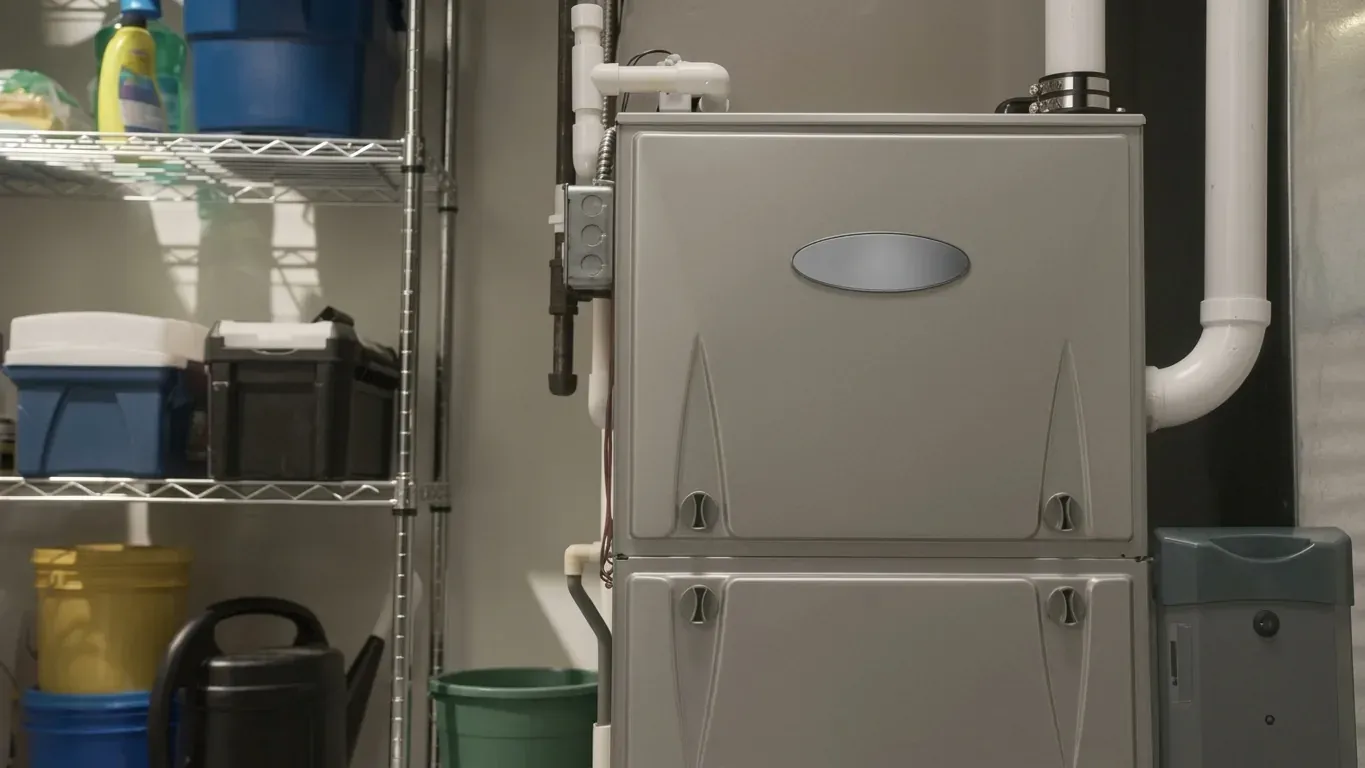
A venting problem. Older low-efficiency furnaces vent through a steel pipe into a chimney by natural draft: hot exhaust rises on its own. If the chimney blocks, from debris, a collapsed liner or a nest, the exhaust can spill back into the house instead.
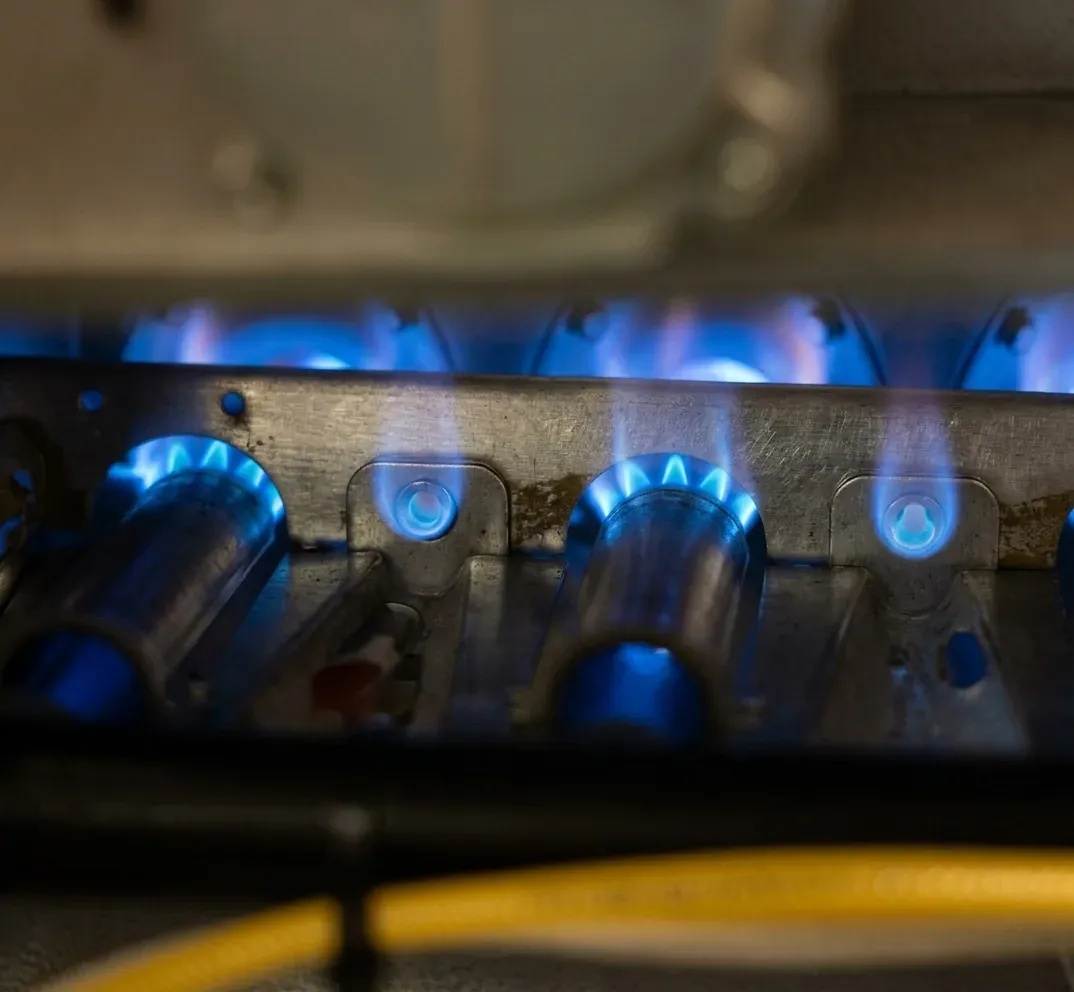 Healthy
 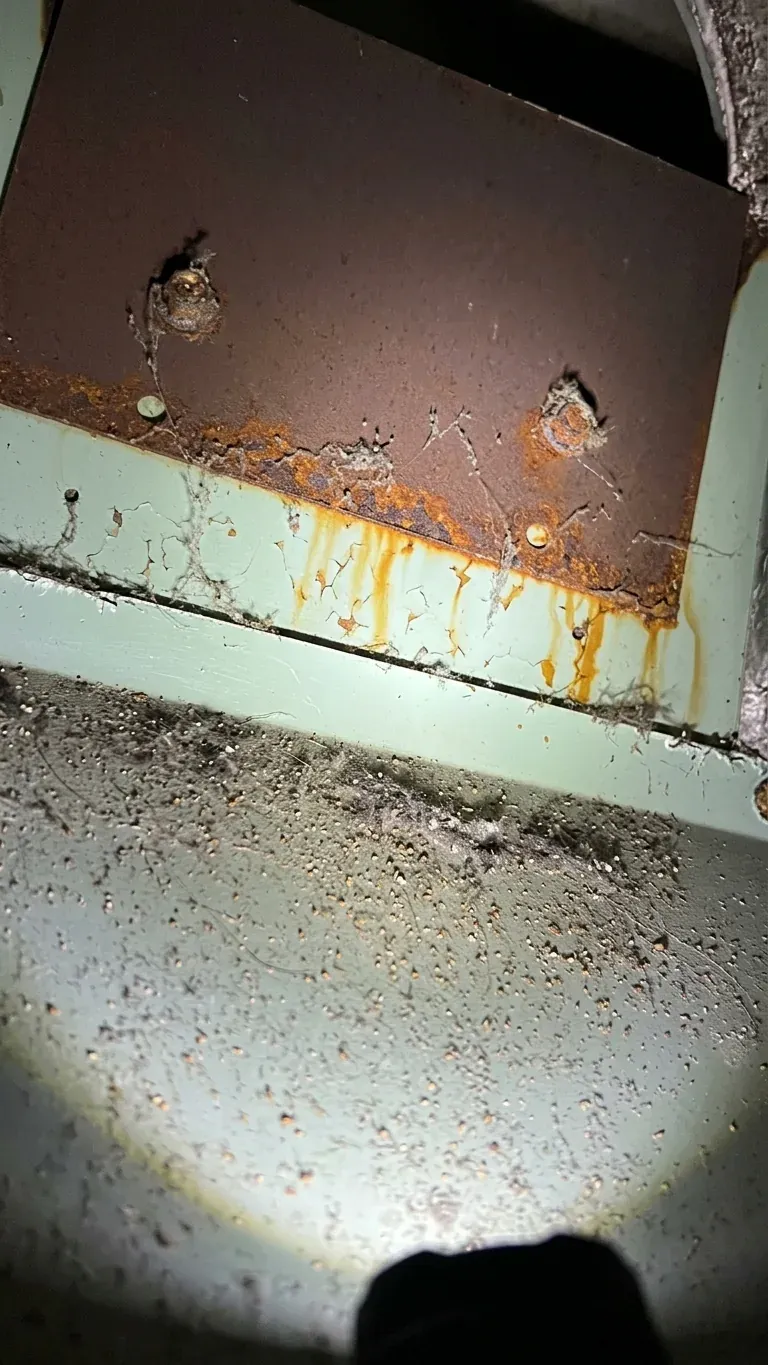 Warning sign
 If the furnace passes a combustion and carbon monoxide test and the heat exchanger checks out, move on to the money question.
How old is too old?
Carrier and Fire & Ice, an Ohio installer, both put a typical gas furnace at 15 to 20 years. Petro, a home-services company, puts the national average at 16 to 20 years, and says diligent maintenance can stretch that to 25 to 30.
Those figures mark when furnaces start to cost more than they are worth, not when they stop working. What changes with age is the odds: breakdowns cluster toward the end of a furnace’s life, and each repair buys less remaining service than the last.
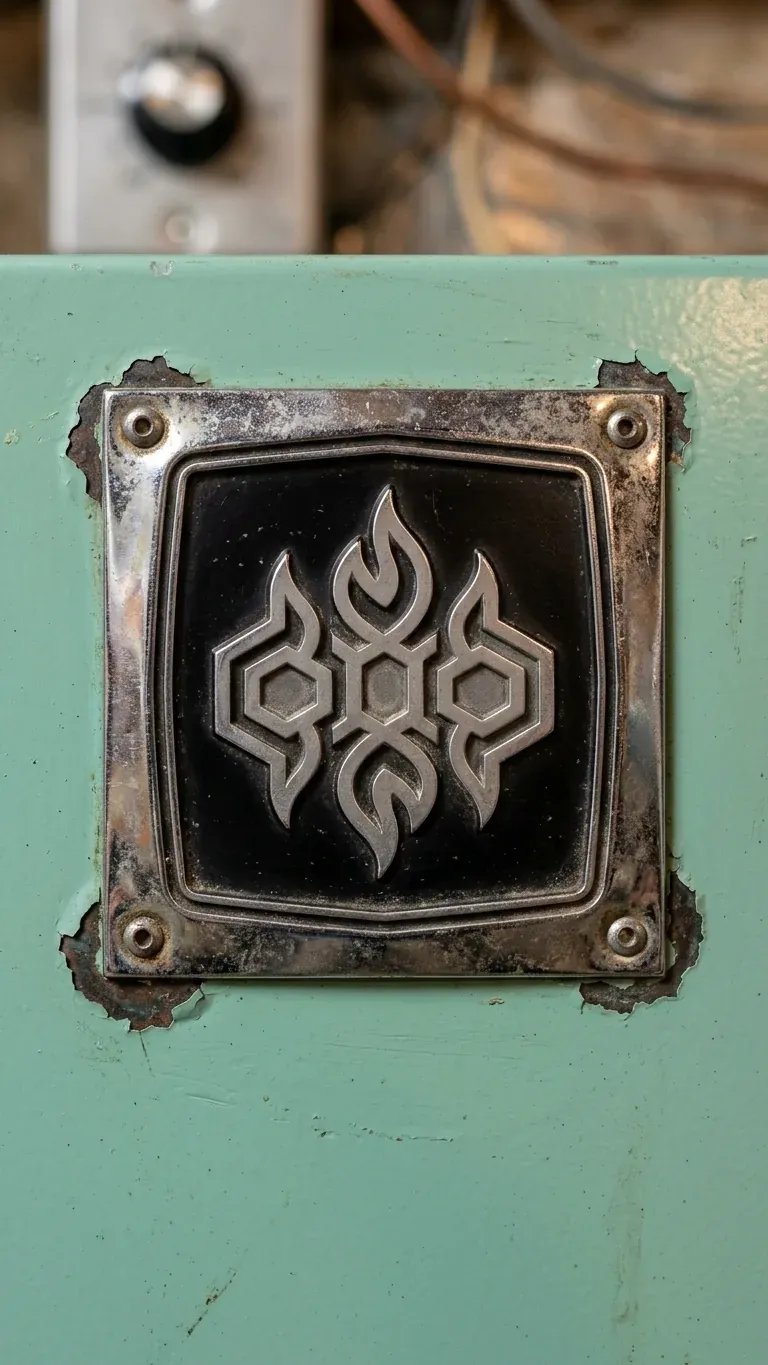
To find your furnace’s age, look for the rating plate inside the burner or blower door. It lists the model and serial number, and many serial numbers encode the year and week of manufacture.
On very old units, the brand badge on the cabinet tells you a lot by itself. A manufacturer that stopped making furnaces decades ago also stopped making parts for them, and that pushes up the cost and the wait on every future repair.
The repair-cost test
Once safety is settled, two rules of thumb do most of the work.
The 50% rule. Repair if the furnace is under 15 years old and the repair costs less than half the price of a replacement. On a $5,000 replacement, the line sits at about $2,500.
The repair-history test. One repair on a sound furnace is normal. Several inside two years is a pattern. Carrier lists repair history as one of its three deciding factors, alongside age and replacement cost.
What common repairs cost now
These are the major-component prices one contractor, Fire & Ice Home Services in central Ohio, published in mid-2025. A single company’s quotes, not a national average, but they show the scale of what an old furnace can ask for.
| Repair | Low | High |
|---|---|---|
| Gas valve, single or two-stage | $1,100 | $1,300 |
| Blower motor, basic | $1,000 | $1,300 |
| Heat exchanger, under warranty | $1,700 | $2,400 |
Same contractor's upper figures: modulating gas valve up to $1,600, variable-speed blower motor up to $2,400, heat exchanger out of warranty up to $4,500.
The same company published a near-identical video in 2021, which makes it possible to see how fast these prices moved:
| Repair | 2021 | 2025 | Change |
|---|---|---|---|
| Gas valve, single or two-stage | $600–$800 | $1,100–$1,300 | +70% |
| Blower motor, basic | $700–$900 | $1,000–$1,300 | +45% |
| Heat exchanger, out of warranty | up to $3,500 | up to $4,500 | +30% |
Change measured between the midpoints of each range.
If you are deferring a replacement to save money, that trend is working against you.
What a new furnace costs, and what it saves
| New furnace, installed | Low | High |
|---|---|---|
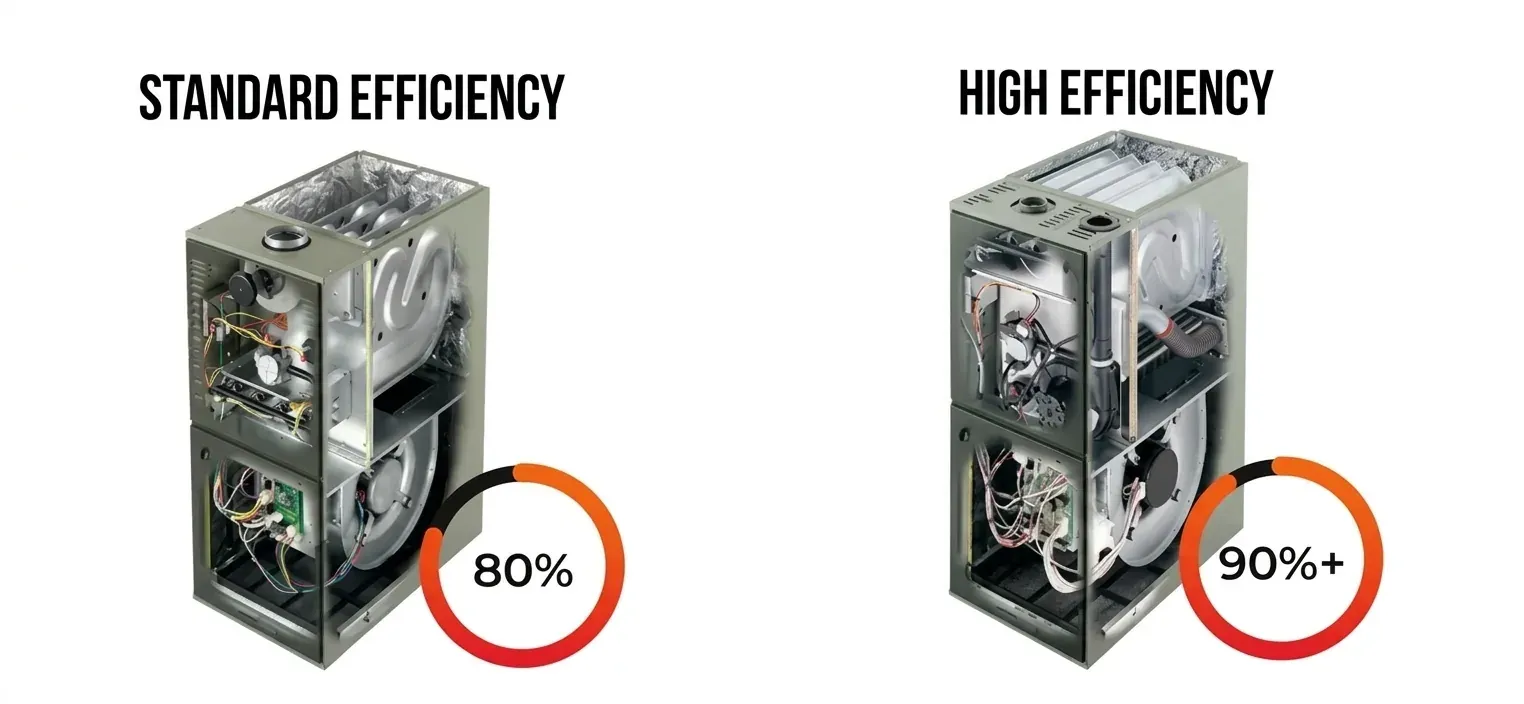
| Standard efficiency (80% AFUE) | $3,700 | $7,600 |
| High efficiency (90%+ AFUE) | $5,200 | $8,500 |
Final price depends on unit size, efficiency rating, ductwork changes, accessories such as humidifiers, permits and labor.
AFUE (annual fuel utilization efficiency) is the share of the fuel that ends up as heat in your house. Old natural-draft furnaces typically run at 70 to 75%: at 75%, a quarter of every dollar you spend on gas goes up the chimney.
When keeping the old furnace makes sense
Replacement is not always the right call. Keep and repair the old furnace when:
- It is safe and the repair is small. One HVAC company filmed a 1960s furnace that had just received a new blower motor. Its verdict: safe and in good working order, so replacing it came down to whether higher fuel and maintenance costs justified a new unit.
- It is still under warranty. A tune-up or covered repair is almost always cheaper than a new system.
- You are moving within a year or two. You will not be there long enough to recover the fuel savings.
- The repair buys a season. A $250 ignitor on a safe 20-year-old furnace is a reasonable bridge while you save for a planned replacement, rather than an emergency one in January.
Look at the rest of the basement while you are at it. In that same 1960s house, the original water heater was still running beside the furnace, at 40 to 50 years old. If yours is past its own service life, pricing both jobs together can save a second visit: here is what a water heater replacement costs in 2026. The same goes for central air, since the furnace blower moves the air for both systems. The AC repair-or-replace thresholds work the same way as the ones above.
A 5-question checklist
Answer in order and stop at the first one that settles it.
If none of the five settles it, repair what is needed and keep the furnace on an annual inspection. If you do replace, get at least two quotes and ask each installer for the AFUE rating, the warranty on parts and labor, and whether the price includes permits and any ductwork changes.