A heat pump that will not heat is often fine. Technicians drive out to a lot of no-heat calls and leave twenty minutes later after changing one setting on the thermostat. So before anything else, it pays to rule out the settings, then the things you can see and reach, and only then the parts that need a meter and a license.
- Typical air at the vents from a heat pump running on its own
- ~90°F
- Breakers on many systems: the outdoor unit, and the air handler with its heat strips
- 2
- Thermostat repair, the cheapest fix on the list
- $100–$300
- National average heat pump repair in 2026
- $410
Source: HomeAdvisor national heat pump repair cost data (June 2026).
First, is it really not heating?
Two things make a working heat pump feel broken, and both are worth ruling out:
- The air feels cool on your hand. A heat pump warms the air to around 90°F. That is warm, but it is below skin temperature, so a hand over the vent reads it as cool, especially if you are used to a gas furnace. It also runs long, steady cycles rather than short hot ones. If the house holds its temperature, the system is doing its job.
- It blows cooler air for a few minutes, the outdoor fan stops and the unit steams. That is a defrost cycle. It melts the frost off the outdoor coil and ends on its own within about 10 to 15 minutes. Our heat pump freezing up guide shows what a normal one looks like, and what to do when the ice does not clear.
A light that says AUX or EM on the thermostat is not a fault either. AUX means the backup heat strips are helping, which is normal in cold weather and during defrost. EM means someone switched the system to emergency heat, which is covered below.
If the air is barely warmer than the room after 10 minutes, the house keeps getting colder, or the outdoor unit is not running at all, work through the causes in order.
The causes, in order
Is the thermostat set to heat?
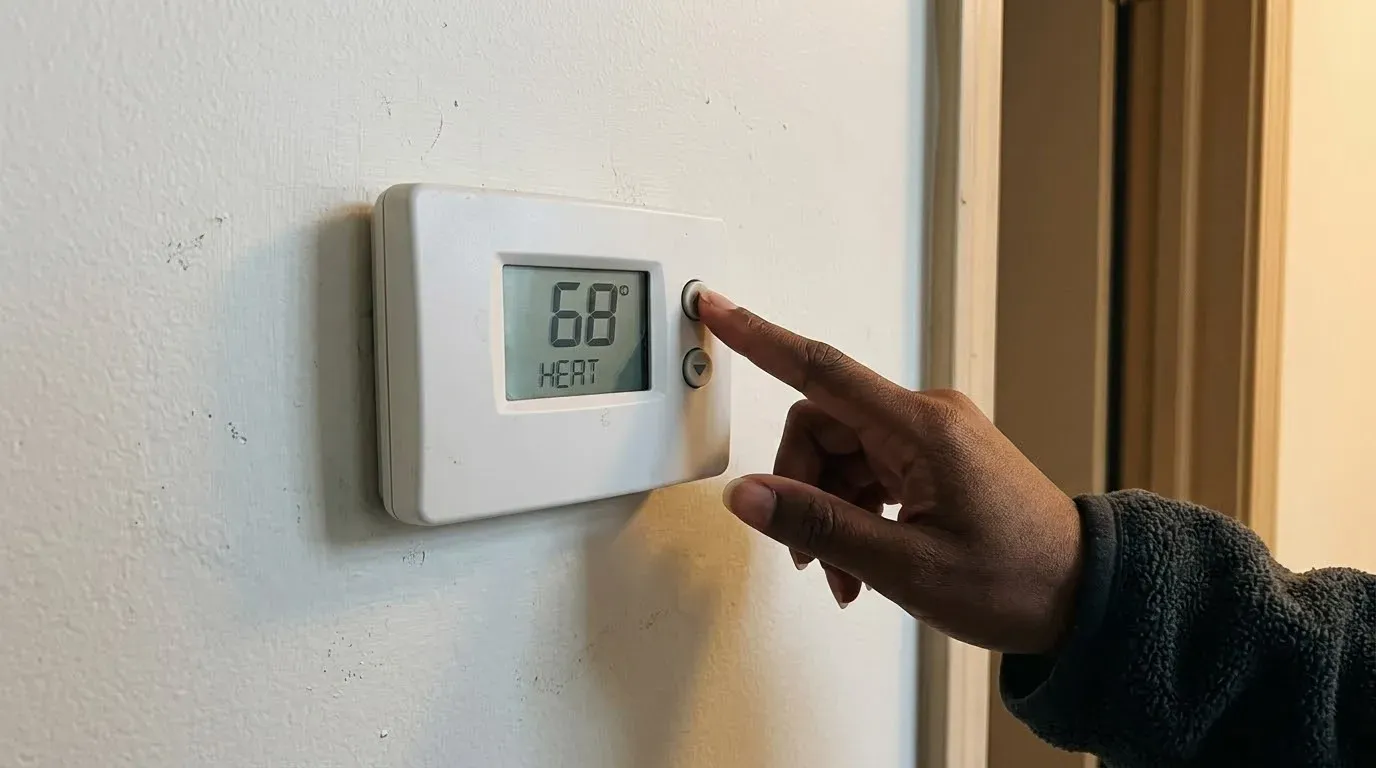
Start with the obvious, because it catches more people than any broken part:
- System mode on Heat. Not Cool, not Off. Auto switches between heating and cooling on its own and can sit idle in between, so set Heat while you troubleshoot.
- Setpoint above room temperature. Raise it 3 to 4 degrees so there is a clear call for heat, then give the system a few minutes. Many thermostats hold the outdoor unit for up to 5 minutes after a change to protect the compressor.
- Batteries and schedule. A dead battery can blank the display, and a schedule can quietly override the setting you just made. Check that no “hold” or program is lowering the setpoint.
- Emergency heat. If the mode says EM or EMER, the outdoor unit is locked off on purpose and the house runs on the backup electric strips. That costs much more to run. Switch back to Heat unless you chose emergency heat because the outdoor unit has a problem.
Is the thermostat set up for a heat pump?
This is the fault that shows up after a thermostat is replaced, or in a house someone has just moved into: the outdoor unit runs, the system seems to work, and the air inside stays cold. Cooling often works perfectly, which makes it even more confusing.
A heat pump heats and cools with the same equipment. A part called the reversing valve decides which way the refrigerant flows, and the thermostat controls it through a wire marked O or B. Most brands energize the valve in cooling (O). A few energize it in heating (B). If the thermostat is set up as a conventional furnace and air conditioner, or set to the wrong one of the two, the valve sits in cooling while the thermostat asks for heat. Heat and cooling can even run at the same time and cancel each other out.
The fix is in the thermostat’s installer settings, not in the equipment:
- Find the installer or equipment menu (the thermostat’s manual names the button sequence).
- Set the system type to heat pump, not conventional or gas.
- Set the reversing valve to O or B to match the outdoor unit. The wiring diagram inside the outdoor unit’s panel, or its installation manual, says which. If you cannot tell, try one setting and run heat for 10 minutes; if the air stays cold, try the other.
- Set the backup heat as electric if the air handler has heat strips.
If the setup menu is beyond what you want to touch, this is a short, cheap visit, and HomeAdvisor’s national range for thermostat work is $100 to $300.
Is the filter clogged?
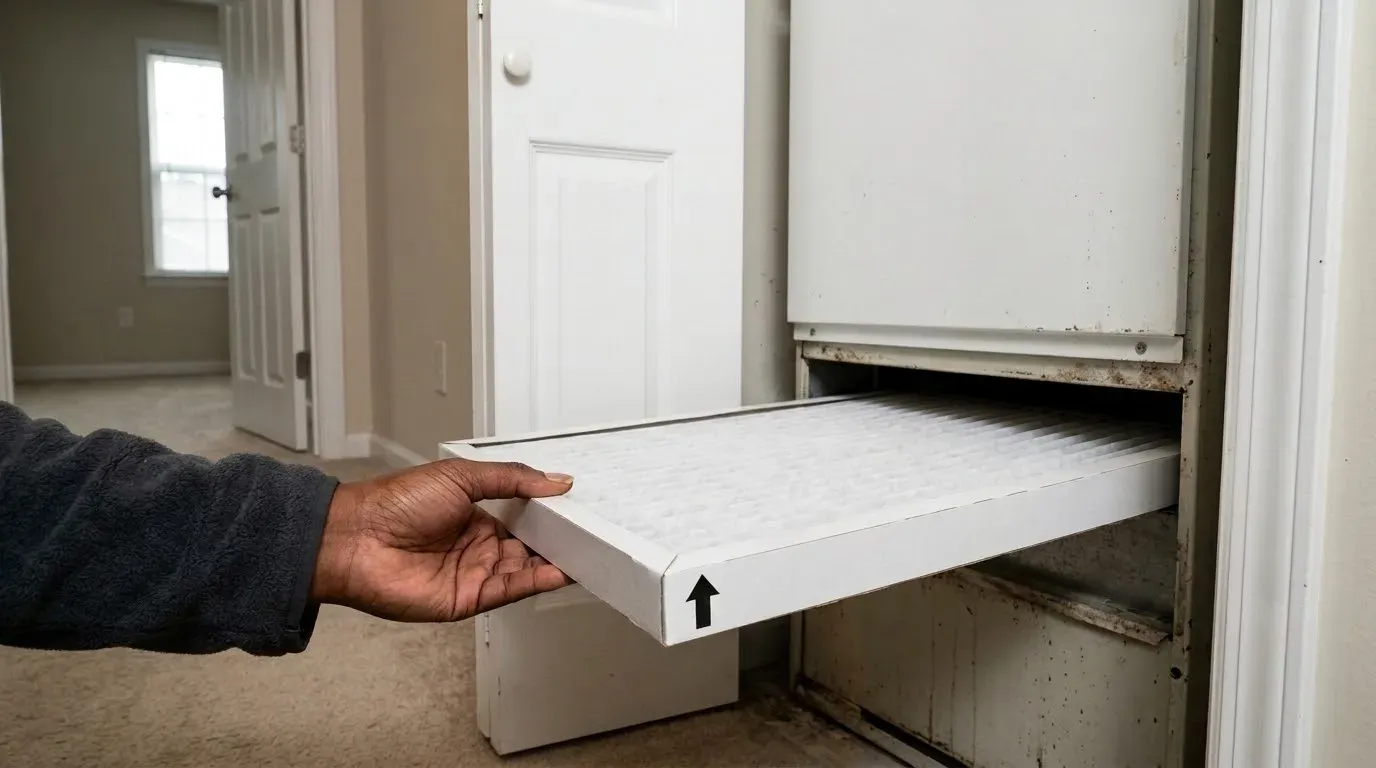
A heat pump delivers its heat in a large volume of moderately warm air, so it depends on airflow more than a furnace does. A clogged filter cuts that airflow, the house warms slowly, and on some systems the high pressure safety shuts the outdoor unit down. A filter that is missing altogether is worse: it can get pulled into the air handler, and the dust it should have caught ends up on the indoor coil.
Pull the filter and hold it to a light. If you cannot see through it, replace it, with the arrow on the frame pointing toward the air handler. ENERGY STAR’s maintenance checklist recommends checking it every month. While you are there, make sure the supply registers are open and no furniture is sitting on the return grilles.
Is the outdoor unit blocked or dirty?
In winter, the outdoor unit is where the heat comes from. It pulls heat out of the outdoor air through its coil, and anything that blocks that air cuts the heat you get inside: snow drifted against the cabinet, leaves and grass packed into the fins, shrubs grown in close. A coil caked with years of dirt does the same thing more quietly.
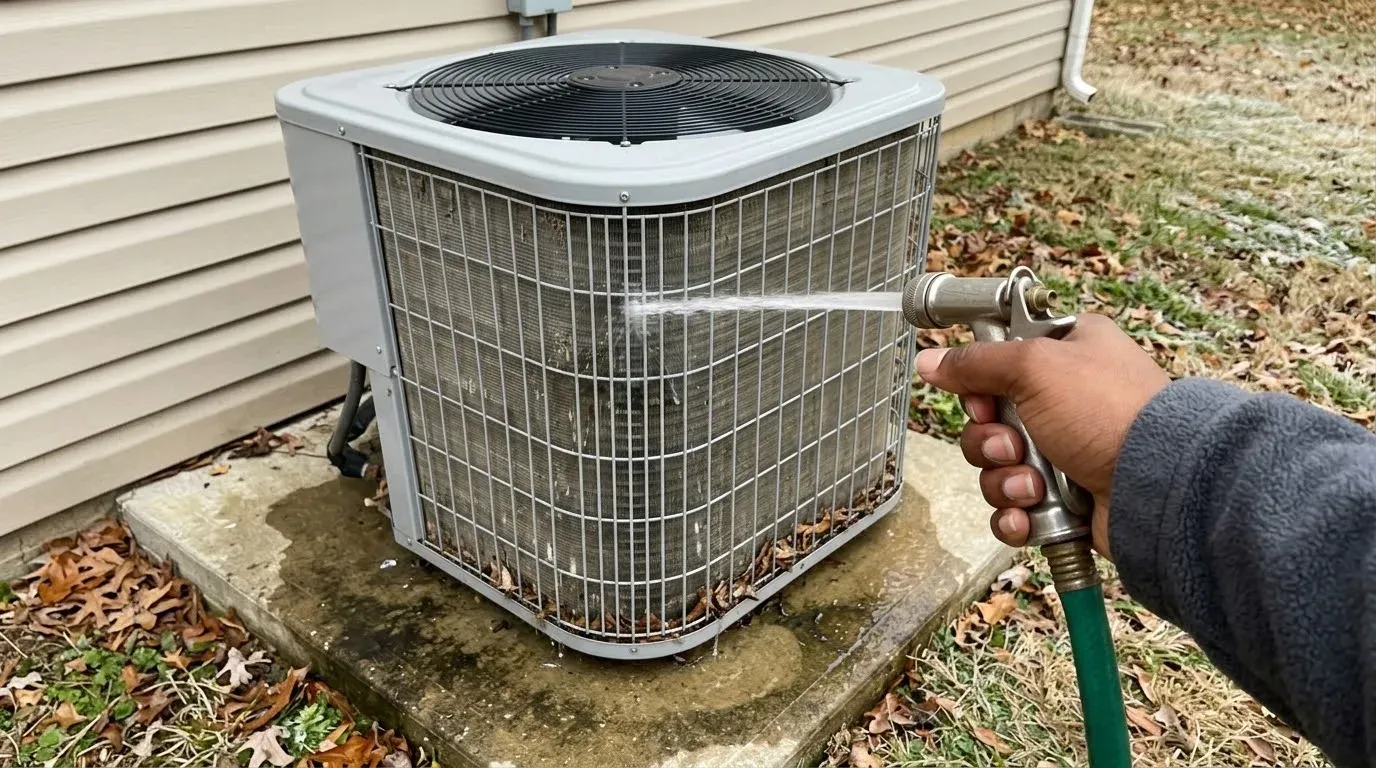
- Clear snow, ice and leaves from around and on top of the unit, by hand or with a broom. Keep about 2 feet of open space around it.
- Rinse a dirty coil on a mild day. Turn the power off at the disconnect box beside the unit, then spray the fins gently with a garden hose. A pressure washer flattens the fins and does more harm than the dirt.
- Do not cover it for the winter. A heat pump works all year. Covers belong on air conditioners only.
If the coil is heavy with ice, not dirt, do not chip at it. Switch to emergency heat and read the heat pump freezing up guide instead.
Is a breaker tripped?
If the outdoor unit is completely silent, fan and all, while the thermostat calls for heat, check the power. Many heat pump systems have two large double breakers in the panel: one for the outdoor unit, and one for the indoor air handler with its heat strips. Some have more than one for the strips.
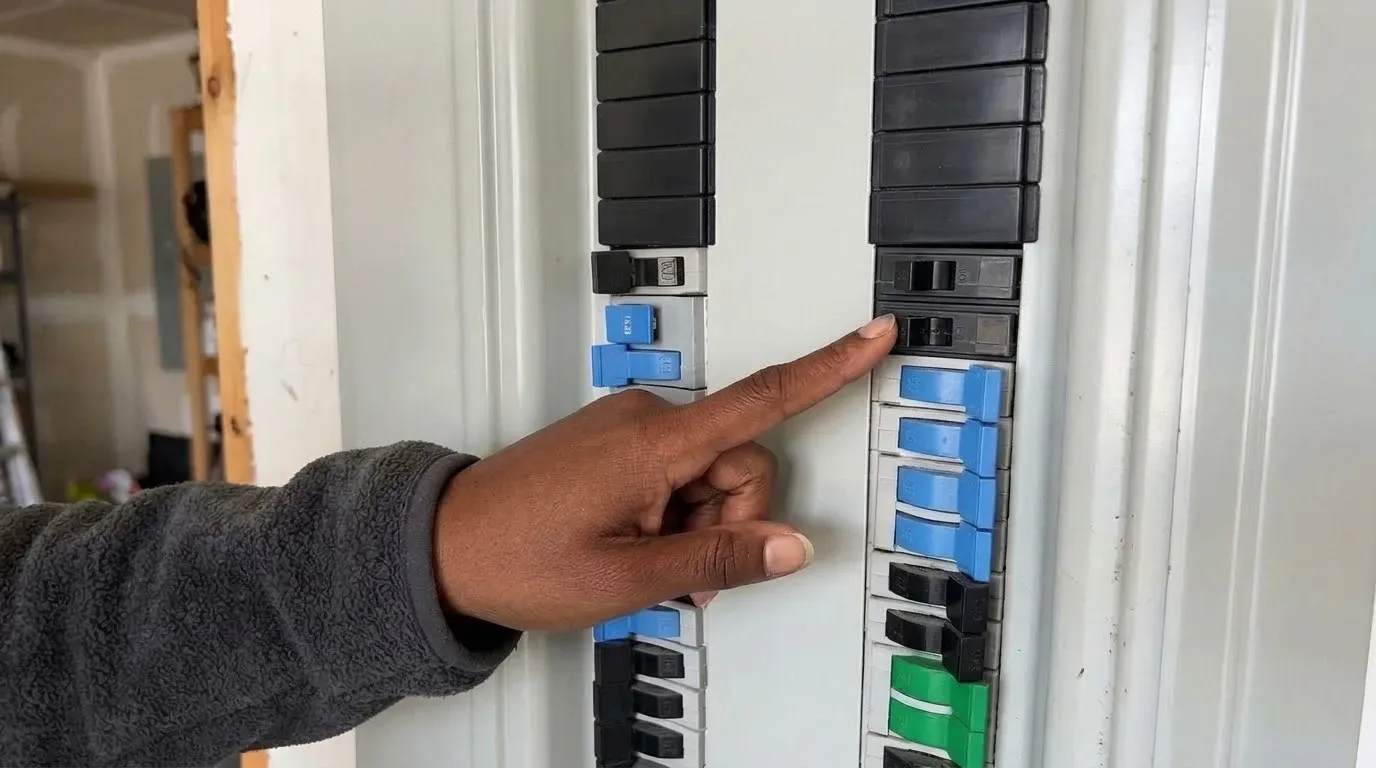
A tripped breaker sits in the middle or all the way off. Push it firmly to OFF, then back to ON. Check the disconnect box on the wall beside the outdoor unit too: it has its own pull-out block or switch, and it gets left off after maintenance more often than you would think.
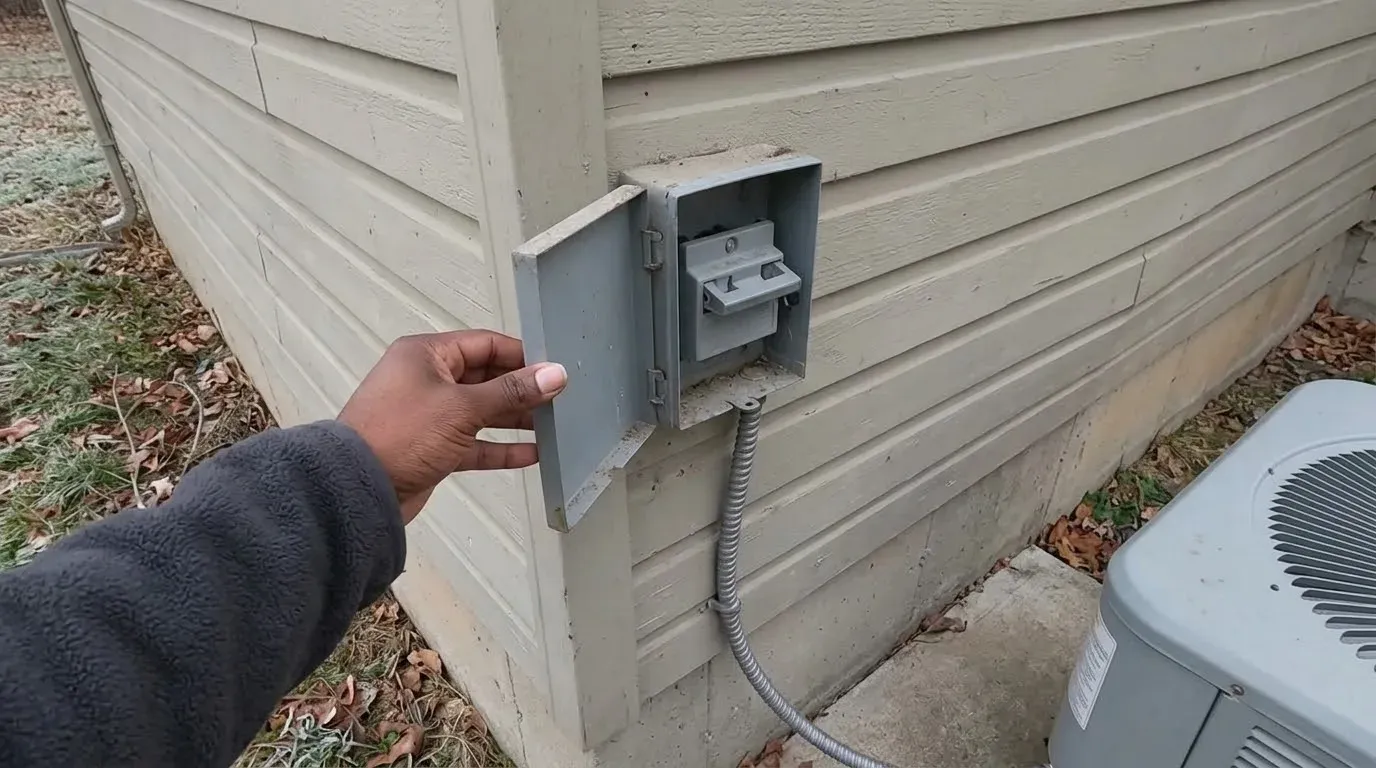
Reset a breaker once. A breaker does not trip for no reason. If it trips again, right away or after a few minutes of running, leave it off and call. A repeat trip can mean a compressor or a fan motor shorted to ground, and running it again only adds damage. If resetting the heat pump breaker trips other, unrelated circuits in the house, or the outdoor fan turns slowly with the thermostat off, stop there: something is feeding voltage where it should not be, and that is a job for an HVAC technician or an electrician now.
Are the backup heat strips working?
Most heat pumps in cold climates have electric heat strips in the air handler: bare resistance coils, like a large toaster, that add heat when the heat pump cannot keep up and during each defrost cycle. When they fail, the pattern is distinctive. The house is comfortable on mild days and falls behind on the coldest ones, the vents go cool during defrost, or nothing happens at all when you switch to emergency heat.
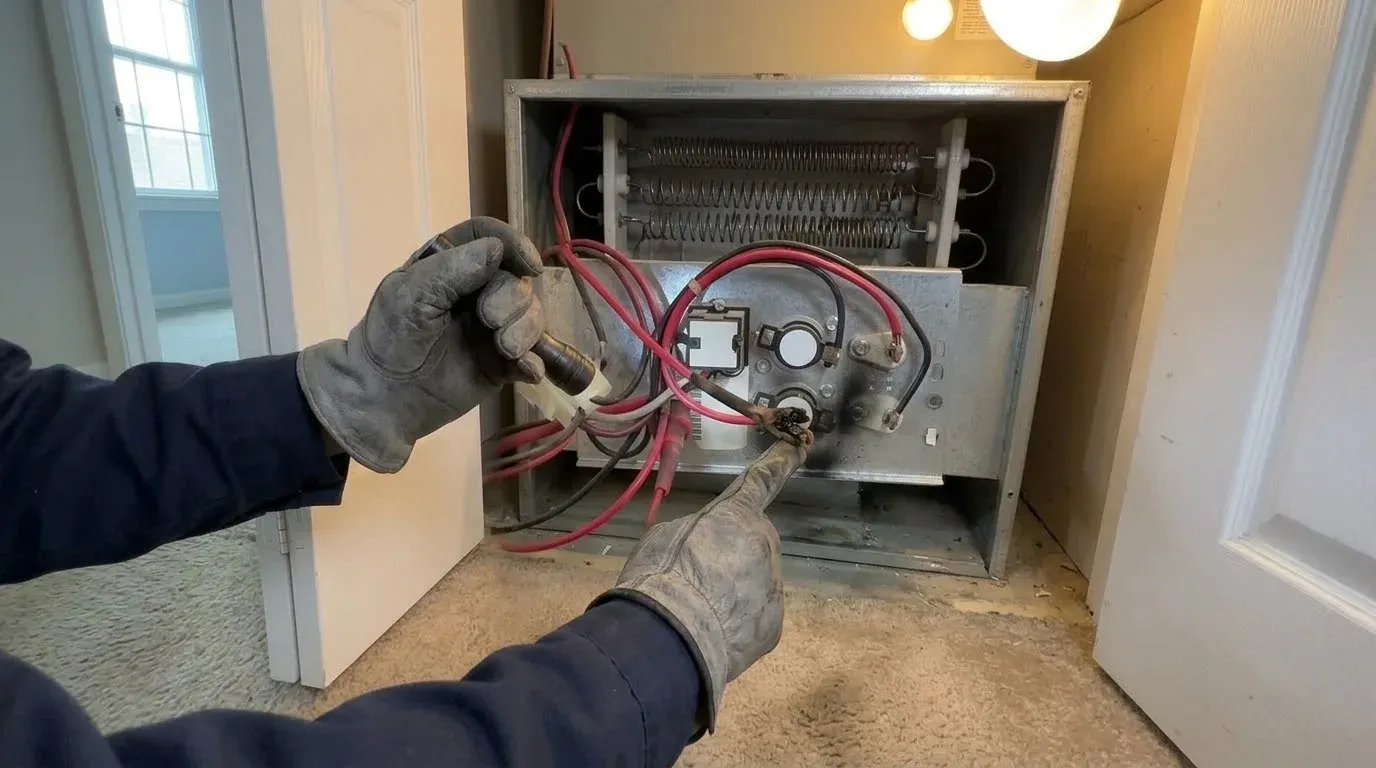
The usual failures are a sequencer, the small relay that switches the strips on in stages, a tripped or failed limit switch, or a burned-out element. Heat strips draw a lot of current, so loose connections heat up and melt, and a sequencer with blackened terminals is a common find. Technicians check that each stage draws current, test the limit and the element with a meter, and tighten every connection while they are in there.
This is 240-volt, high-current work, and a technician’s job. You can still help: check the heat strip breaker, and tell the technician whether the problem shows up only in deep cold or also on emergency heat.
Does the outdoor unit hum but not start?
If the outdoor unit hums, clicks or buzzes but the fan does not turn and no heat comes, a part that starts the motors has likely failed. The most common is the capacitor, a metal can that gives the compressor and the fan the kick they need to start. A failed capacitor is cheap to replace, $150 to $250 installed nationally, and caught early it saves the compressor.
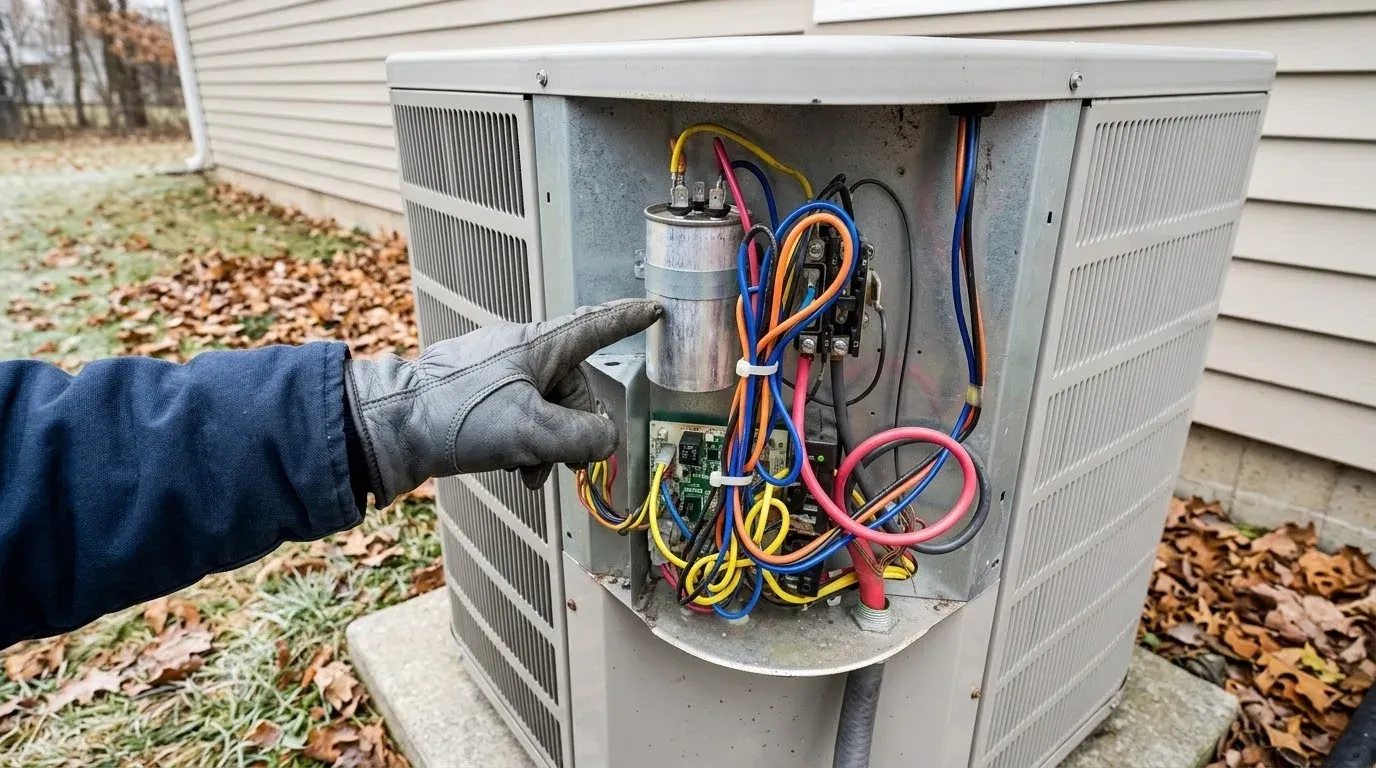
Do not open this panel yourself. The capacitor holds a charge after the power is off, and the wiring behind it is 240 volts. Turn the unit off at the thermostat so a stalled compressor is not left humming, and call.
Is it refrigerant, the reversing valve or the compressor?
When the settings, the filter, the outdoor unit and the power all check out and the air is still cool, the problem is inside the sealed system:
- Low refrigerant. The unit runs but moves little heat, and the outdoor coil often ices up fast. Refrigerant does not get used up, so a low charge means a leak. Only an EPA Section 608 certified technician can add it, at $100 to $350 nationally, and the leak should be found before anyone recharges.
- A stuck reversing valve. The valve stays in cooling no matter what the thermostat says. A technician confirms it with gauges and by checking whether the valve’s coil gets its signal.
- A failed compressor. The heart of the system. A technician tests its windings with a meter, right at the compressor terminals, to tell a dead motor from a wiring fault in between.
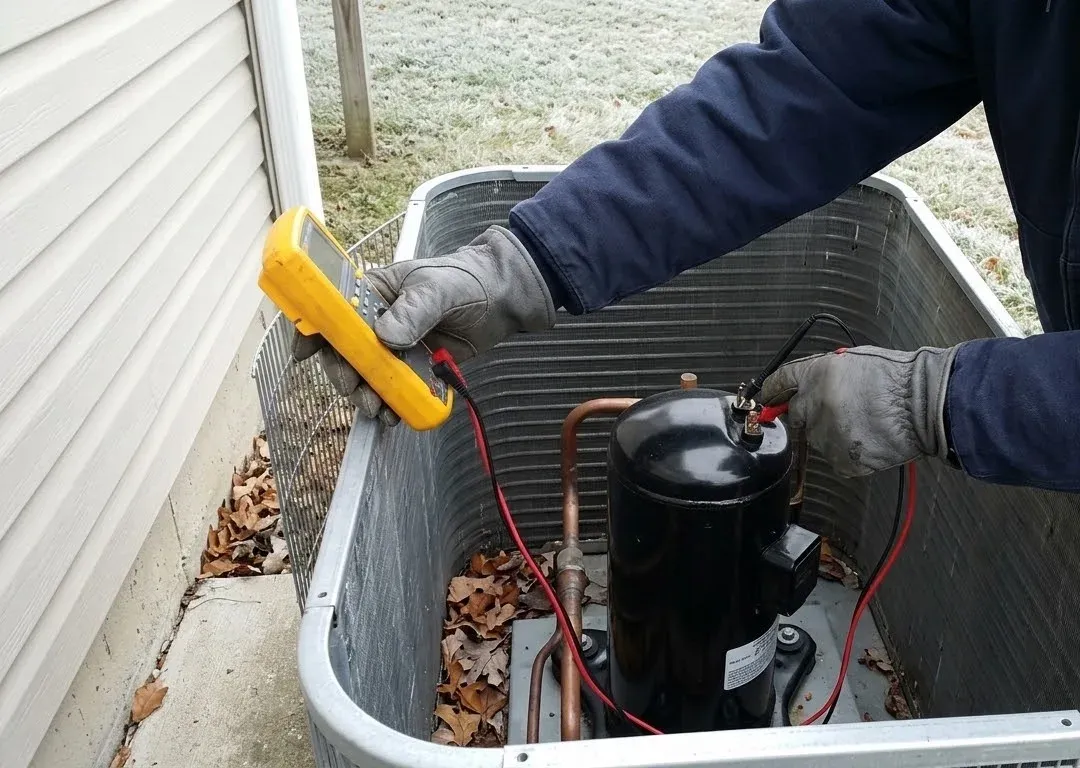
A compressor runs $800 to $3,500 installed nationally. On a system that is near the end of its life, that is the moment to price a replacement too, and decide with both numbers in front of you rather than one.
Heat Pump Freezing Up? What Is Normal and How to Fix It (2026) Heat pump covered in ice? Here is how to tell normal frost from a fault, and what to do right now.Signs it needs a technician
If your system uses a gas furnace as its backup heat instead of electric strips, the furnace blowing cold air guide covers that side of it.