The thermostat says 73, the house says 68, and the air coming out of the vents is cold. A furnace that blows cold air is almost always doing one specific thing: running its blower without its burners. The blower moves house air through the ducts whether or not there is a flame to warm it, so what you are feeling is your own room temperature coming back at you.
That narrows it down. Something is either telling the blower to run when it should not, or stopping the burners from lighting or staying lit. Most of the causes are on the cheap end, and the furnace usually tells you which one it is.
- National average furnace repair in 2026
- $318
- Flame sensor, the most common cheap fix
- $150–$250
- How often ENERGY STAR says to check the filter
- 1×/month
- Where the thermostat fan should be set for heating
- AUTO
Sources: HomeAdvisor national cost data (June 2026), ENERGY STAR maintenance checklist.
First, is it actually cold?
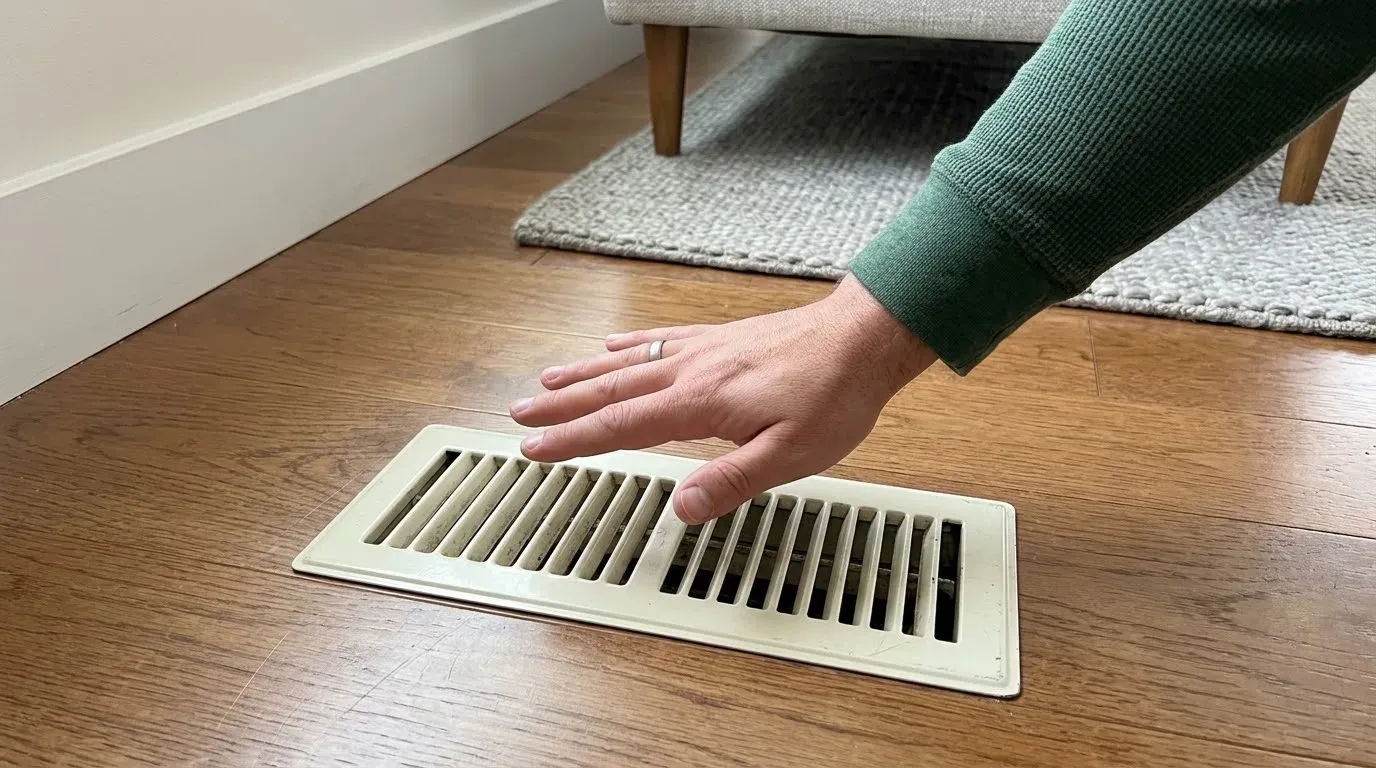
Stand at a supply register through a whole heating cycle. Two things are normal and fool people every winter:
- The first and last minute. A furnace lights its burners first and waits for the heat exchanger to warm before the blower starts. At the end of a cycle, the blower keeps going for a minute or two to pull the last of the heat out. Air that sat in the ducts can feel cool at both ends.
- A heat pump. If your system is a heat pump, or a heat pump with a gas furnace as backup, the air comes out around 90°F. That is warm, but it is below skin temperature, so it feels cool on a hand. Our heat pump freezing up guide covers how a heat pump should behave in winter.
Cold air for the whole time the blower runs is the real symptom. Here is where it comes from.
The thermostat fan is set to ON
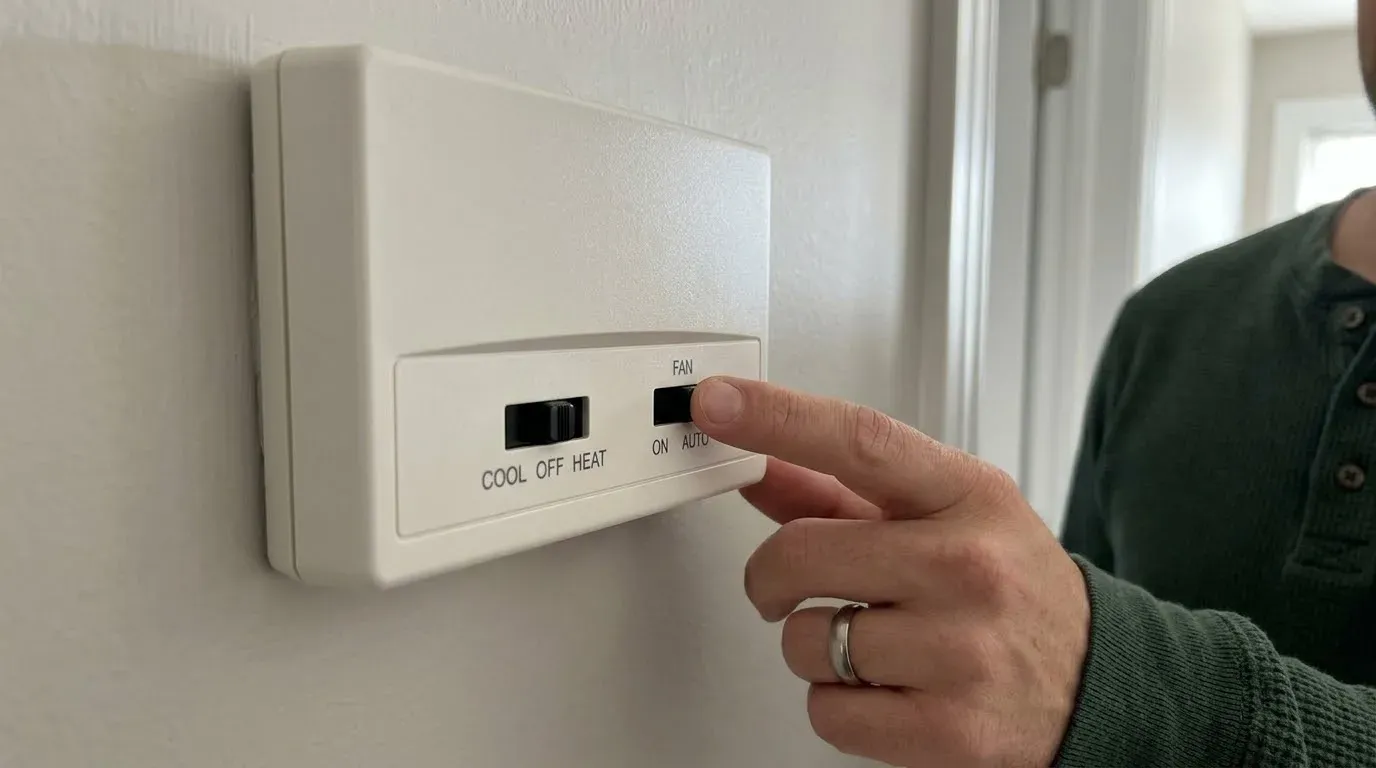
This is the first thing to check because it costs nothing. With the fan set to ON, the blower runs around the clock. When the furnace is heating, you get warm air. Between cycles, the burners are off but the blower keeps going, and you get cool air, often for longer than you get warm air.
Set the fan to AUTO. On a smart thermostat, look for a fan hold or a fan schedule that someone turned on for air circulation and forgot. If the cold air stops between cycles and the heat comes on normally when the thermostat calls, that was it.
The filter is clogged or in backwards
This is the cause behind more cold-air calls than any part. A clogged filter starves the furnace of air. Without enough air moving across it, the heat exchanger overheats, and a safety switch called the high-limit shuts the burners off to protect it. The blower keeps running to cool things down, so you feel cold air. Once it cools, the burners light again, it overheats again, and the cycle repeats: a few minutes of heat, then cold, over and over.
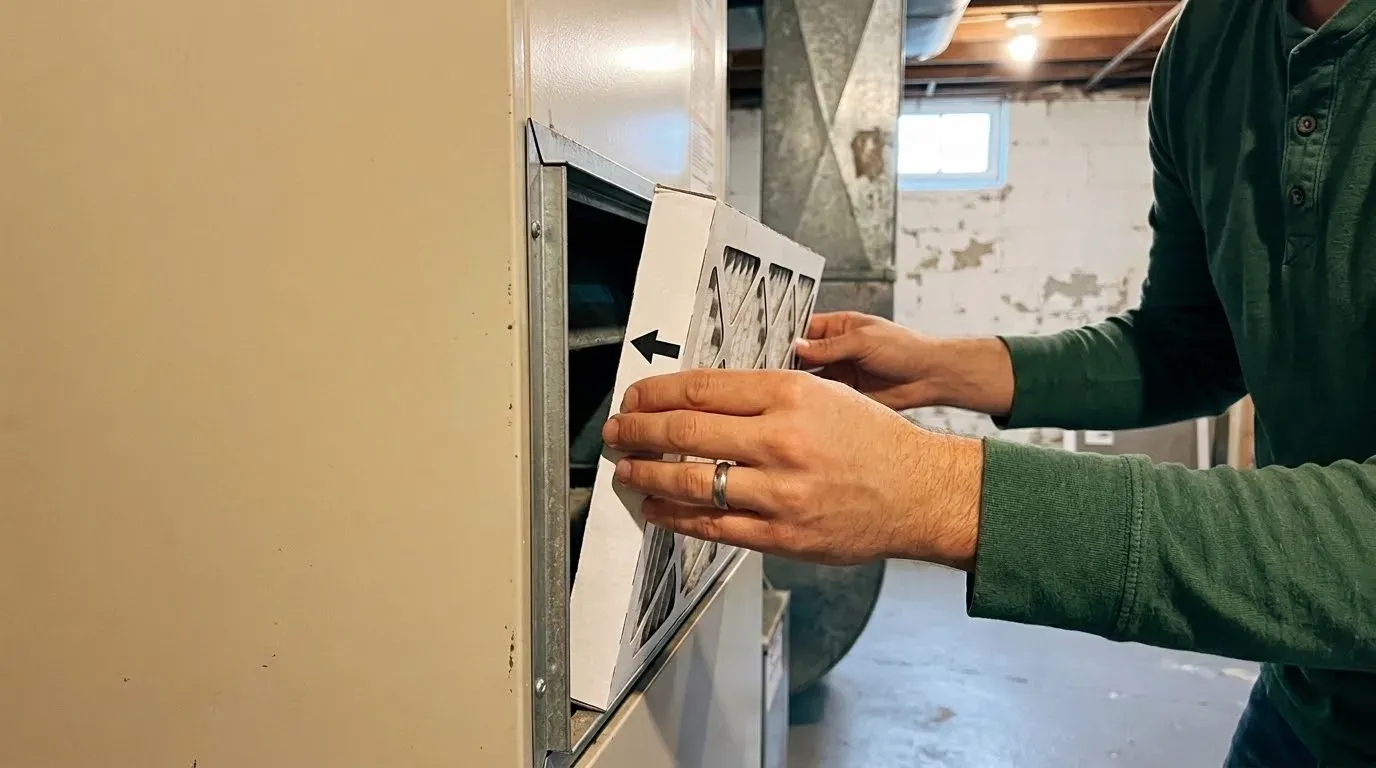
Pull the filter and hold it up to a light. If you cannot see light through it, replace it. While it is out, check the arrow printed on the frame: it should point toward the furnace, in the direction the air travels. A filter put in backwards restricts the air more than it should.
ENERGY STAR’s maintenance checklist recommends inspecting the filter once a month and cleaning or changing it as needed. A new one costs $1 to $35. Check that the supply registers are open and the return grilles are not blocked by furniture too: closed vents do the same thing to a furnace as a dirty filter.
Read the error light
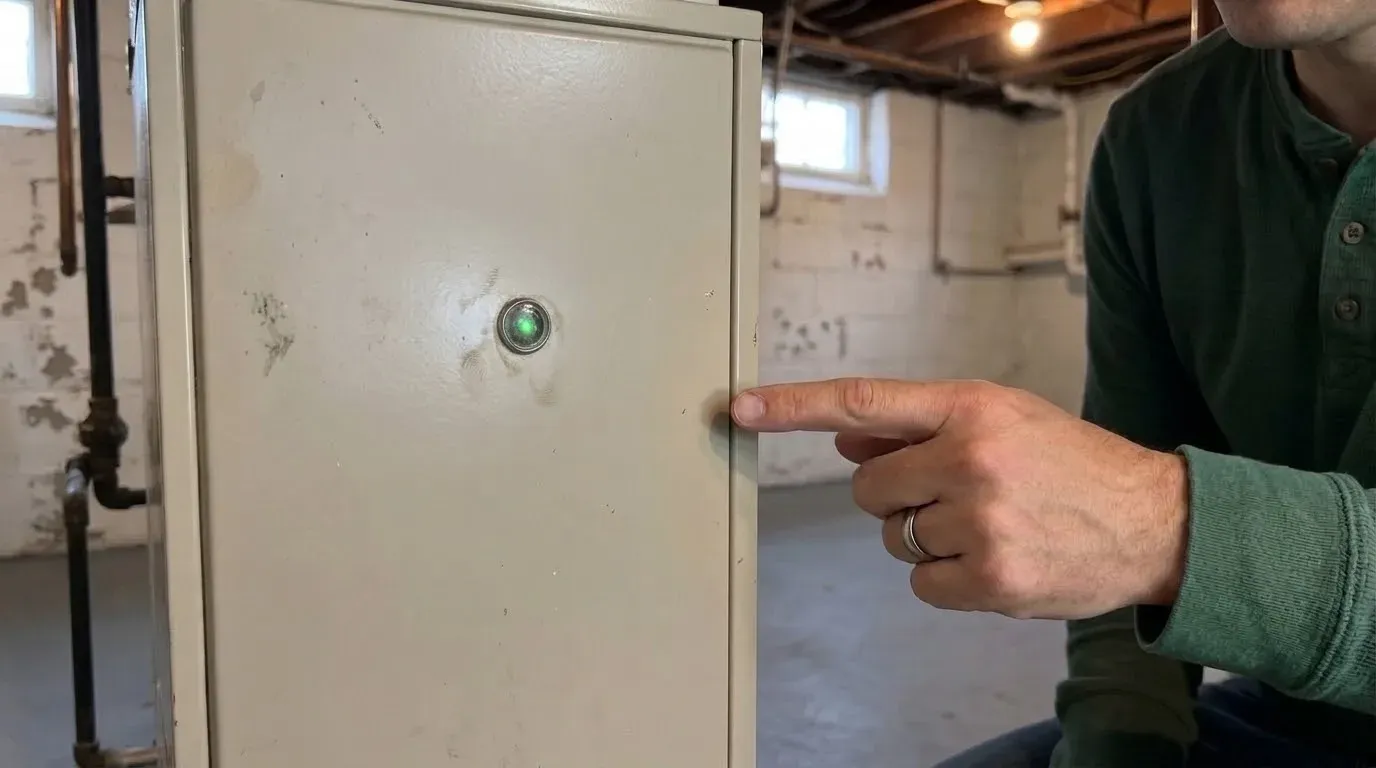
If the filter was clean, let the furnace tell you. Most modern furnaces have a small LED on the control board, visible through a sight glass in the lower door. Count the flashes between pauses, then find the code on the chart printed inside the furnace door.
The codes that point at cold air are usually the ones for an open limit switch, a flame rollout, a pressure switch that will not close, and a weak flame signal. Write the number down before you reset anything: on many furnaces it disappears once the power is cycled, and it is the most useful thing you can tell a technician.
The limit switch has tripped or failed
The high-limit switch is a small round sensor on the sheet metal wall next to the burners, with two wires on it. It does two jobs: it keeps the burners off if the air around the heat exchanger gets too hot, and on many furnaces it is part of what tells the blower when to run. When it trips, the burners go out and the blower keeps going. That is cold air.
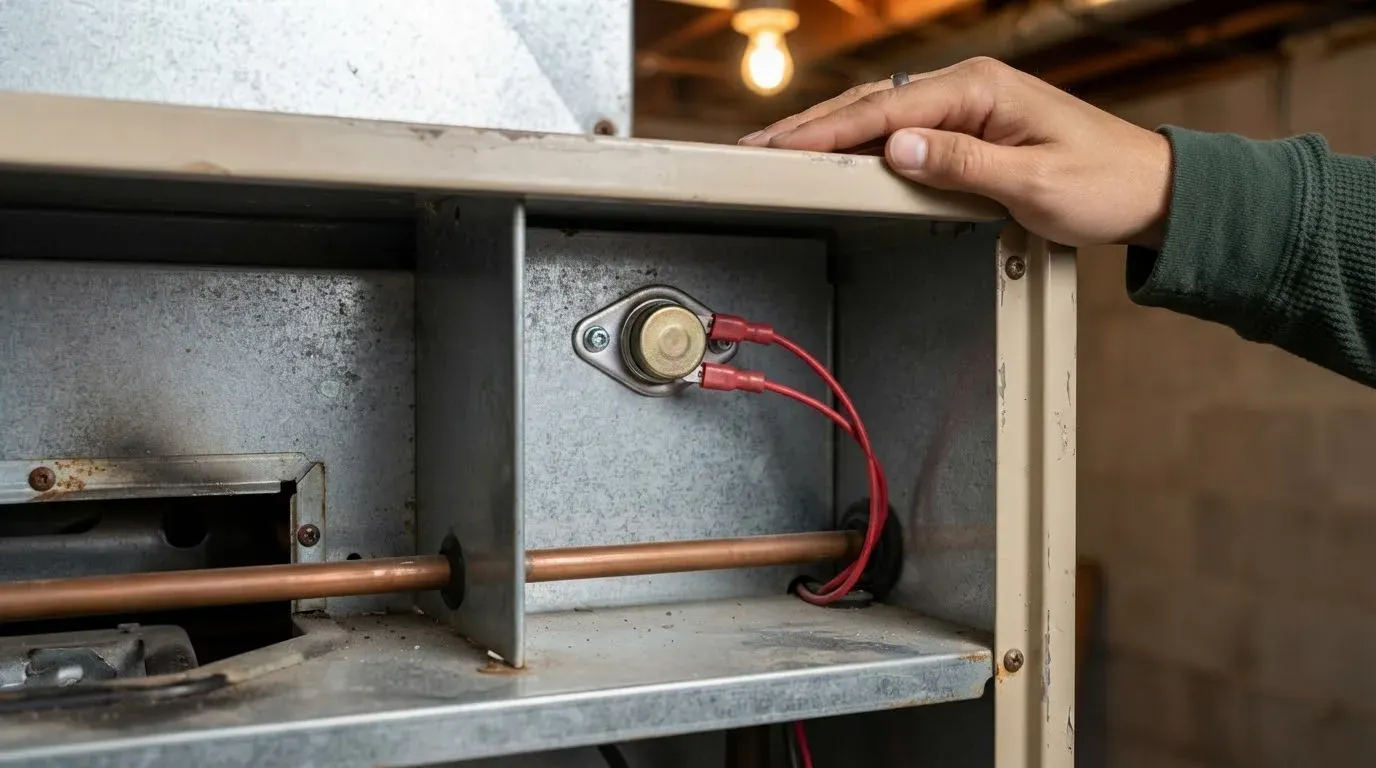
Some limits reset themselves when they cool. Others have a small manual reset button in the middle. If yours has one, turn the power off at the furnace switch, press the button once, restore power and watch a full cycle. If the burners light and stay lit, the switch had tripped.
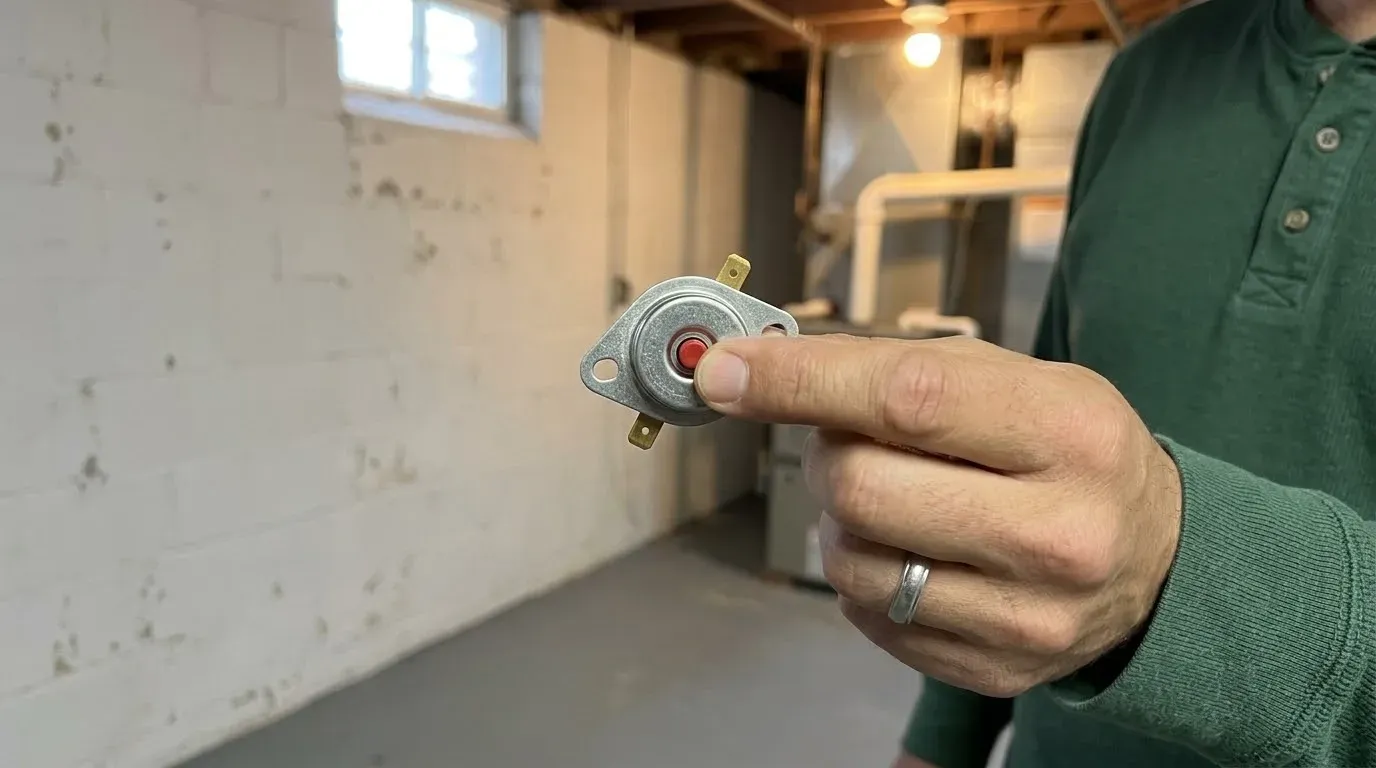
Two warnings. A limit that trips means the furnace got too hot, almost always from a filter or airflow problem, so a reset without fixing the airflow only buys a few hours. And a similar-looking switch near the burners may be the flame rollout switch, which trips when flame comes out of the burner area. Do not keep resetting a rollout switch: it can mean a blocked vent or a cracked heat exchanger, and that is a technician’s job.
A limit switch can also fail on its own after years of heating and cooling. If it trips with a clean filter and open vents, or the code still points at it after a reset, it needs replacing. Nationally that runs $150 to $300 installed, and the replacement has to match the original’s temperature rating.
The flame sensor is dirty
If the burners light, burn for a few seconds and go out, and the furnace tries a few more times before giving up while the blower keeps running, the flame sensor is the first suspect. It is a thin metal rod sitting in the flame, and its job is to prove to the control board that there is a flame. Coated in residue, it cannot, so the board shuts the gas off for safety.
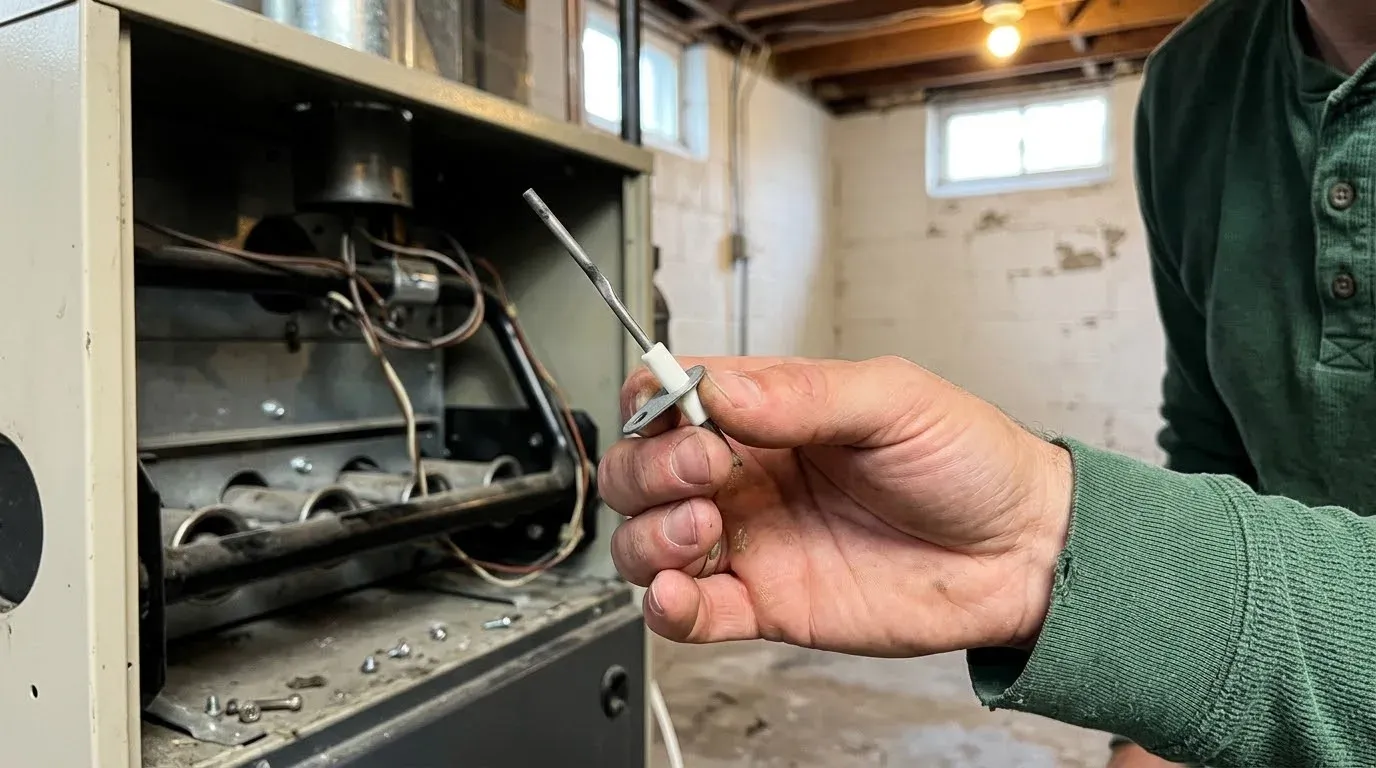
Cleaning it is a common homeowner job. Turn off the power at the furnace switch and close the gas shutoff, remove the single screw that holds the sensor, and rub the rod gently with a clean dollar bill or very fine abrasive pad until it shines. Do not use sandpaper, which scratches it, and do not touch the rod with oily fingers. Put it back, restore gas and power, and watch the burners. If cleaning does not fix it, a new sensor is a cheap part, $150 to $250 installed nationally.
The ignitor is not lighting the burners
If the furnace clicks and tries but the burners never light, look through the sight glass during startup. On most modern furnaces a hot surface ignitor should glow bright orange for several seconds before the gas valve opens. No glow means the ignitor or its circuit has failed. Check first that the gas shutoff on the pipe into the furnace is open, with its handle in line with the pipe, because a closed valve gives the same symptom.
Ignitors are brittle and wear out. Replacing one is $150 to $500 installed nationally. Our furnace not turning on guide walks through the startup sequence step by step if you want to see exactly where it stops.
The inducer motor is failing
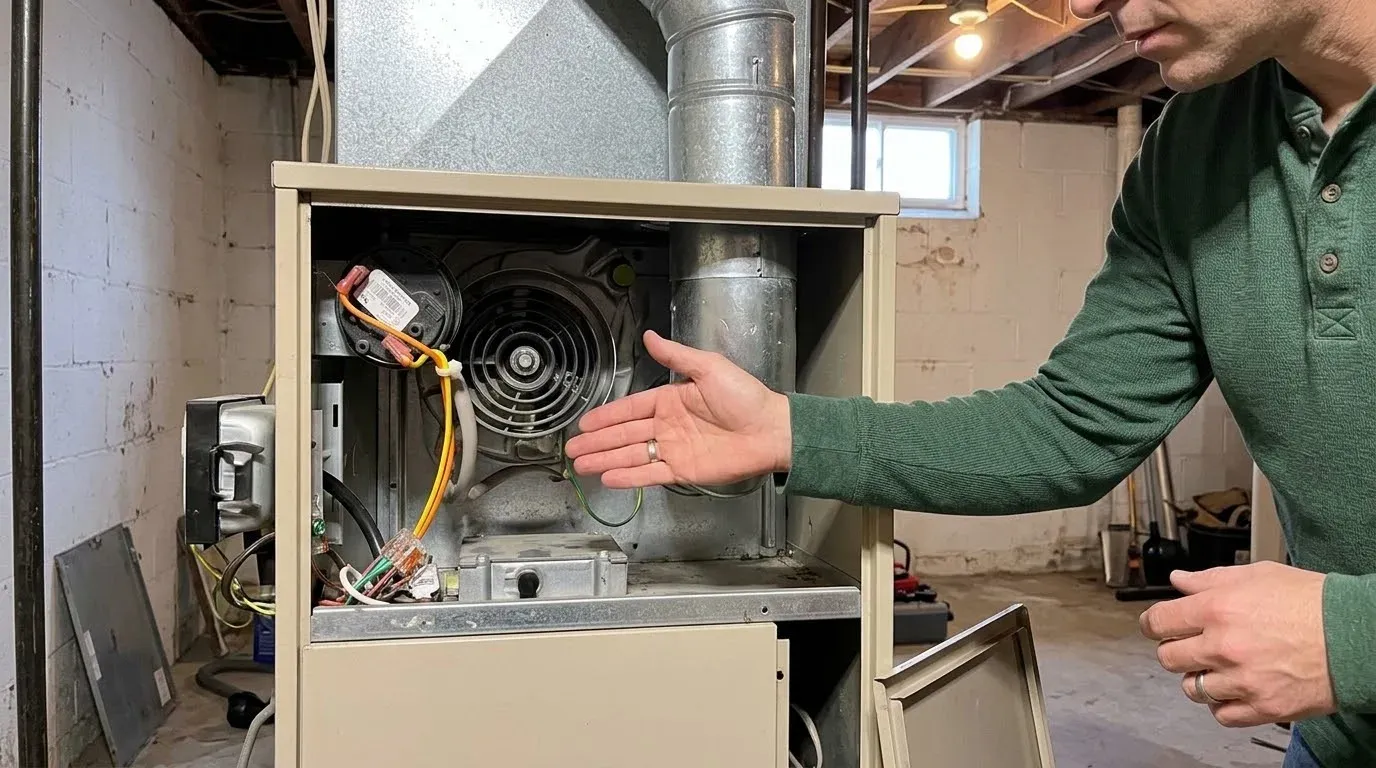
On a high-efficiency furnace, the draft inducer is the small blower that starts first and pulls exhaust out through the vent pipe. A pressure switch beside it has to confirm the draft before the burners are allowed to light. A motor with worn bearings that spins slowly, or not at all, never closes that switch, so the burners never light and you can end up with the blower running and cold air.
A struggling inducer is usually loud: a grinding, roaring or whining from the top of the furnace, which our furnace noise guide describes. Replacing one is $200 to $1,500 installed. Because the inducer seals onto the exhaust side, this is a job to leave to a technician.
A cracked heat exchanger or a control fault
Two less common causes end in a service call. A cracked heat exchanger can let the blower’s air push the flame out of the burner area, which trips the flame rollout switch, shuts the burners off and leaves the blower running. And a failed control board can run the blower without ever starting the burners. Both are diagnosed by a technician.
If the error code points at rollout, or the rollout switch has tripped more than once, treat it as a carbon monoxide question as much as a heat question. Make sure you have working CO alarms, and ask for the heat exchanger to be inspected. ENERGY STAR’s checklist includes the heat exchanger in the annual fall checkup for exactly that reason.
Emergency Furnace Repair: What to Do Before You Call (2026) Cold air on a freezing night? What to check before you pay an after-hours rate.Signs it needs a technician
Most cold-air problems give warning: a filter that has not been changed in a season, a furnace that took two tries to light last week. A monthly look at the filter and a fall checkup catch nearly all of them before the first cold night.