A furnace that used to run with a soft hum and now roars, rattles or squeals is telling you something specific. Most of these noises come from a handful of moving parts, two fans and their motors, and the sound itself narrows it down. A few are harmless. Two mean you should shut the furnace off before you do anything else.
- National average furnace repair in 2026
- $318
- Blower motor replacement, the widest range on the bill
- $150–$2,000
- US deaths a year from carbon monoxide from household products
- ~170
- Professional inspection of the heating system
- 1×/year
Sources: HomeAdvisor national cost data (June 2026), U.S. Consumer Product Safety Commission.
Which noise is it?
Then work out where the sound lives. Most furnaces have two doors on the front. The upper one covers the burners, the ignitor and, on a high-efficiency furnace, the draft inducer. The lower one covers the blower, the big fan that pushes warm air through the house. Stand next to the furnace through a full cycle with the doors closed and listen: a noise that starts the moment the thermostat calls, before the burners light, is the inducer. One that starts a minute later, when air begins moving at the registers, is the blower.
Do not run the furnace with a door off to listen. There is a safety switch behind the lower door that cuts the power when it is removed, for good reason: the blower and the wiring are exposed, and furnace labels warn against running it with the blower door off because an open blower compartment can draw combustion gases into the house air.
Start with the filter and the registers
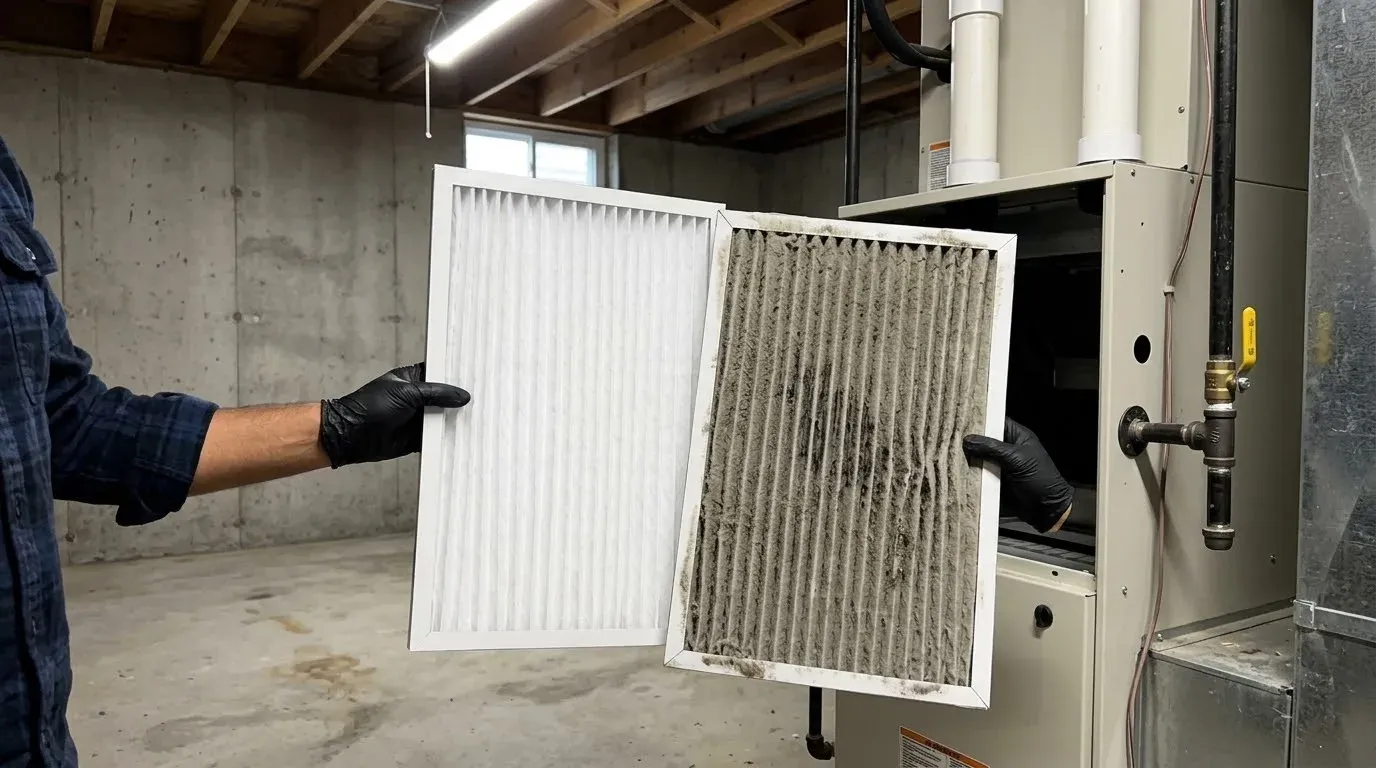
Before you blame a motor, check the cheapest part. A clogged filter starves the blower of air, and the result can be a whistle or squeal at the furnace or the registers, a blower that sounds strained, and ducts that bang harder than usual. Closed registers and returns blocked by furniture or a laundry basket do the same thing.
Pull the filter and hold it up to a light. If you cannot see through it, replace it, and open every register in the house. A filter costs $1 to $35. If the noise drops, you are done.
A loud roar or whine: the draft inducer
The draft inducer is the small blower behind the upper door of a high-efficiency furnace. It is the first thing to start on a call for heat: it pulls air through the burners and pushes the exhaust, carbon monoxide included, out the vent pipe. A healthy one makes a smooth, rising whine for a few seconds and then a steady hum.
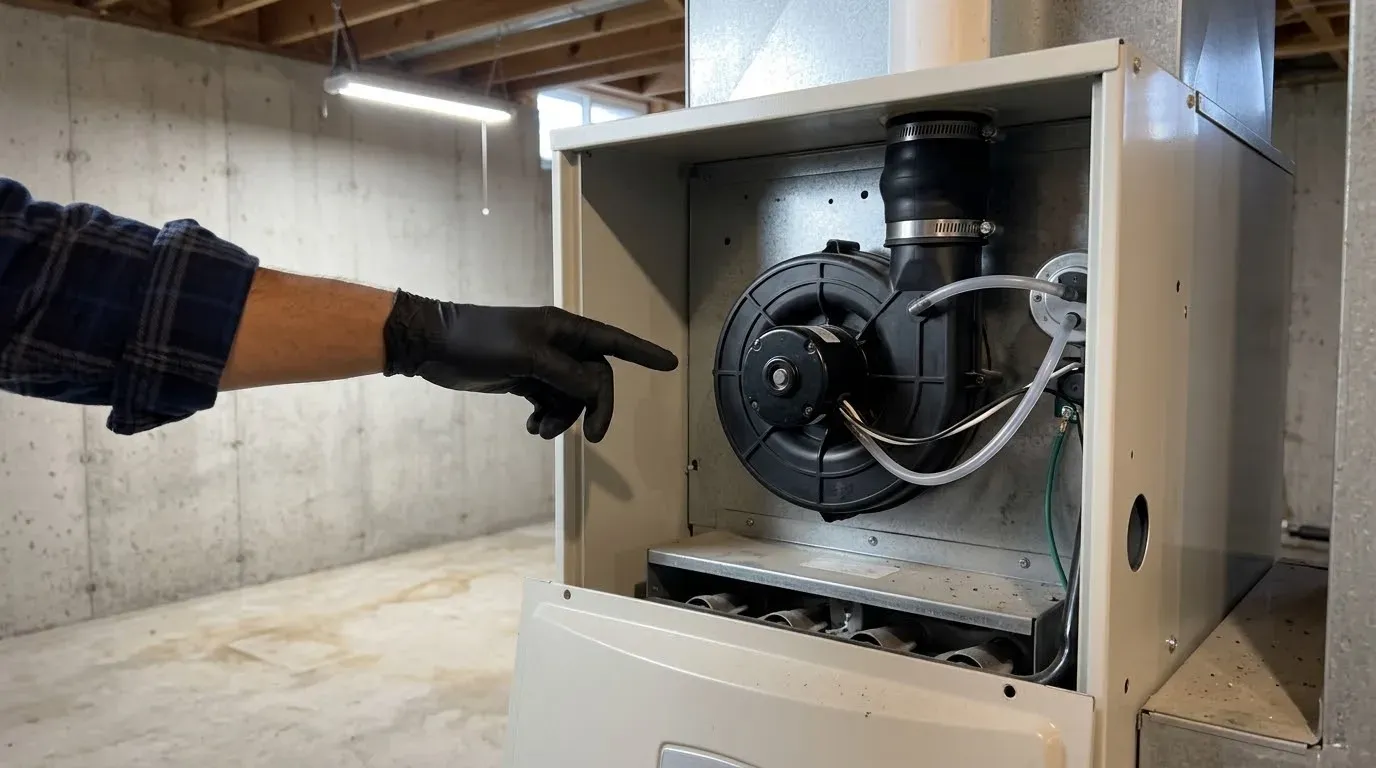
When its bearings wear, it gets loud: a constant roar, whine or rattle from the top of the furnace all the way through the cycle, often louder at startup. Left alone, the bearings eventually seize, the motor stops, the pressure switch never closes and the furnace no longer lights at all. A noisy inducer is a part that is telling you its schedule.
Replacing one is mechanically simple, a few wires, a rubber hose and four screws, and handy homeowners do it. Think twice anyway. The inducer seals onto the exhaust side of the furnace, and a gasket that does not seat perfectly leaks combustion gas into the house. Nationally, an inducer replacement runs $200 to $1,500 installed, and the right part comes from the model and serial number on the furnace’s rating label. If it has already stopped and the furnace will not start, our furnace not turning on guide covers the rest of the startup sequence.
A rumble or grinding: the blower motor
The blower motor sits behind the lower door, inside a round housing with a squirrel-cage wheel. When its bearings wear, it makes a deep, steady rumble that a lot of people describe as a truck idling in the basement. It starts when the air starts moving at the registers and stops when the air stops.
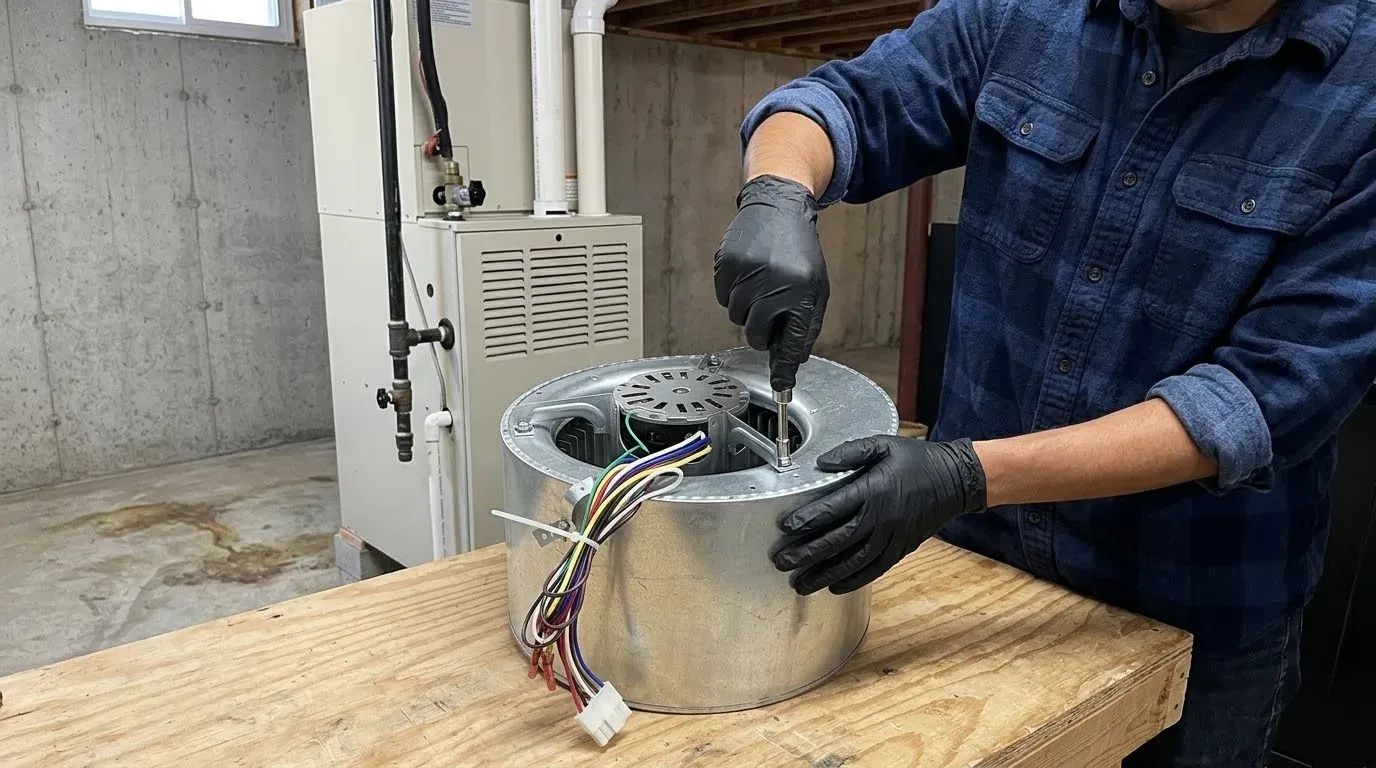
Worn bearings do not get better. They get louder, then hotter, and finally the motor seizes and the furnace runs with no air moving, which trips the high-limit switch and leaves you without heat. The fix is a new motor, and this is where the bill varies most: $150 to $2,000 nationally, depending on whether it is a basic motor or a variable-speed one. On a furnace past 15 years, a blower motor at the top of that range is the point to weigh repair against replacement.
Grinding or scraping is a different sound: metal on metal. That is usually the wheel rubbing its housing because it has shifted on its shaft, or something that got sucked in and is hitting the blades. Turn the power off and look before you run it again.
Rattling: something loose
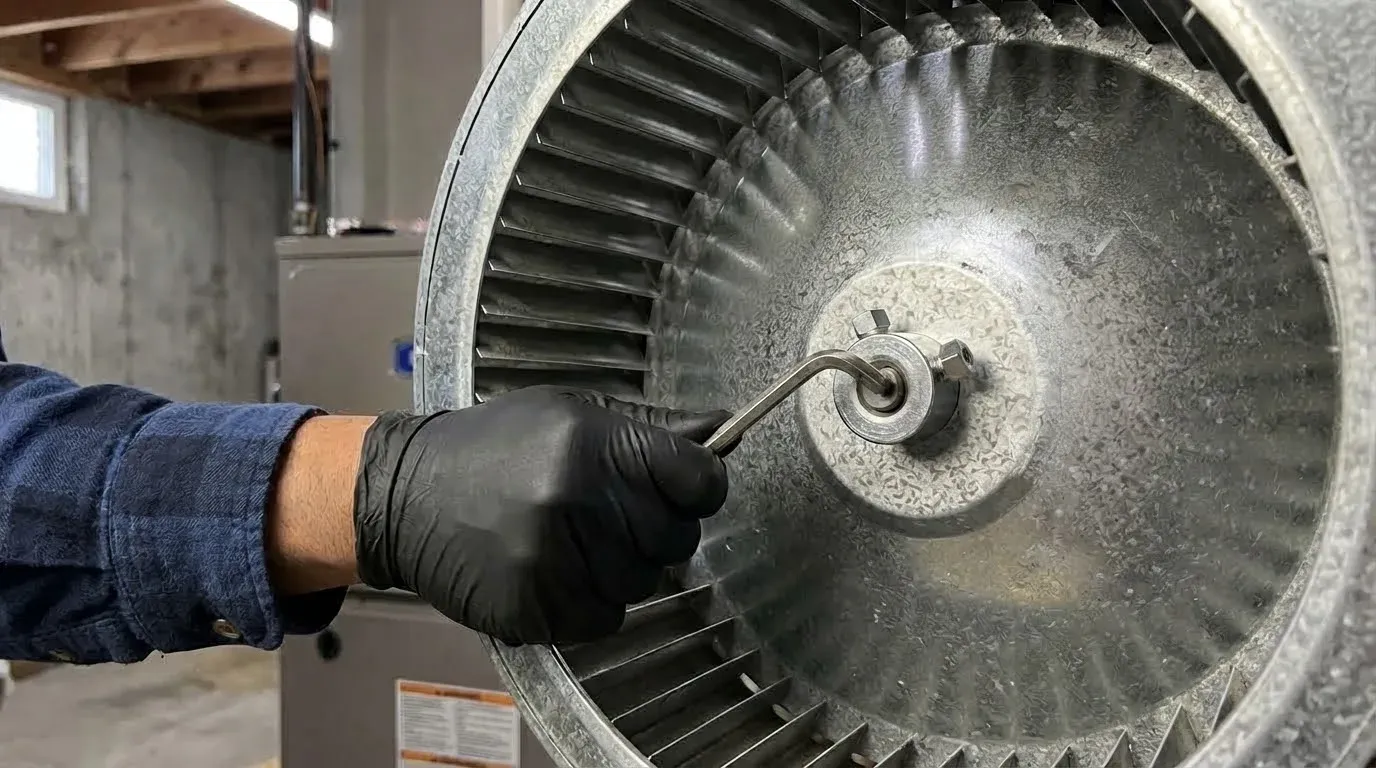
A rattle is often the easiest noise to fix. The blower wheel is clamped to the motor shaft by a single set screw on its hub. If that screw backs out, the wheel wobbles as it spins and rattles the whole housing. The motor’s own mounting bolts can loosen too, and so can the furnace’s sheet metal panels.
With the power off at the furnace switch or the breaker, check the panels first: a door that is not seated, a loose screw, a cover that buzzes against the cabinet. Then, if you are comfortable, open the lower door and check that the wheel does not move on its shaft and the motor does not shift in its mounts. Tighten the set screw onto the flat of the shaft and snug the mounting bolts.
A rattle that comes from deeper inside the furnace, where the burners are, is not a loose panel. See the last section.
Squealing: a belt or a bearing
Older furnaces often drive the blower with a V-belt between a pulley on the motor and a pulley on the blower, the same way an old car runs its fan. When that belt is worn, dirty, loose or out of line, it squeals, especially at startup.
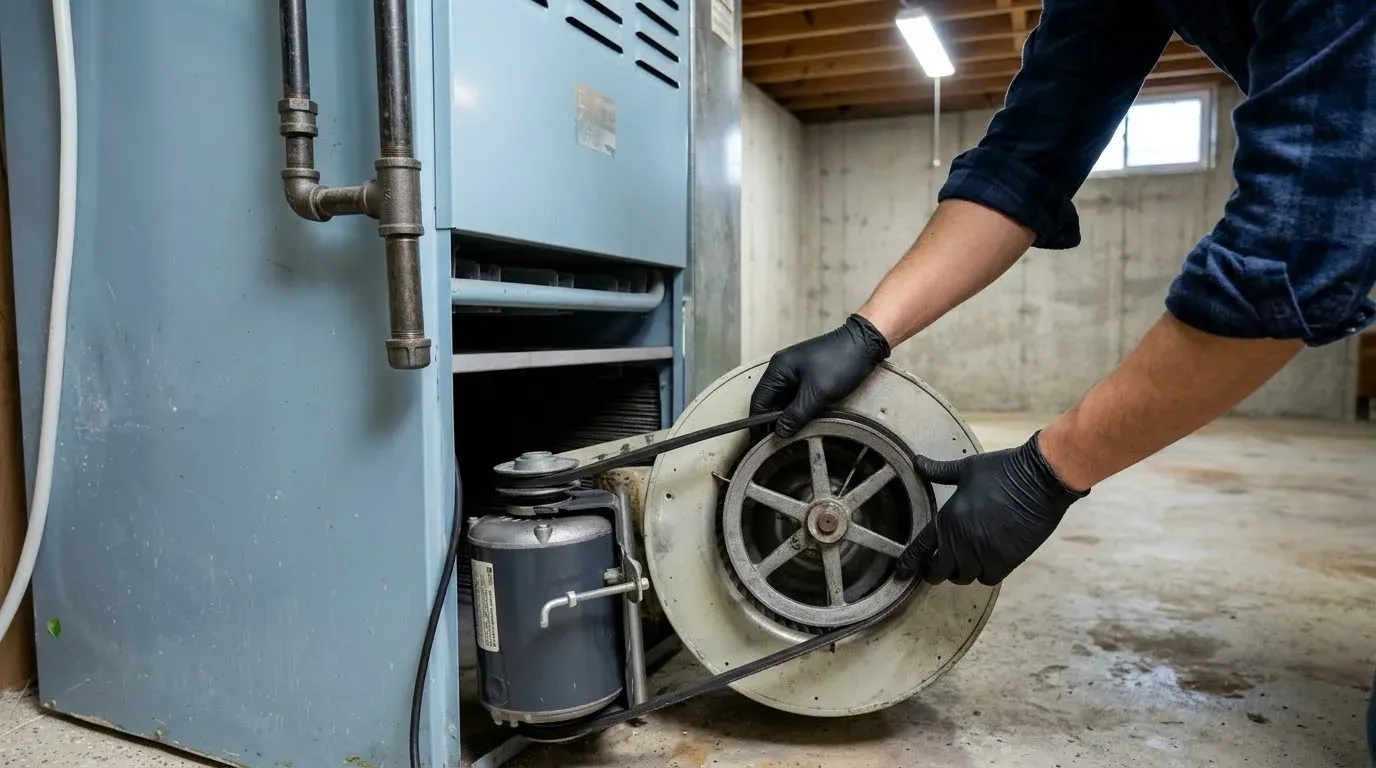
With the power off, look at the belt. Cracks, a shiny glazed surface or a belt that sags noticeably between the pulleys means it is due. Belts are cheap and fitting one is a reasonable homeowner job: match the size printed on the old belt, line the pulleys up, and set the tension the motor bracket allows.
Most furnaces built in the last few decades are direct drive, with the wheel mounted straight on the motor and no belt at all. On those, a squeal or high whine is usually bearings, in the blower motor or the inducer, and the fix is the motor.
Humming or buzzing: electrical parts
A furnace has a few parts that hum normally and get louder when they start to fail.
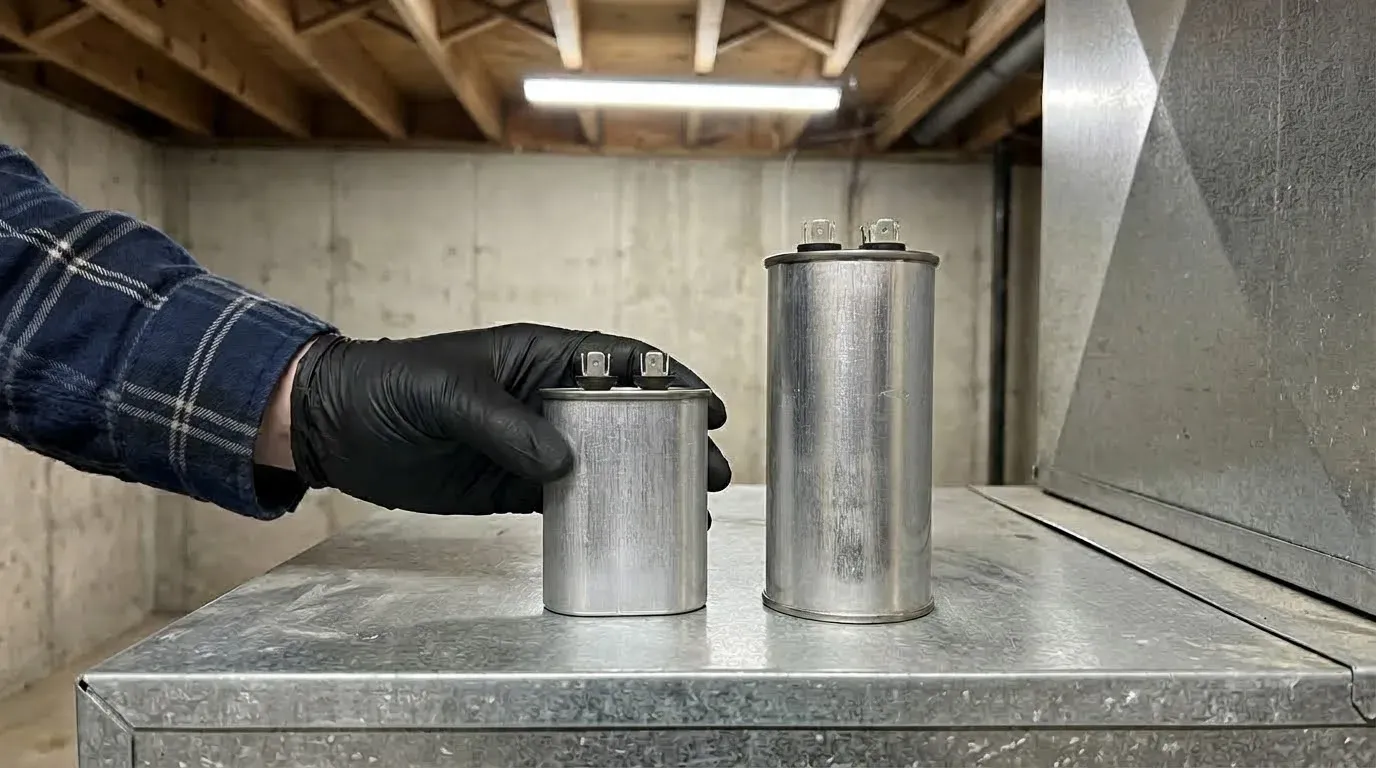
- The blower capacitor. It gives the blower motor the push it needs to start. When it weakens, the motor hums, struggles or spins up slowly, and eventually burns itself out.
- The transformer. It steps house voltage down for the controls, and a failing one buzzes. Nationally it is one of the cheaper repairs, $100 to $175.
- The motors. A blower or inducer motor that is binding hums louder before it gets noisy in other ways.
- The gas valve. It clicks open with a faint hum, and a loud buzz from it is a part for a technician to test.
This is all line voltage, and a capacitor stays charged after the power is off. Leave the testing to a technician.
Clicking: the ignition system
A couple of clicks at the start of a cycle are normal: relays on the control board switching, the gas valve opening. What is not normal is clicking that repeats while the burners never light, or light and go out.
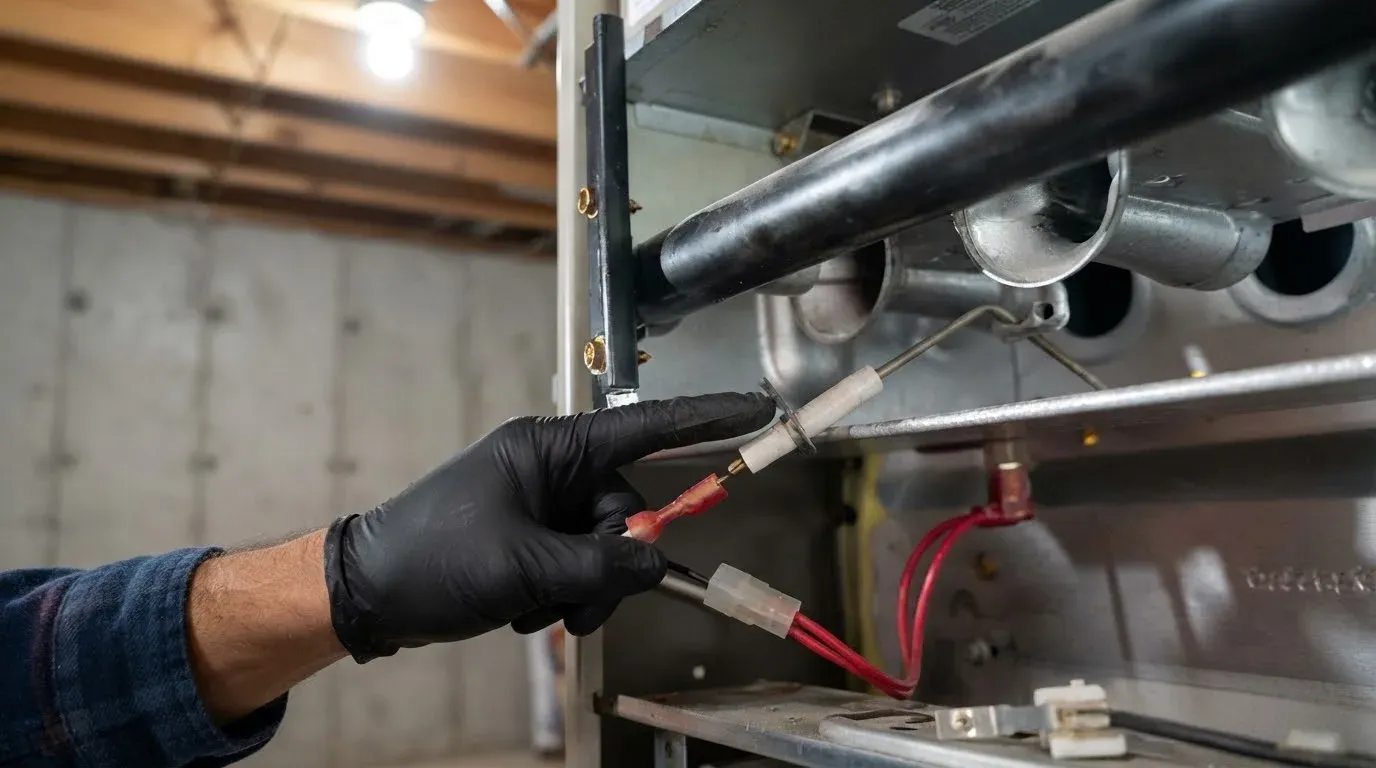
That points at the ignition sequence. Check the one thing you can: that the gas shutoff on the line to the furnace is open, its handle parallel to the pipe. Beyond that, the usual suspects are a failing ignitor, a dirty flame sensor that does not prove the flame so the furnace shuts the gas off again, dirty burners, or on older furnaces a pilot that has gone out. Nationally, an ignitor runs $150 to $500 and a flame sensor $150 to $250. The furnace not turning on guide walks through the sequence step by step.
Pops and bangs in the ducts: expansion
A pop or a metallic bang in the ductwork a minute or two after the furnace starts, or after it shuts off, is almost always the sheet metal itself. Warm air heats the duct, the metal expands and flexes, and a flat panel snaps from one shape to the other like the lid of a can. It is annoying and it does not affect how the furnace works.
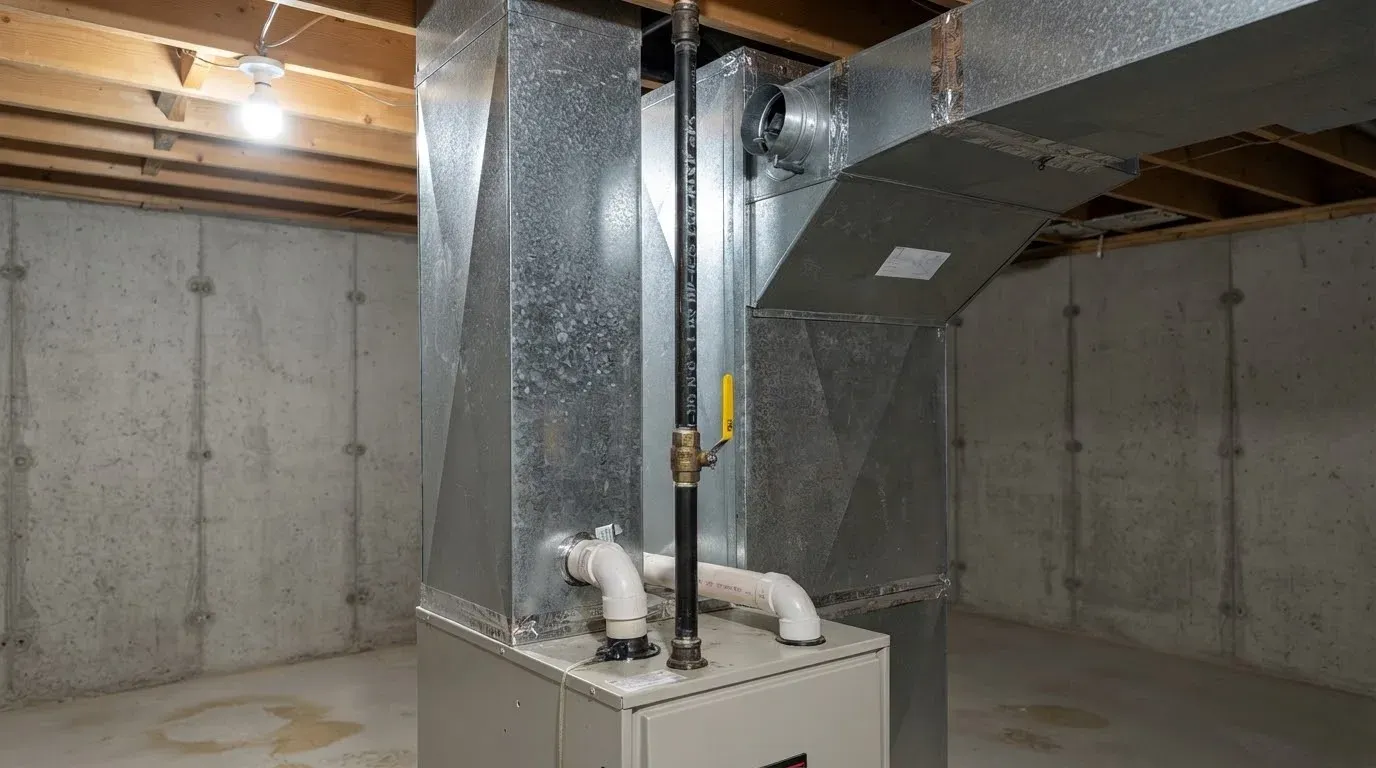
It gets worse when the air pressure in the ducts is high, so a dirty filter or a lot of closed registers make the bangs louder. Fix those first. A duct that still booms can often be quieted by a technician adding a crease or a brace to the flat panel that flexes.
A boom at ignition: delayed ignition
This one is different from duct noise, and it matters. A single loud boom from inside the furnace right as the burners light means the gas did not catch the moment it reached the burners. It collected for a second or two, then lit all at once. The usual causes are dirty or rusted burners, a weak ignitor, or gas pressure that is off.
Do not keep running a furnace that does this. Every boom is a small explosion inside the burner compartment, and over time it can crack the heat exchanger. Set the thermostat to OFF and book a service call. A burner cleaning or replacement runs $150 to $450 nationally, much less than what it protects.
Rattling with symptoms: a cracked heat exchanger
The heat exchanger is the sealed metal chamber that keeps the flame and its exhaust separate from the air you breathe. Years of heating and cooling can crack it, and a crack can open with a rattle or a tick as the metal heats. More important than the sound: a crack can let carbon monoxide into the house air.
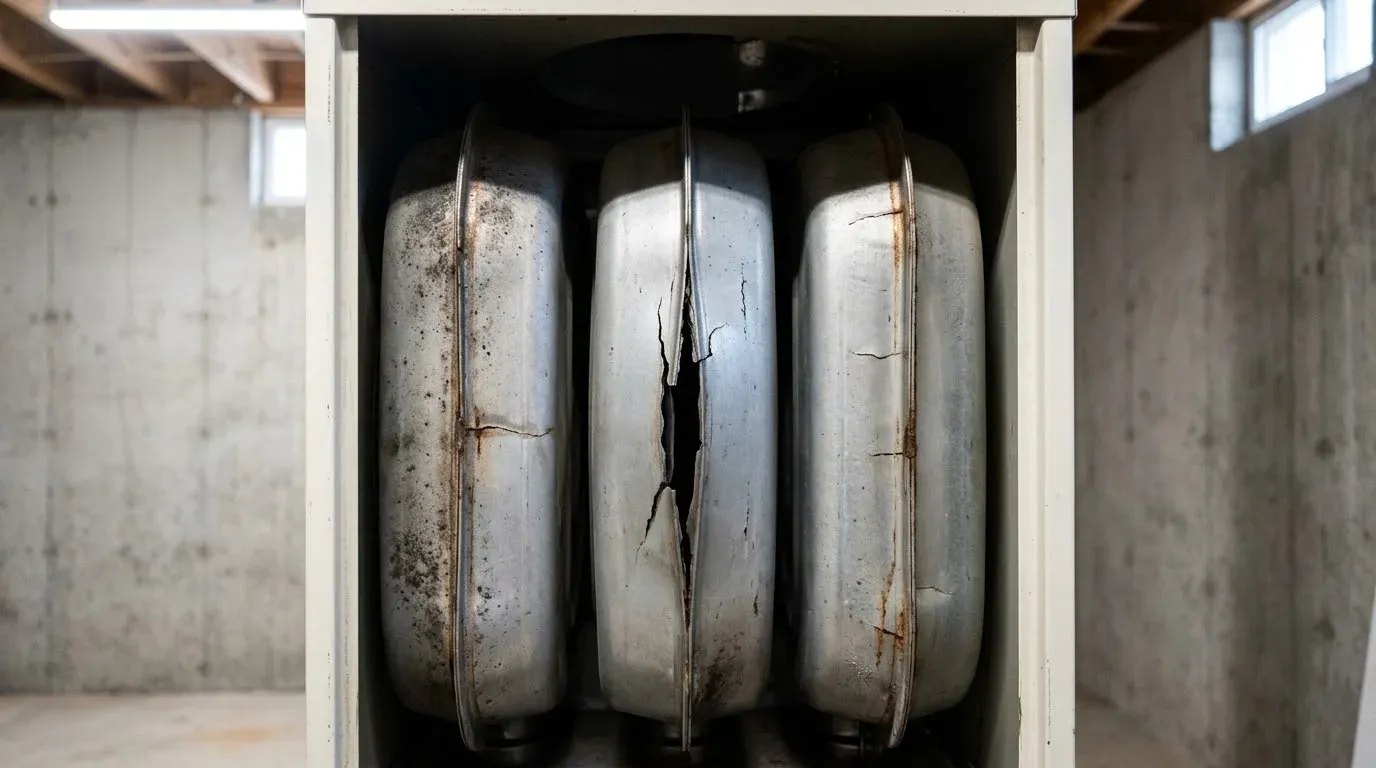
You cannot see this without taking the furnace apart, so the signs to watch are around it. Headaches, nausea, dizziness or tiredness in the house that ease when you leave are the classic symptoms of carbon monoxide, according to the U.S. Consumer Product Safety Commission. The CPSC also recommends carbon monoxide alarms on every level of the home and outside sleeping areas, ideally interconnected. If an alarm sounds, go outside and call 911. Do not go back in to turn the furnace off.
A cracked heat exchanger is diagnosed by a technician with a camera or a combustion test. On an older furnace it usually ends in a replacement rather than a repair, and that is the decision covered in our repair or replace guide.
Furnace Not Turning On? 10 Causes, Checked in Order (2026) Noise stopped and so did the heat? Work the startup sequence in order.Noises that need a technician
Have the furnace inspected once a year before the heating season, which is also what the CPSC recommends for carbon monoxide safety. Bearings and belts give plenty of warning, and a technician who hears them in October is cheaper than one who comes out on a January night to a seized motor.