A driveway quote is a square-foot price times the size of your driveway, plus whatever it takes to get the old one out. Contractors measure the length and the width, multiply, and apply their rate. Everything else in the quote, from the thickness of the slab to the strength of the concrete, is what decides whether that rate is fair.
Prices come from HomeAdvisor’s 2026 national driveway data, materials and labor together. Where your job falls in each range depends on the local labor rate, the season, and how much grading the lot needs.
- National average to pave a driveway in 2026
- $4,904
- Per square foot for a new concrete driveway
- $8–$18
- Per square foot to replace asphalt, removal included
- $8–$15
- Per square foot to break out and haul away old concrete
- $2–$6
Source: HomeAdvisor national driveway cost data (June 2026).
What does a driveway replacement cost in 2026?
| Material | National range, per sq ft | Typical life |
|---|---|---|
| Gravel | $1.25 to $4 | Needs topping up and regrading every few years |
| Chip seal (tar and chip) | $5 to $10 | About 10 years before resurfacing |
| Asphalt, replacing an old driveway | $8 to $15 | About 20 years, resurfaced every 10 to 20 |
| Concrete, plain or broom finish | $8 to $12 | Up to 40 years |
| Concrete, stamped | $12 to $18 | Up to 40 years |
| Pavers (concrete, brick, stone) | $10 to $70 | 30 to 50 years |
The asphalt figure already includes tearing out the old driveway. The concrete figures do not: removal of an old concrete slab is a separate $2 to $6 per square foot, and asphalt removal alone runs $1 to $2.
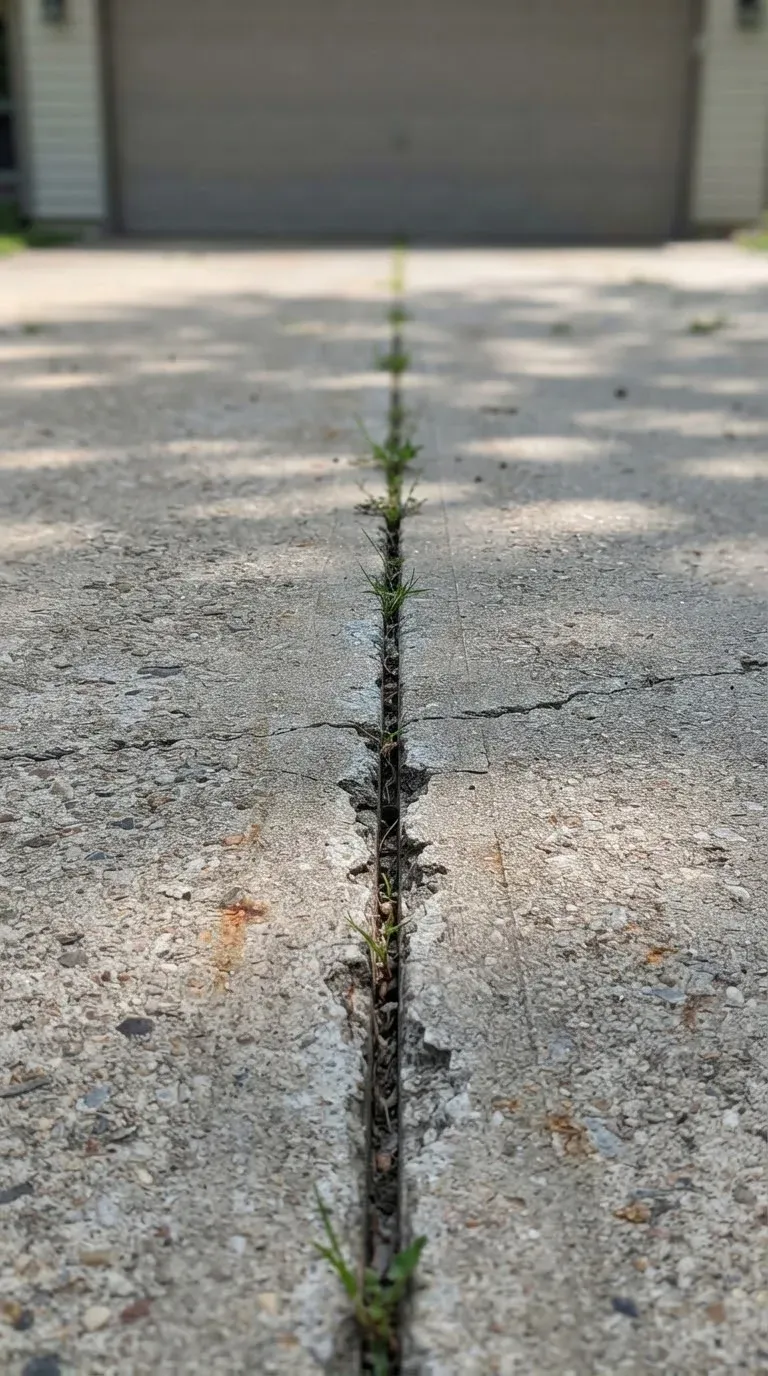
How a contractor prices your driveway
Measure the length and the width, in feet, and multiply. A two-car driveway 24 feet wide and 25 feet long is 600 square feet. A long driveway 18 feet wide and 68 feet long is 1,224. The flared wings where the driveway meets the street or the garage add a little, and some contractors round them in, others charge them.
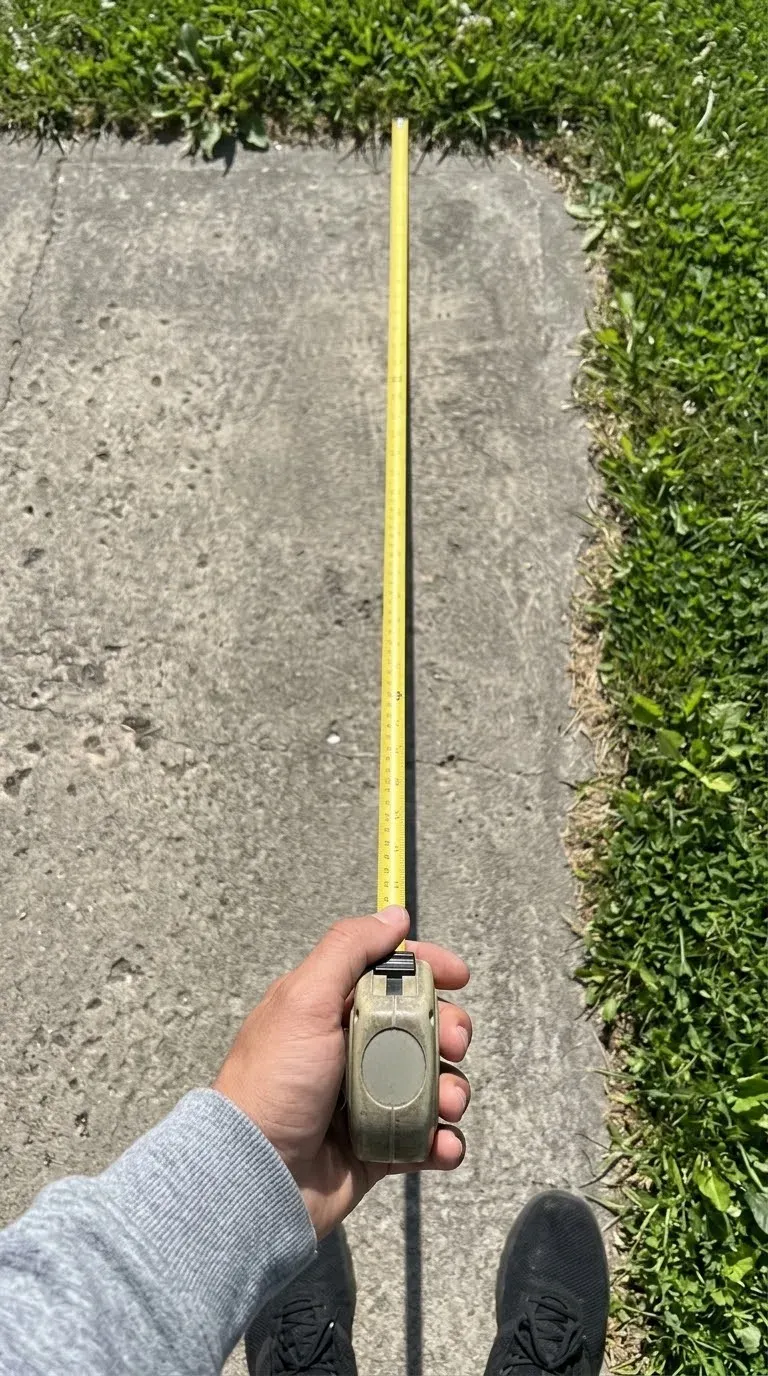
Then the rate. HomeAdvisor’s national figures for a new concrete driveway, by size, before removal of the old one:
| Driveway size | Square feet | National range |
|---|---|---|
| 10 by 20 feet | 200 | $1,600 to $3,000 |
| 12 by 24 feet | 288 | $2,300 to $4,300 |
| 20 by 20 feet | 400 | $3,200 to $6,000 |
| 24 by 24 feet | 576 | $4,600 to $8,600 |
| 24 by 36 feet | 864 | $6,900 to $13,000 |
For a replacement, add the removal. On a 600 square foot concrete driveway, that is $1,200 to $3,600 on top of $4,800 to $10,800 for the new slab, so roughly $6,000 to $14,400 all in. Some contractors quote it as one rate per square foot that covers both; in that case, check that the rate is high enough to include the tear-out, because a low all-in rate is often missing it.
Removal: the line to read twice
Breaking out an old driveway, loading it and paying to dump it is real work, and HomeAdvisor puts it at $250 to $3,000 for a typical driveway. Asphalt laid over old concrete is common on older houses, and it means two layers to break out and haul away instead of one. A steep driveway can add $1,000 to $2,500 for grading before anything is poured.
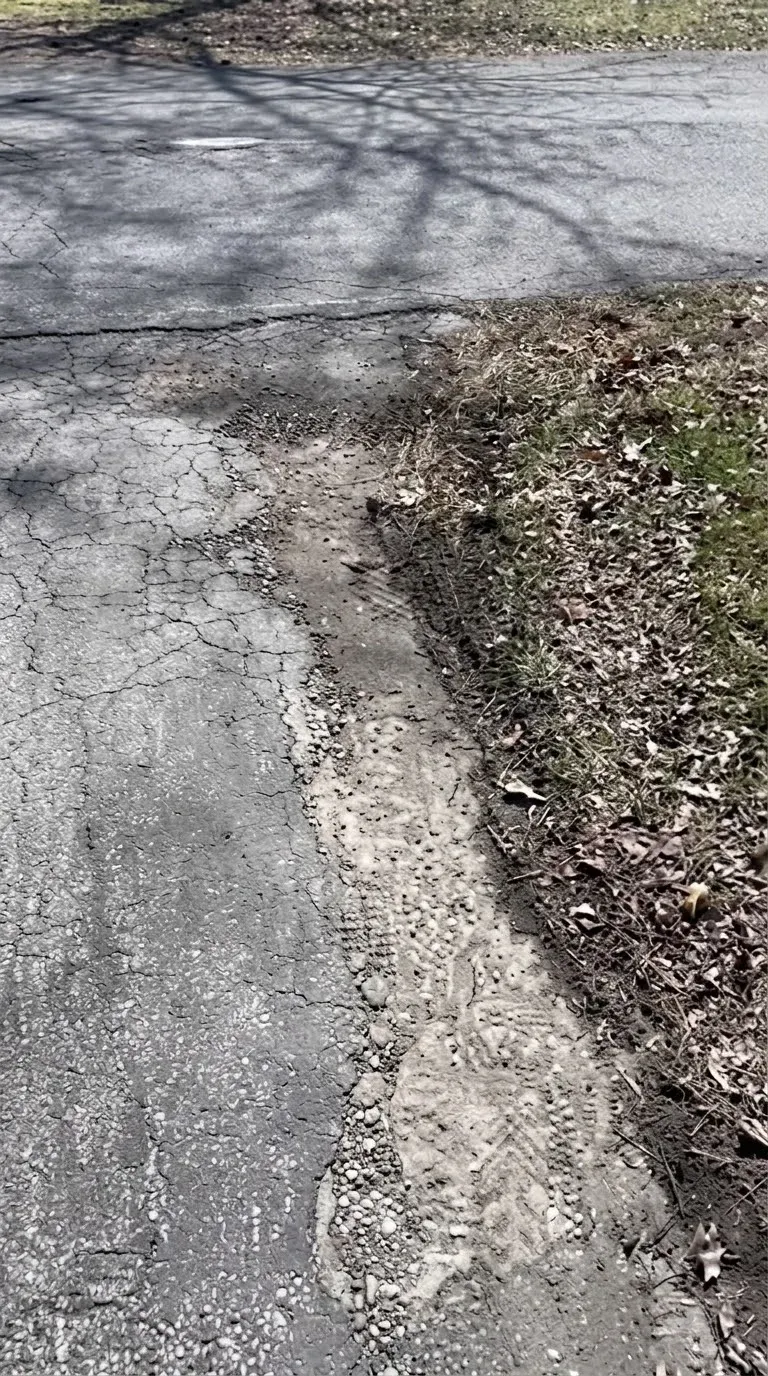
Once the old surface is out, the contractor regrades and compacts a gravel base. That base carries the weight of the car; the slab only spreads it. A quote that does not say how deep the base is, or whether it gets compacted, is leaving out the part that decides whether the new driveway settles and cracks.
Where the money goes
National figures split a concrete driveway roughly in half between materials and labor. The concrete itself is a smaller share than most people expect. Ready-mix costs $120 to $210 per cubic yard, and a 4-inch slab uses about 1.2 cubic yards per 100 square feet, so a 600 square foot driveway takes around 7.5 yards: roughly $900 to $1,600 of concrete. The rest pays for the tear-out and the dump fees, the base, the forms, the reinforcement, a crew for a day or two of work that cannot wait once the truck arrives, the equipment, insurance, and the contractor’s overhead and profit.
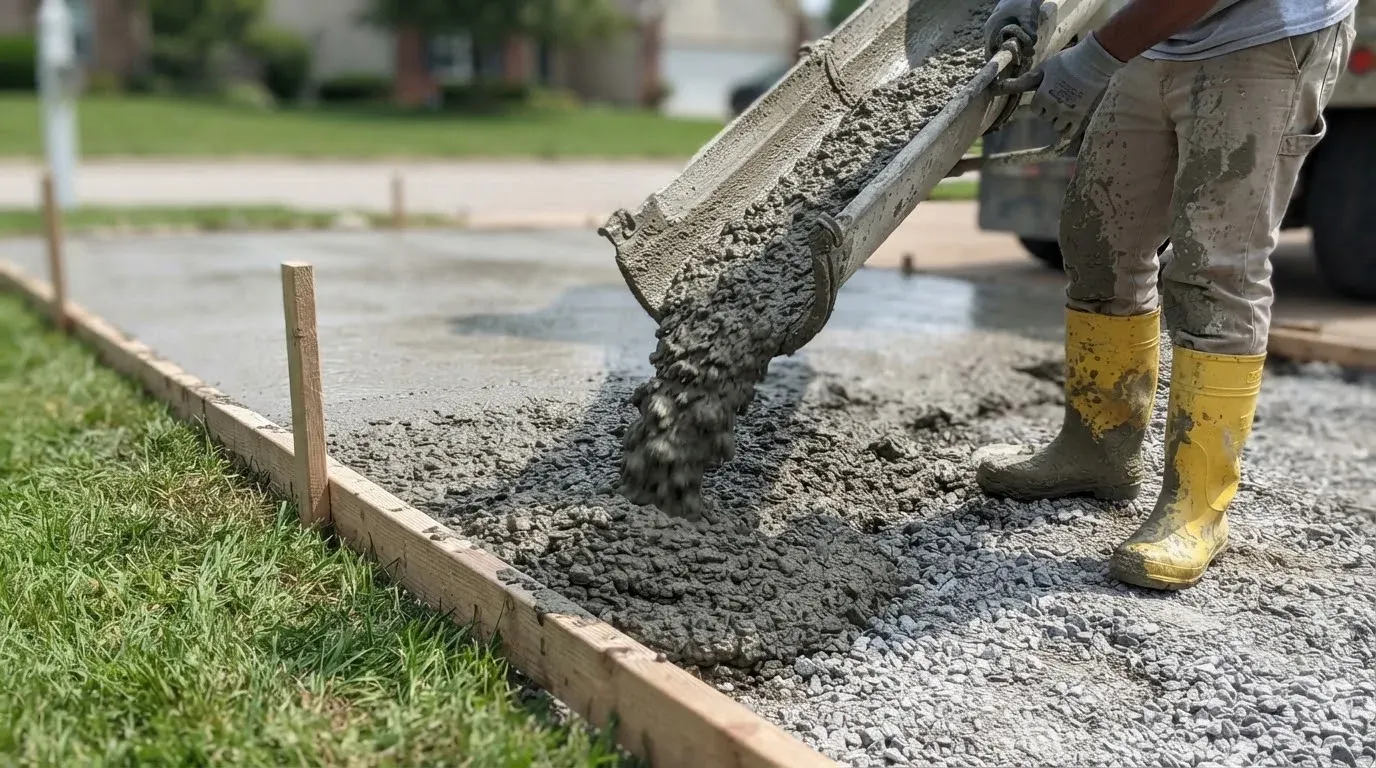
That is also why small driveways cost more per square foot than big ones: the truck, the crew and the setup cost about the same whether they pour 200 square feet or 800.
What to ask for in the quote
Two quotes at the same price per square foot can be for very different driveways. These are the specs that decide how long it lasts.
Thickness. Most residential concrete driveways are 4 inches thick, and asphalt about 2 to 3 inches over a gravel base. If a pickup, a box truck or an RV parks on it, ask for 5 inches; HomeAdvisor’s guidance goes to 6 or 8 for heavy vehicles. Each extra inch adds about a quarter more concrete to the bill.
Concrete strength. Concrete is ordered by its strength in psi. The model residential code, the IRC, sets 3,500 psi and air-entrained concrete for garage and carport slabs exposed to the weather in regions with severe freeze-thaw (Table R402.2), and many cities hold driveways to the same figure. Air entrainment puts tiny air bubbles in the mix that keep freezing water from breaking up the surface. In cold-winter states, ask for both in writing.
Reinforcement. Steel rebar or wire mesh in a grid holds a cracked slab together and helps it carry heavy loads; rebar adds about $0.70 to $2.55 per linear foot. Synthetic fibers mixed into the concrete help control the small cracks that form as it dries, and on a light-duty driveway some contractors use fiber alone. Ask which one the quote includes and why.
Slope. The surface has to drain away from the house. The IRC asks for hard surfaces within 10 feet of the foundation to slope at least 2 percent away from it, about a quarter inch per foot.
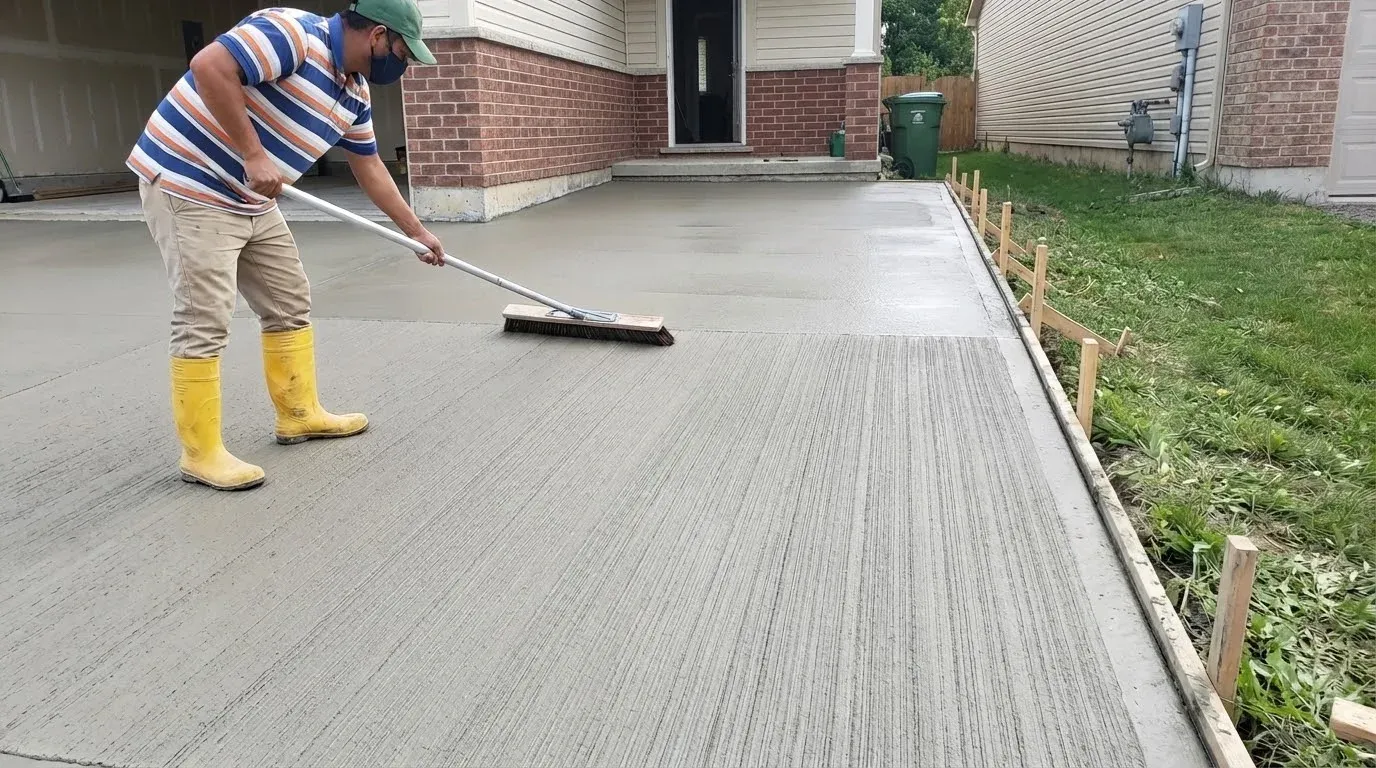
The finish. A broom finish, dragged across the wet concrete, gives tires and shoes grip and is the standard for driveways. Stamped, colored or exposed aggregate finishes look better and cost more: up to $18 per square foot for stamped, $18 to $20 for stained.
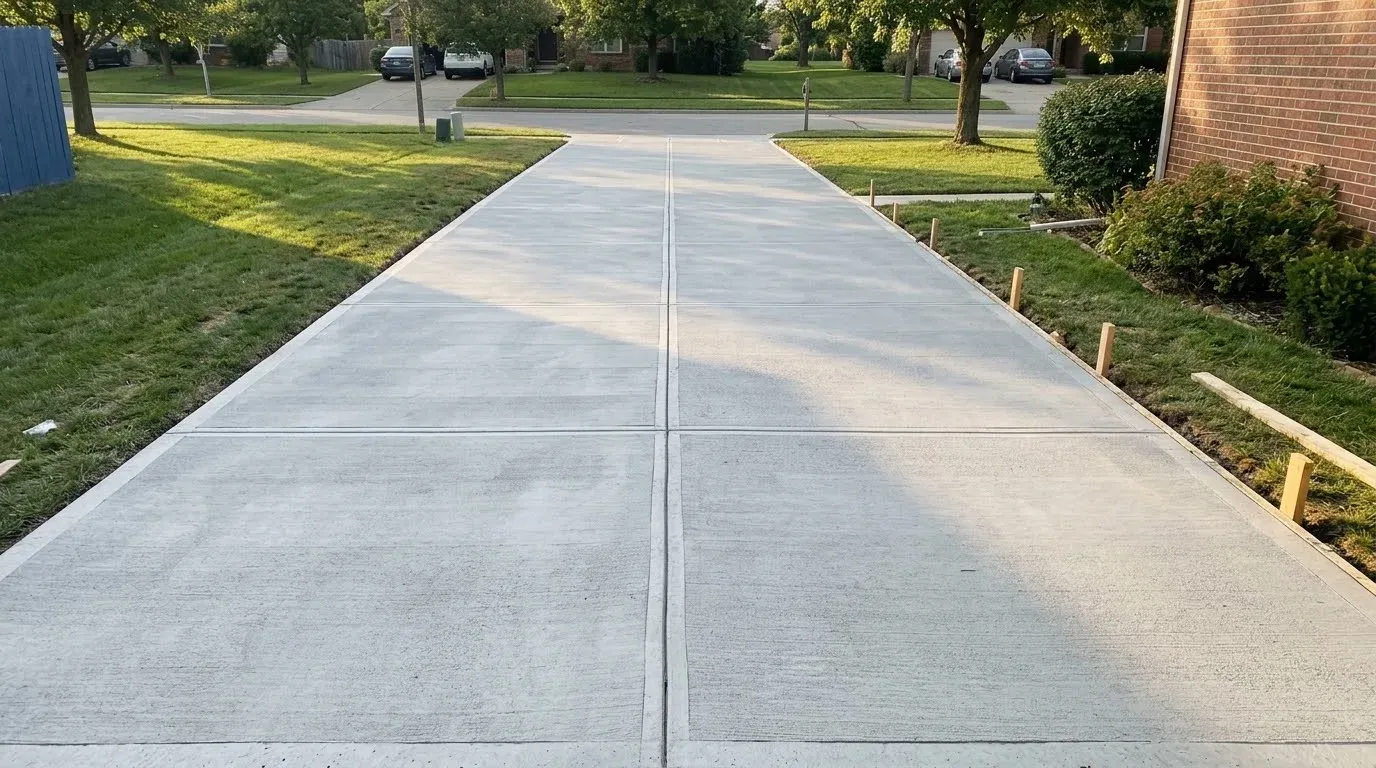
Control joints. Concrete shrinks as it cures and moves with the seasons, so it will crack. Joints cut or tooled into the slab decide where. The American Concrete Institute’s rule of thumb is a joint every 2 to 3 feet per inch of thickness, so every 8 to 12 feet on a 4-inch driveway, cut about a quarter of the way through the slab within hours of the pour. Panels close to square crack less than long, narrow ones.
Cure time. Ask when you can walk on it and when you can drive on it. A week before cars is a common answer for concrete. Asphalt is usually ready for cars sooner, but stays soft in hot weather for its first months.
Concrete, asphalt or pavers?
Concrete costs more up front and lasts the longest of the poured options, up to 40 years. It can crack and scale in freezing climates, especially with de-icing salt, which is why the strength and the air entrainment matter.
Asphalt costs a little less, handles freeze-thaw cycles well and is easier to patch. It softens in hot climates, needs sealing, and needs resurfacing every 10 to 20 years. A full asphalt replacement runs $8 to $15 per square foot with removal included.
Pavers cost the most, $10 to $70 per square foot depending on concrete, brick or stone, and last 30 to 50 years. A cracked paver can be lifted out and replaced on its own, which no slab allows.
Gravel is the cheapest by far, $1.25 to $4 per square foot, and needs regrading and new stone every few years. It fits long rural driveways better than short suburban ones.
Repair, resurface or replace?
Crack filling runs $0.50 to $3 per linear foot, though most contractors set a minimum of $100 to $150 for the visit. Replacing individual slabs costs $6 to $14 per square foot, and resurfacing $3 to $5 for concrete or $3 to $7 for an asphalt overlay. All of these assume the base underneath is still good. Wide cracks, slabs that rock or sink, or a surface broken up in many places mean the base has failed, and anything laid on top will crack again along the same lines.
Reading two driveway bids side by side
When one bid comes in far below the rest, check four lines first: slab thickness, concrete strength, base depth and removal. They are the cheapest corners to cut, and the only ones you cannot inspect once the concrete is poured.