An electric furnace is the cheapest central heating system to install and one of the most expensive to run. There is no gas line, no flue and no burner, only a blower and a few banks of resistance coils, which is why the equipment costs less than a gas furnace. The bill that varies most is the wiring: a furnace that draws 80 amps or more has to have its own circuits, and an older panel may not have the room.
- National average, electric furnace installed
- $5,148
- The furnace unit alone, most homes
- $800–$2,600
- Average US residential electricity price per kWh, 2026 forecast
- 18.2¢
- Electricity a heat pump saves over resistance heat
- ~50%
Installed prices: HomeAdvisor, June 2026. Electricity price: US Energy Information Administration. Heat pump savings: US Department of Energy.
What an electric furnace costs to install in 2026
HomeAdvisor’s June 2026 figures put a typical installed electric furnace at $2,247 to $8,116, averaging $5,148. That price splits into two parts of roughly equal weight: the unit, $800 to $2,600 for most homes and up to $4,500 for large ones, and labor, $300 to $2,500 at $50 to $150 an hour.
Where your quote lands depends on which of three jobs it is:
- Swap on existing wiring and ducts. The new furnace is the same size as the old one, and the installer reconnects it. This is the $1,300 end of HomeAdvisor’s $1,300 to $8,400 replacement range.
- Swap with upgrades. The new unit is bigger, or the ducts leak, or the panel is full. Expect the electrical and duct lines from the table below on top of the furnace.
- First install in a house that never had one. New ducts, new circuits, often a new panel: HomeAdvisor puts these at $4,700 to $19,100, mostly because of the ductwork.
Converting from an oil furnace adds the removal of the burner, tank and flue, which HomeAdvisor prices at $1,800 to $6,200 for the conversion, removal included.
Price by size, in kilowatts
Electric furnaces are rated in kilowatts (kW), and each kilowatt of elements produces 3,412 BTU per hour. HomeAdvisor sizes the unit by heat output and floor area:
The floor area is only a starting point: the same 2,000 square feet needs about 30 to 35 BTU per square foot in a warm climate and 50 to 60 in a cold one. A contractor who quotes from the square footage alone is guessing. The right number comes from a room-by-room heat-loss calculation (ACCA Manual J), and it matters more here than with gas, because every extra kilowatt adds elements, amps and wire.
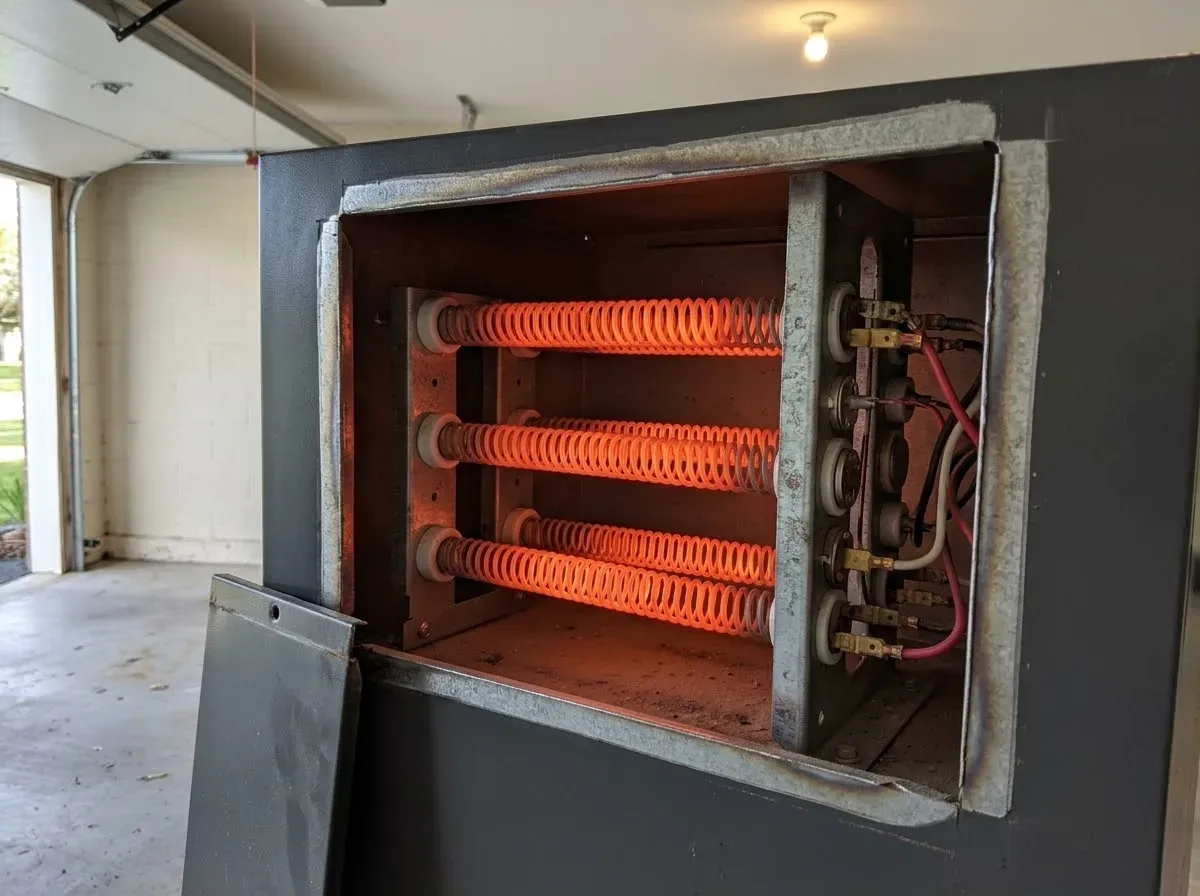
Inside, a 15 or 20 kW furnace splits its coils into two to four banks that switch on in stages, so a mild day runs one bank and a cold night runs all of them.
The wiring is the line that surprises people
Current is what makes an electric furnace expensive to connect. At 240 volts, a 15 kW furnace draws about 63 amps and a 20 kW unit about 83. The electrical code treats a furnace as a continuous load and sizes its circuits at 125% of that draw, and it splits element loads over 48 amps across separate circuits, so a 20 kW furnace typically lands on two breakers totaling 100 amps or more.
Two consequences follow:
- A dedicated circuit, $500 to $2,000 nationally. Even a replacement needs one if the new unit is larger than the old one or the existing wire is undersized for it.
- A panel upgrade, $750 to $2,000 to go from 100 to 200 amps. That is HomeAdvisor’s June 2026 range, before any new branch wiring. A 100-amp service with an electric range and a dryer often has no room left for 100 more amps of heat. If the utility has to upgrade the service drop or the meter, that work is scheduled with the power company and priced on top, so get the electrician’s quote in writing.
A permit, $200 to $500, covers the inspection of both the electrical and the mechanical work. An unpermitted furnace and circuit tend to surface at the worst time, in a buyer’s inspection.
What it costs to run, hour by hour
An electric furnace converts every kilowatt-hour into heat: it is 100% efficient at the point of use. That does not make it cheap. The power plant lost most of the fuel’s energy before the electricity reached your panel, and the Department of Energy notes that electric furnaces cost more to operate than baseboard heaters, because ducts lose part of the heat on the way.
The math is simple: kilowatts times hours times your rate. The EIA expects US residential electricity to average 18.2 cents per kWh in 2026:
Your own rate is on your electric bill, and it can be half or double the national average depending on the state. Staged elements cut the real cost below these figures on mild days, since fewer banks run.
Pairing it with a heat pump
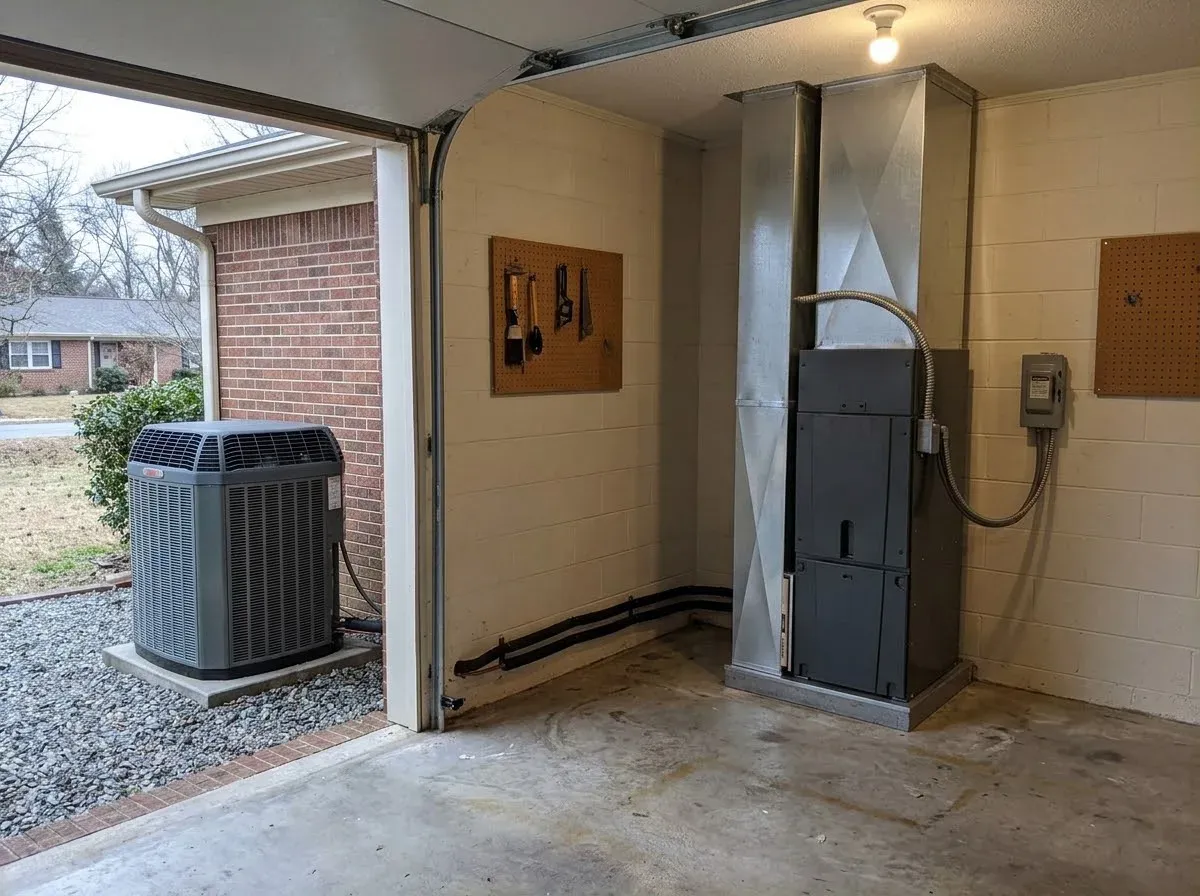
When electricity is the only fuel, the Department of Energy points to heat pumps, which cut electricity use by about 50% compared with resistance heat. In that setup the electric furnace becomes the indoor air handler: the heat pump does the heating while it is mild, and the elements come on as backup heat when the outdoor temperature falls toward the heat pump’s limit, or during defrost. With a standard heat pump that switchover usually falls somewhere between 25°F and 35°F; the Bonneville Power Administration’s program rules, for example, lock the strips out above 35°F. Cold-climate models keep heating well below that.
The trade-off is the upfront price: an air-source heat pump costs $4,500 to $8,000 installed nationally, HomeAdvisor reports for June 2026. It pays back faster the longer the heating season and the higher your electric rate. The best moment to add one is when the central AC is due for replacement anyway, since the heat pump takes the AC’s place outdoors. How the two hand off is covered in why a heat pump stops heating.
What changes the price between three quotes
The blower is the main difference between an entry, mid-range and premium electric furnace: the elements are the same simple coils in all three. A variable-speed blower moves air more slowly and evenly, which helps a two-story house with a cold upstairs, and it is what makes a heat pump pairing run at its best. For a small home in a mild climate, a single-speed unit does the job.
Comparing electric furnace bids
If you are weighing an electric furnace against keeping an older gas or oil one, the repair-or-replace test is the place to start, and a yearly tune-up on the new unit checks its element banks, sequencers and blower before the first cold night.