A gas water heater keeps its pilot only as long as the thermocouple says there is a flame. That copper-tipped rod sits in the pilot flame, turns its heat into a few millivolts, and that tiny current holds a magnet in the gas valve open. Anything that cools the tip, weakens the flame or starves it of air shuts the gas off. The timing of the outage is the clue to which one it is.
- A service call to check and relight the pilot, nationally
- $50–$150
- Thermocouple replaced by a plumber
- ~$150
- Gas control valve replaced
- ~$350
- Cool-down before you clean the air intake, per A.O. Smith
- 15 min
Prices: HomeAdvisor water heater repair data, updated June 17, 2026. Cleaning procedure: A.O. Smith technical bulletin 186.
When does it go out?
Relight it by the label on the tank and watch. That one observation sorts the causes:
Smell rotten eggs at any point and stop: do not touch the knob or a light switch, leave, and call the gas utility from outside.
Dies the moment you let go
Is the thermocouple loose or sooty?
Before buying a part, check the two things that make a good thermocouple act like a dead one. First, its connection: the thin copper tube ends in a nut on the side of the gas valve. If that nut has backed off, the few millivolts never arrive. With the gas control set to Off, snug it finger-tight and then a quarter turn with a wrench; it seals by contact, so more force only damages it.
Second, the tip. The top of the rod has to sit in the pilot flame, with the flame wrapping its upper half. Years of heat leave a black or gray crust on it that insulates it from the flame.
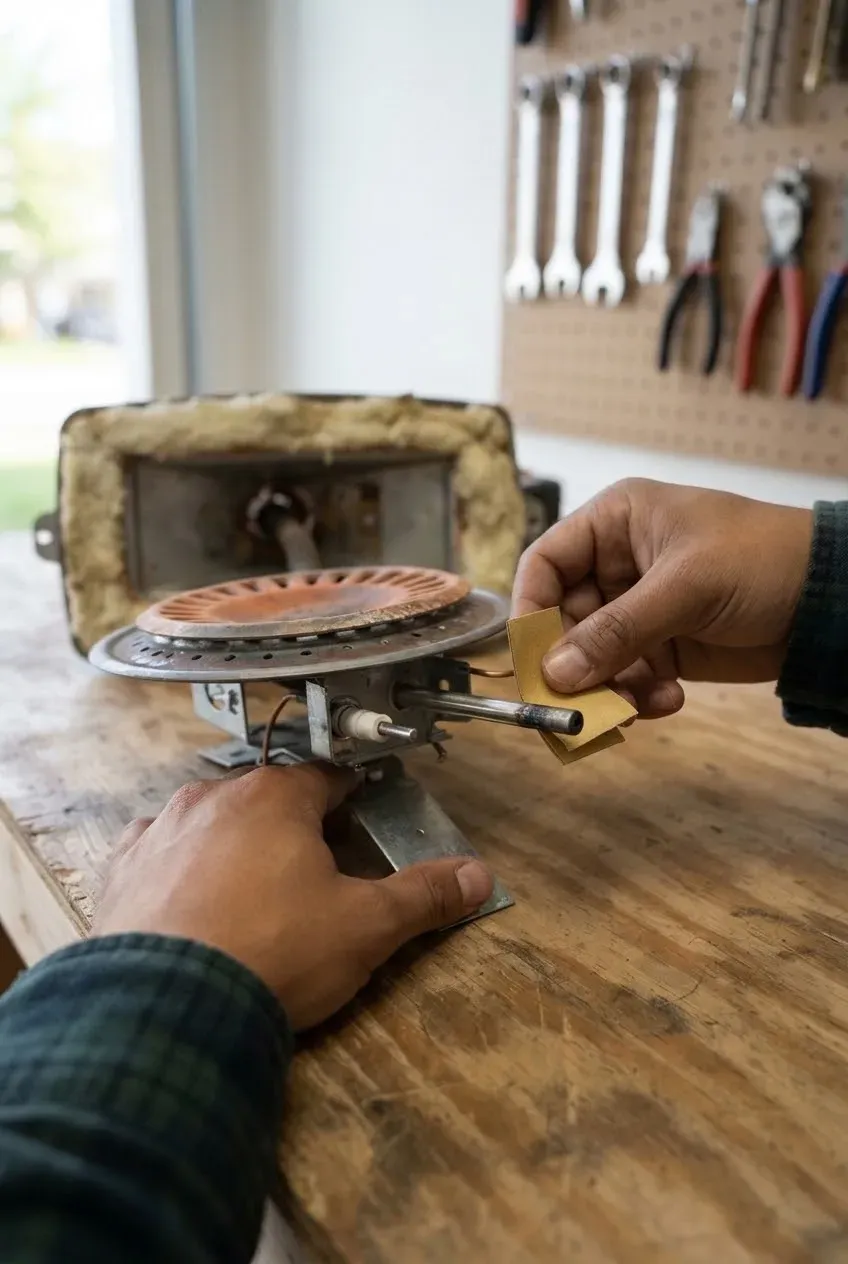
On older open-burner tanks you can reach it through the access door and rub it with fine sandpaper or emery cloth until it is bright. On most tanks built since the mid-2000s, the burner sits behind a sealed door with a gasket, and getting to the tip means disconnecting the pilot tube, the burner feed and the thermocouple and sliding the whole assembly out. That is work on gas fittings, and the gasket and every connection have to be resealed and leak-tested with soapy water afterward. If you are not comfortable doing that, stop at the nut.
Has the thermocouple simply worn out?
A thermocouple is a wear part. When a clean, tight one still lets the pilot die on release, it has stopped producing enough current, and replacing it is the most common gas water heater repair: around $150 with a plumber, HomeAdvisor reports.
The part itself is cheap, but the right one matters. Universal thermocouples come in 18, 24 and 36-inch lengths, and many sealed-burner tanks use a pilot assembly where the thermocouple, the pilot tube and the igniter come as one unit. Order by the model number on the rating plate, from the manufacturer if you can. After any replacement, the new tip has to sit where the flame hits it, not beside it.
Stays lit, then goes out later
Is the air intake at the base clogged with lint?
Since the mid-2000s, nearly every standard gas tank is built to resist igniting flammable vapors, such as gasoline fumes in a garage. Its burner breathes through a flame arrestor and a screen at the bottom of the tank instead of through an open door. In a laundry room, a garage or next to a dryer vent, that screen collects lint and dust, and the flame slowly suffocates.
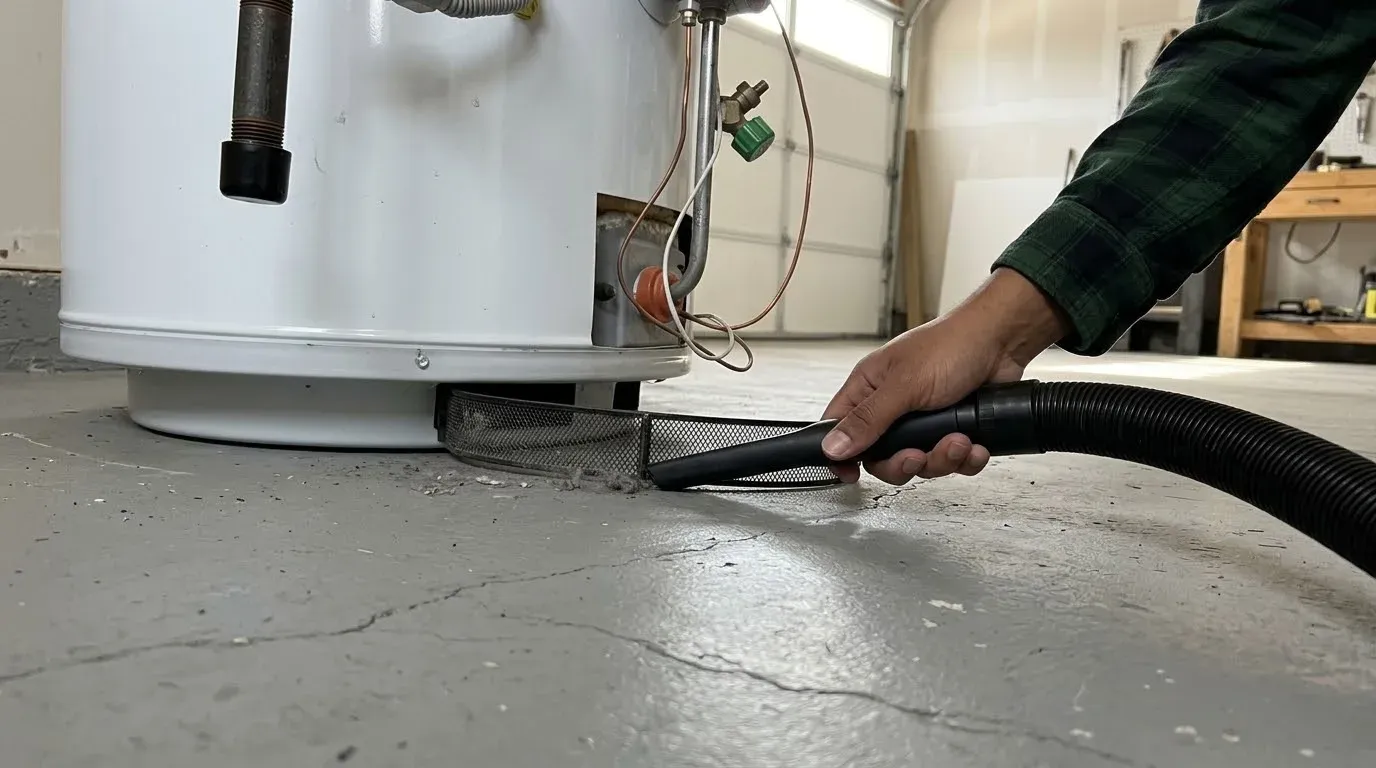
The symptom is a pilot that lights and holds, then is out again hours or days later, often after the burner has run. On Bradford White’s sealed-burner tanks, the service manual notes that a thermal switch shuts down the burner and the pilot when lint, dust or oil restricts the airflow through the arrestor. Technicians replace a lot of good thermocouples on tanks whose only problem was this screen.
A.O. Smith’s cleaning procedure is the one to follow on most tanks: turn the gas control to Off, let the heater cool about 15 minutes, remove the outer door and any snap-in filter, then vacuum the intake openings and the floor around the base. In dusty rooms, it suggests checking the filter as often as once a month. Relight by the label once it is clean. If your tank has a thermal switch with a reset button, it may need resetting; if it trips again, call.
Is debris falling onto the burner?
The flue tube runs up through the middle of the tank, right above the burner. As a tank ages, rust and scale flake off inside it and drop onto the burner and the pilot. A pile of rust can block burner ports, choke the pilot opening, or knock the thermocouple out of the flame.
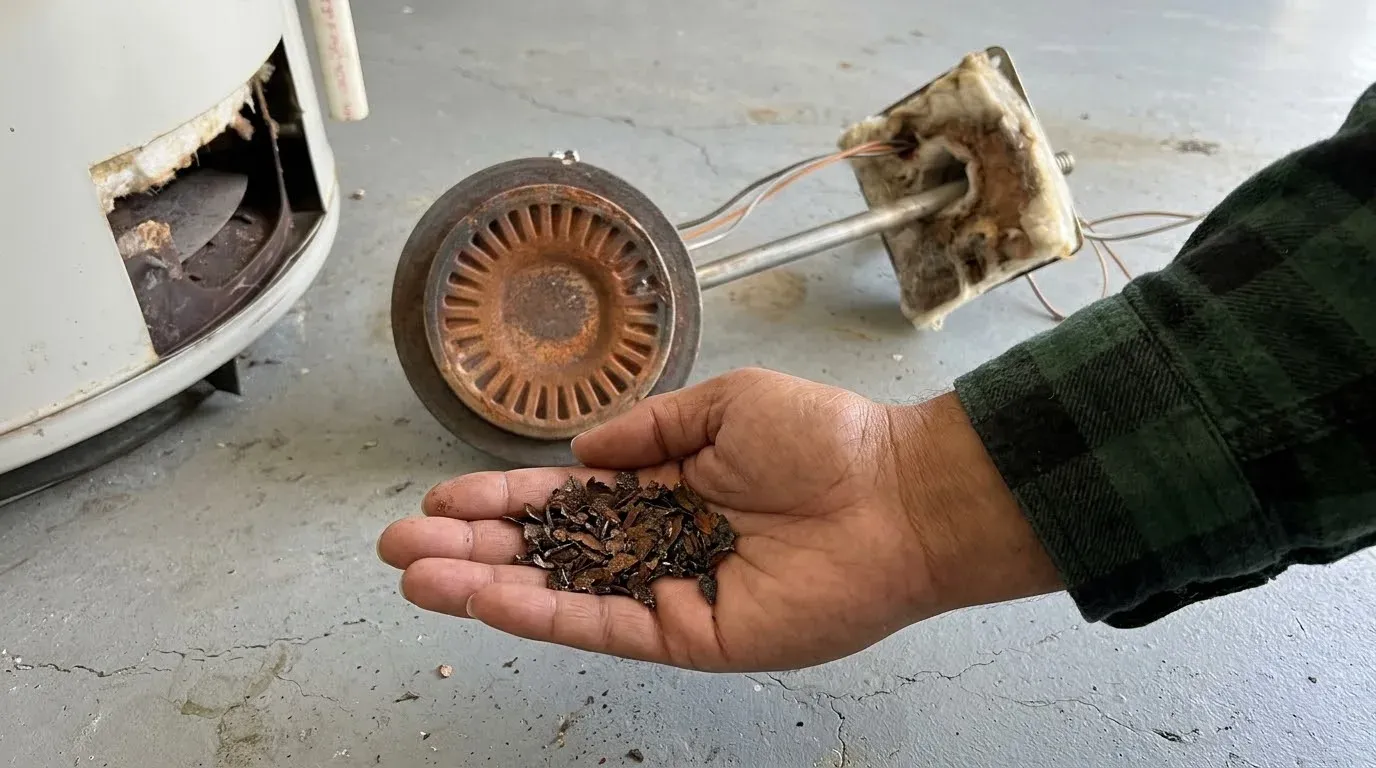
The same position explains another cause listed in A.O. Smith’s instruction manual: condensation running down the flue onto the burner can put out the pilot. It is most likely when a tank full of cold incoming water first fires. A pilot flame that looks small, yellow or lazy, instead of a steady blue cone around the thermocouple tip, usually means the pilot orifice is partly blocked. Cleaning the burner and the orifice is a gas-fitting job for a plumber. On a tank old enough to shed this much rust, it is also a sign to price a replacement.
Goes out when the burner fires, or on windy days
Is exhaust coming back down the flue?
A standard gas tank vents by natural draft: hot exhaust rises out of the flue, through the draft hood on top of the tank, and up the vent. If the vent is blocked, disconnected or too short to draw, or wind pushes air down it, the exhaust rolls back out under the hood and the burner and pilot breathe their own exhaust. The pilot goes out, and the same spill puts carbon monoxide in the room.
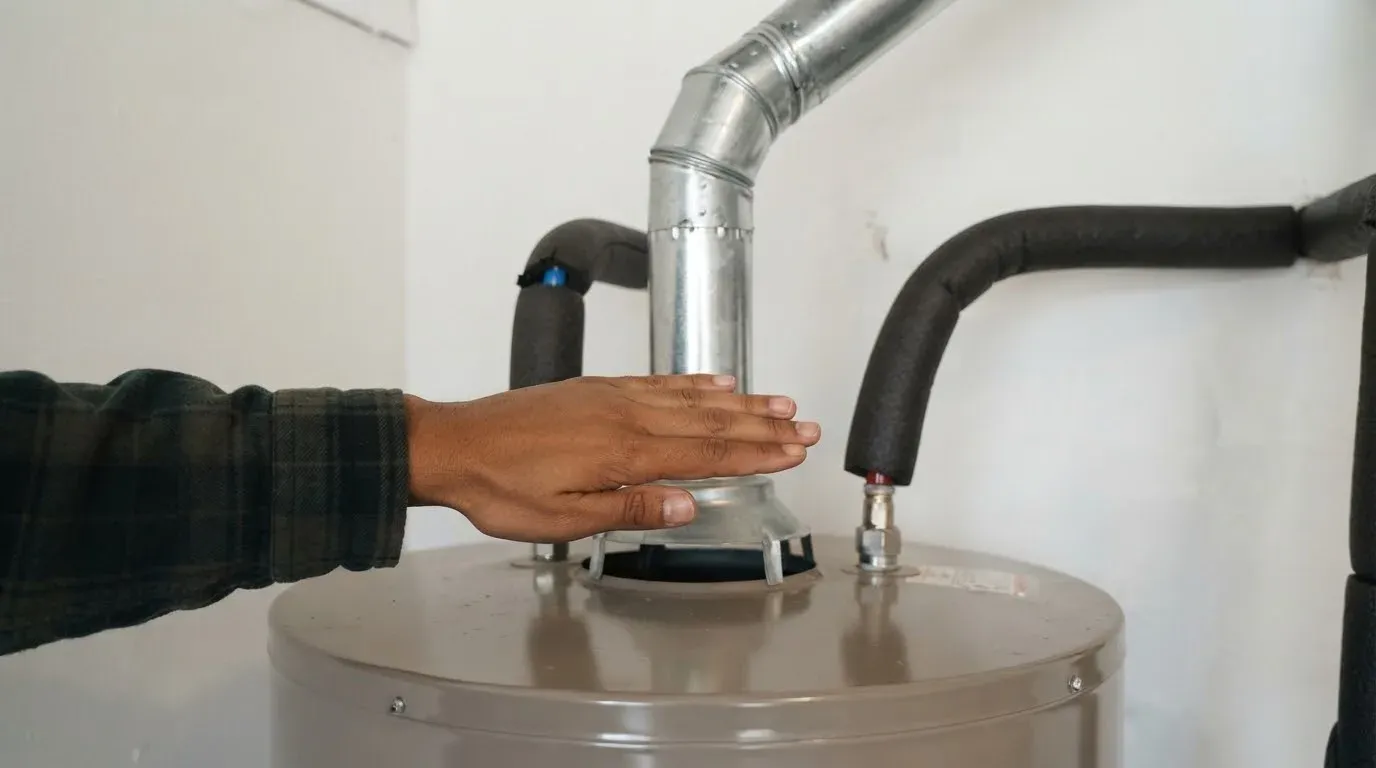
A quick check: let the burner run for five minutes, then hold the back of your hand near the gap under the draft hood. You should feel nothing or a gentle pull inward. Warm, damp air pushing out at you means the vent is not drawing. Do not run the heater that way: turn the control to Pilot or Off and call a plumber to inspect the vent and the chimney. A CO alarm near the heater is cheap insurance either way.
A new thermocouple does not fix it
Has the gas control valve failed?
If a new, clean, correctly placed thermocouple still lets the pilot die on release, the problem is on the other end: the magnet inside the gas control valve that the thermocouple’s current is supposed to hold. A valve that has lost it cannot keep the gas on. The same is true when the valve’s own high-limit cutout has tripped or failed.
Replacing the valve means draining the tank, unthreading the old control from its side and leak-testing the new one, about $350 installed nationally. On a tank more than about 10 years old, price that against a new heater at $875 to $1,800 before approving it.
No pilot knob to hold
Is it an electronic-ignition tank?
Newer tanks often have a white plastic control with a status light instead of a knob you hold down. Many generate their own power with a thermopile, a bundle of thermocouples in the pilot flame, and use a flame sensor in the combustion chamber. When they lose the pilot, the status light blinks a code; the legend is printed on the control or the label. A lint-clogged intake causes the same shutdowns here, so clean it first. Past that, the code usually points to the thermopile, the sensor or the control itself, parts a plumber replaces together on many models.
No Hot Water? 7 Causes, Gas and Electric (2026) Pilot is lit and holding, but the water is still cold or runs out fast? The causes are elsewhere.Hand it to a plumber when
A pilot that needed relighting once after a gust of wind or a slammed door needs nothing more. One that goes out again within days has a cause: vacuum the intake first, because it costs nothing and it is the fault most often mistaken for a dead thermocouple.