You turn on the shower and it stays cold. On an electric water heater, the first thing worth checking is a small red button hidden behind a panel on the side of the tank. Pressing it takes five minutes and a screwdriver. Knowing what it means when it trips is the part most guides skip.
- Time to reset, start to finish
- 5 min
- Water temperature that trips the button
- ~170–180°F
- Voltage at the terminals beside it
- 240V
- Wait before you test the hot tap
- 1 hour
Sources: manufacturer installation manuals for electric tank heaters, and a 2026 walkthrough on a 50-gallon Ruud electric tank.
What the reset button actually does
The red button is the reset for the high-limit switch, also called the ECO (energy cut-off). It sits on top of the upper thermostat and has one job: if the water in the tank gets dangerously hot, it cuts power to both heating elements and stays off until someone presses it back in.
The normal thermostats are meant to stop the water at your setting, usually 120 to 140°F. The high-limit switch only steps in when they fail to, at roughly 170 to 180°F. So a tripped button is not the fault itself. It is the heater telling you the water got hotter than it ever should.
That is why the button is worth one press and not two.
Before you start: does your heater have one?
If you have a gas tank and no hot water, skip ahead to the gas causes in our no-hot-water guide. Everything below is for electric tanks.
How to reset an electric water heater
What follows is the same routine a homeowner filmed on a 50-gallon Ruud electric tank in their garage in 2026. The house had no hot water at any tap; the reset brought it back. The whole job, panel to breaker and back, took under five minutes of work plus an hour of waiting.
1. Turn off the breaker
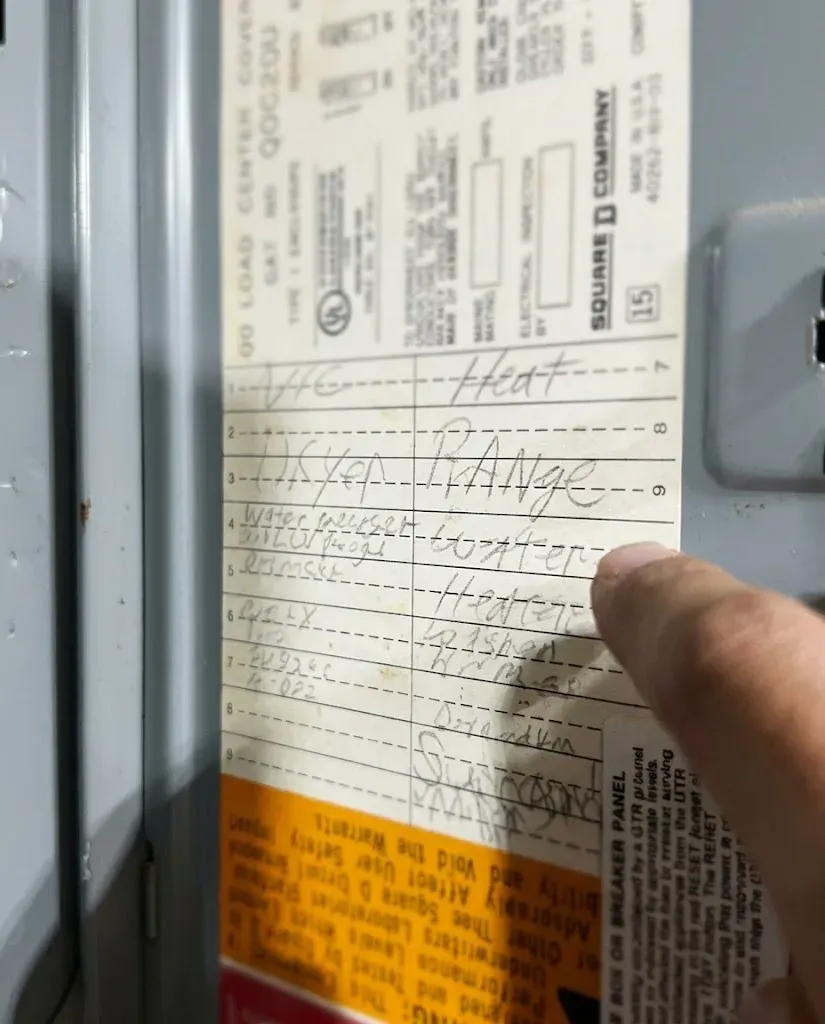
Find the water heater on the directory inside the panel door. Whoever wired the house usually wrote it in by hand, next to the circuit numbers. In the video, the water heater sat on circuits 10 and 12. Count down the numbers stamped beside the breakers to the matching ones and switch it off.
A water heater runs on a double-pole breaker: one wide handle covering two slots. If the breaker you found is a single slim one, it is the wrong breaker.
Do not skip this step because the heater “isn’t working anyway”. The terminals right beside the reset button carry 240 volts whenever the breaker is on, whether the water is hot or not.
2. Open the upper access panel
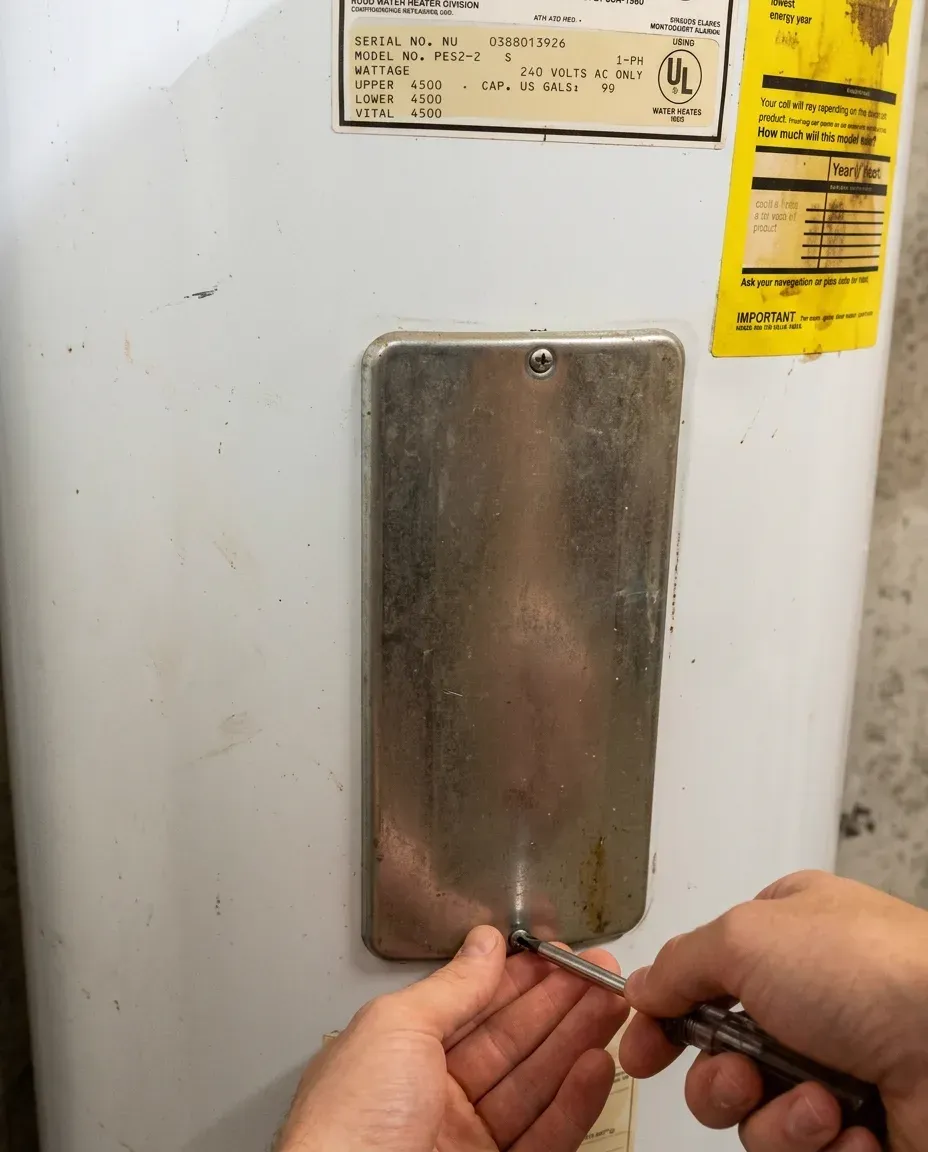
Electric tanks have two panels on the side: upper and lower. The reset button is always behind the upper one. On most models it is held by two Phillips screws. Put them somewhere you will find them again.
While you are there, read the rating plate. It tells you the voltage (almost always 240V) and the element wattage, which you will need if it comes to testing or replacing an element later. The tank in the video had two 4,500-watt elements on a 50-gallon tank, the most common setup in the US.
3. Fold back the insulation and press the button
Behind the panel there is a pad of fiberglass or foam insulation. Pull it out gently; gloves help with fiberglass. Underneath you will see a plastic safety cover over the thermostat with a round hole in it. The red button is in that hole.
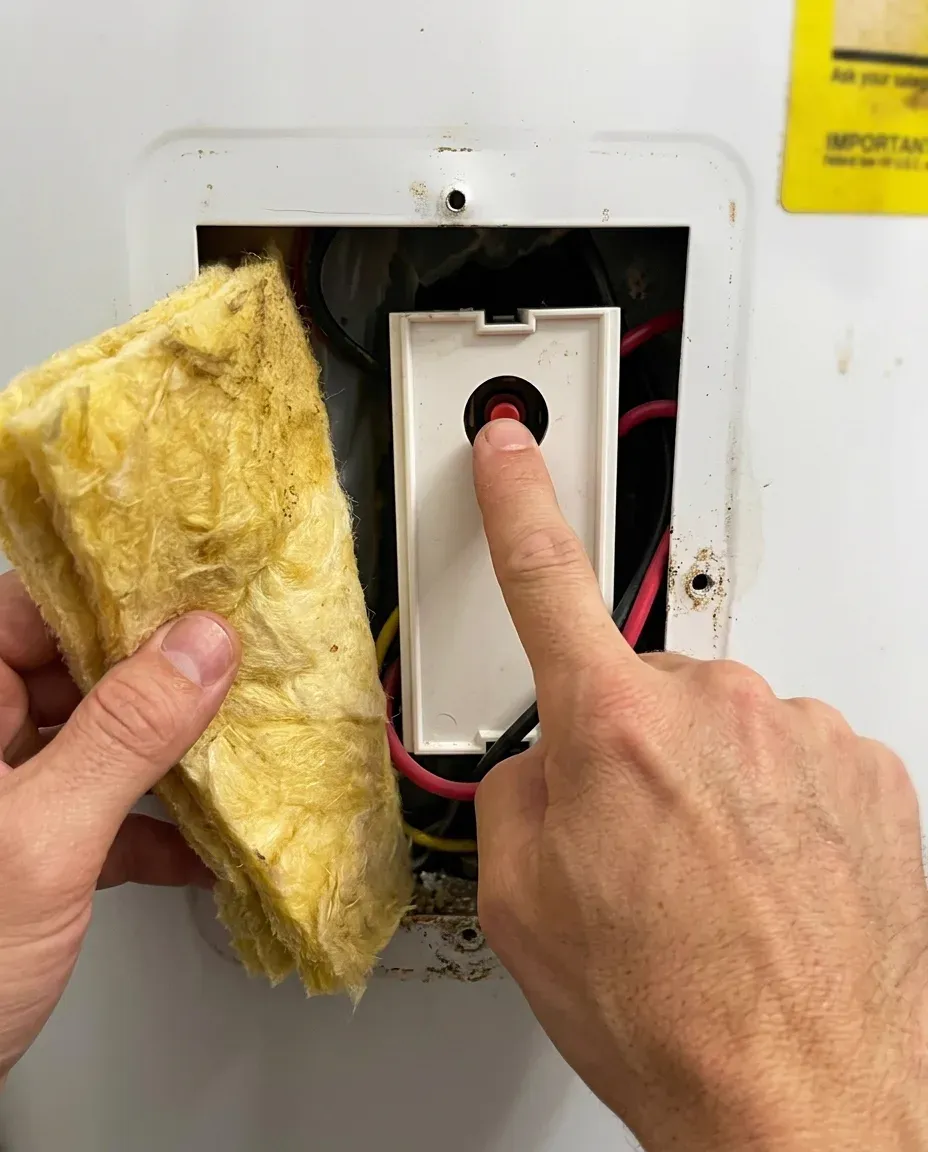
Press it firmly with a finger. If the switch had tripped, you will feel and often hear a click. If nothing clicks, the button was not tripped and the problem is elsewhere: jump to what to check next.
Do not take the plastic cover off, and do not poke at anything with the screwdriver. You only need the button.
4. Close up before the power goes back on
Push the insulation back in place so it covers the thermostat, then refit the panel. Start both screws by hand so the threads catch straight, then snug them with the screwdriver. They only need to be tight enough that the panel does not shift.
The order matters: the panel goes back before the breaker goes on, so that live terminals are never exposed.
5. Turn the breaker back on
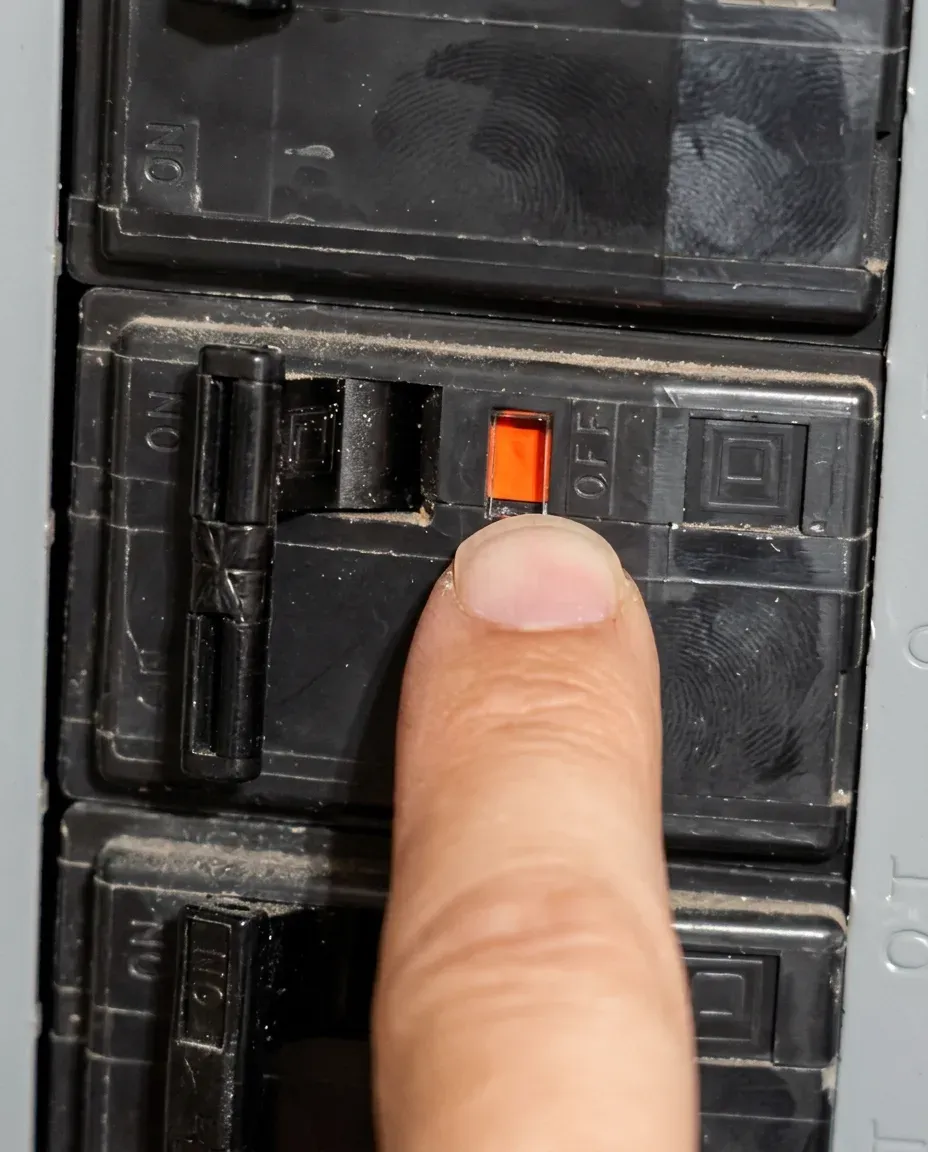
Push the breaker firmly to the ON position until it clicks. Every breaker is labeled with ON and OFF, so check the marking rather than assuming which way is which: the direction depends on which side of the panel the breaker sits.
While you are at the panel, look at the water heater breaker closely. On many brands, a breaker that has tripped (rather than been switched off) shows a red or orange flag in a small window, or rests in a middle position. To reset a tripped breaker, push it hard all the way to OFF first, then back to ON. A tripped breaker is a separate fault from a tripped high-limit, and it is worth knowing which one you had.
6. Wait an hour, then test
Set a timer for one hour, then run a hot tap. The water should be clearly warm, if not yet fully hot.
If it trips again
If the button holds and the hot water comes back, note the date and move on. A one-off trip after a power surge or a brownout happens, and it is not worth chasing.
If it trips again within days or weeks, stop pressing it. Something is driving the water past 170°F, and resetting it only puts that tank back into service. The usual causes, from most to least common:
- Upper thermostat stuck closed. Its contacts weld together and it never switches the element off. The high-limit switch is built into the same part, so the fix is replacing the upper thermostat.
- An element shorted to the tank. A failed element can keep heating even with the thermostat open. A meter test shows it immediately.
- Loose or burnt wiring at the thermostat or element terminals. Heat at a loose connection can trip the switch on its own. Look for darkened insulation or melted plastic.
- A faulty high-limit switch. Old switches can trip at lower and lower temperatures. Again, it comes as part of the upper thermostat.
- Thermostat set at its maximum. Rarely the whole story, but a setting near 150°F leaves little margin. 120°F is enough for most homes.
If the reset did not work
If the button did not click, or it clicked but the water is still cold after two hours, the high-limit switch was not the problem, or not the only one. In order:
- Check the breaker again. A double-pole breaker can lose one leg and still look on. That gives exactly the symptoms of a dead element.
- Test the elements. With the power off, disconnect one wire from each element and measure across its two terminals with a multimeter on ohms. A healthy 4,500-watt, 240-volt element reads about 13 ohms (a 3,500-watt one, about 16). An open reading means it is burned out.
- Test the thermostats. That takes power on and a meter on live terminals, which is a job for an electrician or a water heater tech if you are not used to working live.
The lower panel has its own thermostat and element but no reset button, so there is nothing to press down there.
What the repair costs if it comes to that
Both of the usual culprits are cheap parts. Elements and thermostats sell for roughly $20 to $40 each at hardware stores; most of what you pay a professional for is the diagnosis and the labor.
| Repair, installed | Low | High |
|---|---|---|
| Upper or lower thermostat replacement | $200 | $350 |
| Electric heating element replacement | $200 | $400 |
Element replacement means draining the tank, which is why it costs more than the part suggests.
On a tank more than 10 to 12 years old, a repeat trip is a good moment to ask whether the heater is worth another repair. Here is what a water heater replacement costs in 2026.