Both burn the same fuels and both sit in the basement, but they move heat in opposite ways. A furnace warms air and pushes it through ducts. A boiler warms water and sends it through pipes. Nearly every difference in price, comfort, running cost and upkeep follows from that one fact.
- US homes heated mainly by a furnace, and by a boiler
- 60% vs 7.5%
- Average furnace and boiler replacement, installed
- $4,814 vs $5,913
- Federal minimum AFUE for a new gas furnace and a new gas hot water boiler
- 80% vs 84%
- Furnace heat lost by ducts in an attic, garage or crawlspace
- Up to 35%
Sources: EIA Residential Energy Consumption Survey 2020; HomeAdvisor national cost data, June 2026; 10 CFR 430.32; US Department of Energy.
Air through ducts, water through pipes
A furnace pulls air from the house through a return duct, passes it over a heat exchanger warmed by a gas burner or electric elements, and a blower pushes it back out through supply ducts to a register in each room. The air does the carrying, so the house warms up within minutes of the burner lighting.
A boiler heats water, and a circulator pump moves it through a closed loop of pipe to cast iron radiators, baseboard convectors or tubing under the floor. Those surfaces warm the room by radiation and gentle convection. Older systems make steam instead of hot water, which rises through the pipes with no pump at all.
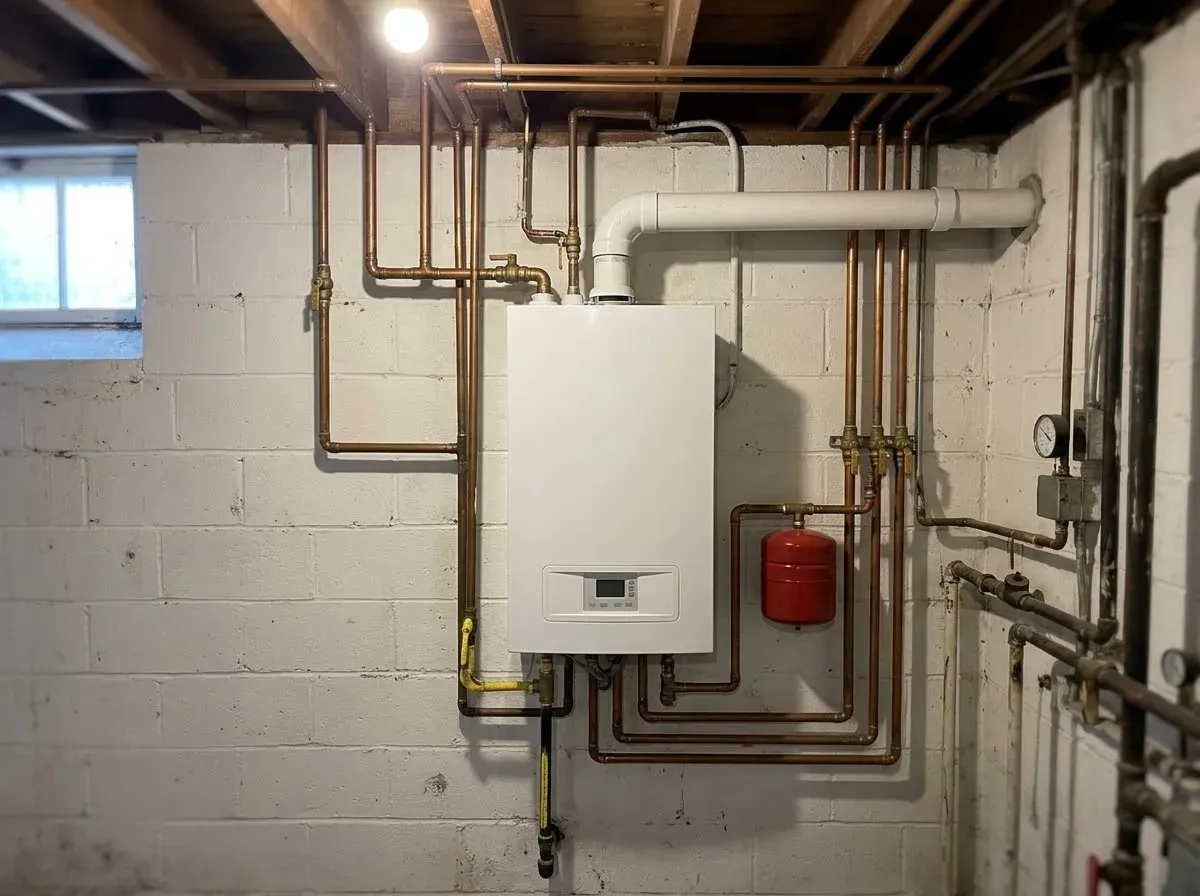
You can tell which one you have from the rooms rather than the basement. Floor or wall registers that blow air mean a furnace. Radiators, or metal baseboard fins under the windows, mean a boiler.
| Furnace | Boiler | |
|---|---|---|
| Heats | Air | Water or steam |
| Delivers heat through | Ducts and registers | Pipes to radiators, baseboards or floor tubing |
| Moving part in the loop | Blower | Circulator pump (none on steam) |
| Shares its distribution with central AC | Yes | No |
| Room-by-room control | Only with a zoning kit and dampers | Built in with radiator valves or zones |
| Can also heat tap water | No | Yes, as a combi boiler or with an indirect tank |
Furnace or boiler: what each costs installed
| Equipment, installed | Low | High |
|---|---|---|
| Furnace, typical replacement (all fuels) | $2,823 | $6,897 |
| Gas furnace | $3,800 | $10,000 |
| Boiler, typical replacement (all fuels) | $3,605 | $8,450 |
| Gas boiler | $4,000 | $9,000 |
| High-efficiency boiler (90%+ AFUE) | $6,000 | $11,000 |
HomeAdvisor national cost data, updated June 2026: average $4,814 for a furnace and $5,913 for a boiler. Replacing like for like; new ducts or piping are not included.
The boiler costs about $1,100 more on average, and the gap widens with efficiency: a condensing boiler needs a condensate drain, PVC venting and careful piping, which is why the high-efficiency boiler range starts near the top of the typical furnace range. A furnace is also the easier job for installers to bid, because far more of them do it every week.
These prices assume you replace the same kind of system. Swapping one for the other is a different project, priced further down.
Which one wastes less fuel
At the equipment, neither has an edge. AFUE (annual fuel utilization efficiency) measures how much of the fuel becomes heat. The Department of Energy puts old natural-draft units of both kinds at 56% to 70% and the best modern condensing ones at up to 98.5%. The federal floors under 10 CFR 430.32 are close too:
- Gas furnace: 80% AFUE today, rising to 95% for indoor gas furnaces made from December 18, 2028.
- Gas hot water boiler: 84% AFUE since January 15, 2021.
- Gas steam boiler: 82% AFUE. Steam runs hotter than hot water and is less efficient by design.
The real difference is what happens after the burner. AFUE stops at the heater. The Department of Energy notes that duct losses can reach 35% of a furnace’s output when the ducts run through an attic, garage or crawlspace, and ENERGY STAR estimates that a typical duct system leaks 20% to 30% of the air it moves. A water pipe is sealed, small and easy to insulate, so a boiler delivers more of what it makes.
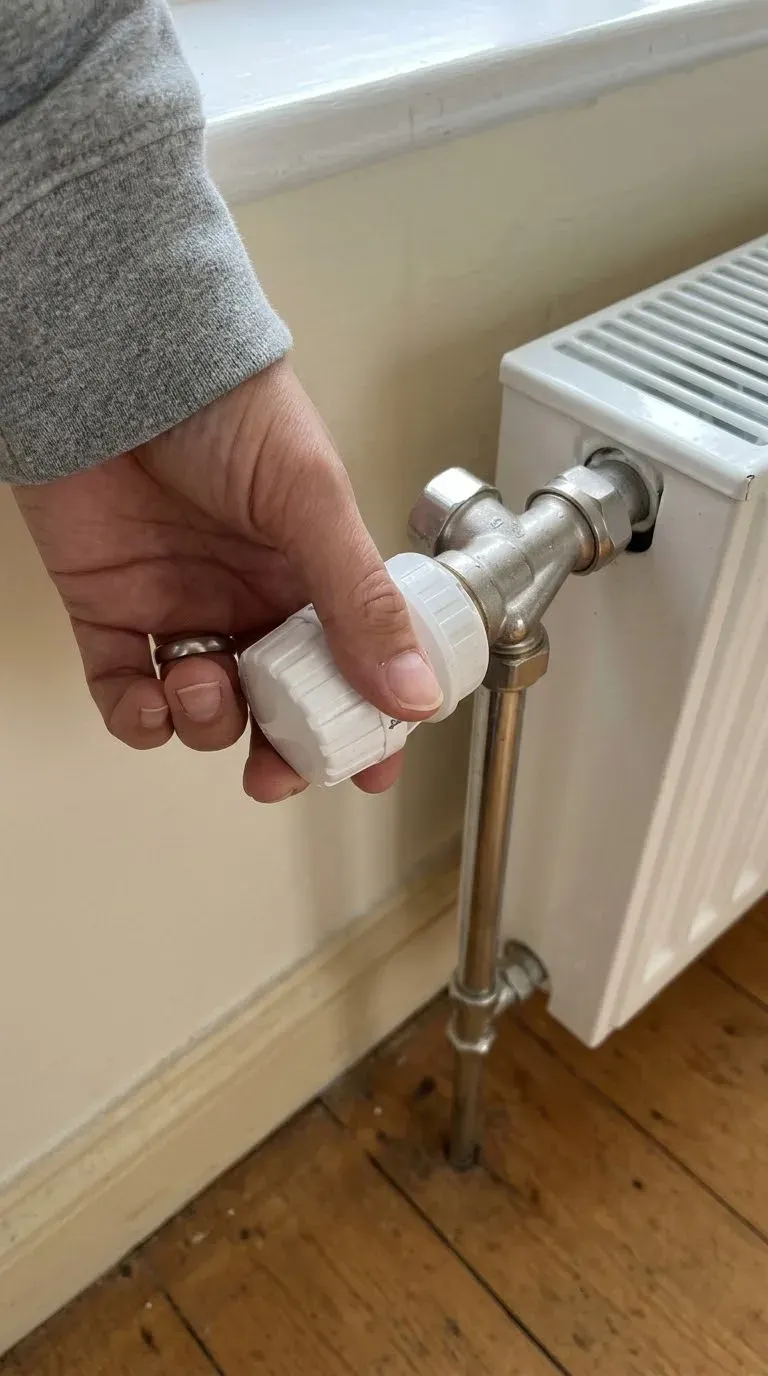
A boiler also saves fuel by heating rooms separately. A thermostatic valve on each radiator, or a few zones on separate pumps or valves, keeps spare bedrooms cool while the living room stays warm. A furnace can be zoned too, with motorized dampers in the ducts and a zone panel, but that is an add-on few homes have.
What each one feels like in the room
A furnace heats in bursts. When it runs, warm air comes out of the registers fast, and a cold house is comfortable again within minutes. Between cycles the air cools, rooms far from the furnace run a degree or two behind, and the moving air carries dust, pet hair and pollen with it. Heated air also feels drier, and the blower is the noise you hear when the heat comes on.
A boiler heats evenly and quietly. Radiators and warm floors keep heating after the burner stops, there is no draft, and nothing blows dust around, which matters in a house with allergies. The trade-off is speed. A cold radiator system takes a while to bring a room back up, and radiant floors are slow enough that deep nightly setbacks gain little. Radiators also take up wall space, usually under the windows.
Cooling is the furnace’s real advantage
The ducts a furnace uses for heat also carry cold air in summer: central air conditioning or a heat pump adds an outdoor unit and a coil on top of the furnace, and the same blower does the rest. A boiler house has no ducts, so cooling has to come another way:
- High-velocity small-duct systems. An air handler in the attic or basement pushes cold air at high speed through flexible tubes about 2 inches across, which fit through closets and wall cavities. The outlets are small round vents in the ceiling or floor.
- Ductless mini-splits. An outdoor heat pump feeds one or more wall units through a small hole in the wall. HomeAdvisor’s national data puts a mini-split system at $5,000 to $15,000 installed. They also heat, which can let the boiler rest in spring and fall.
- Window or portable units, the low-cost option, room by room.
If you are building or gutting a house in a climate that needs both heat and air conditioning, this is usually what decides it: one set of ducts serves both, while a boiler means paying for a second distribution system.
Upkeep and what goes wrong
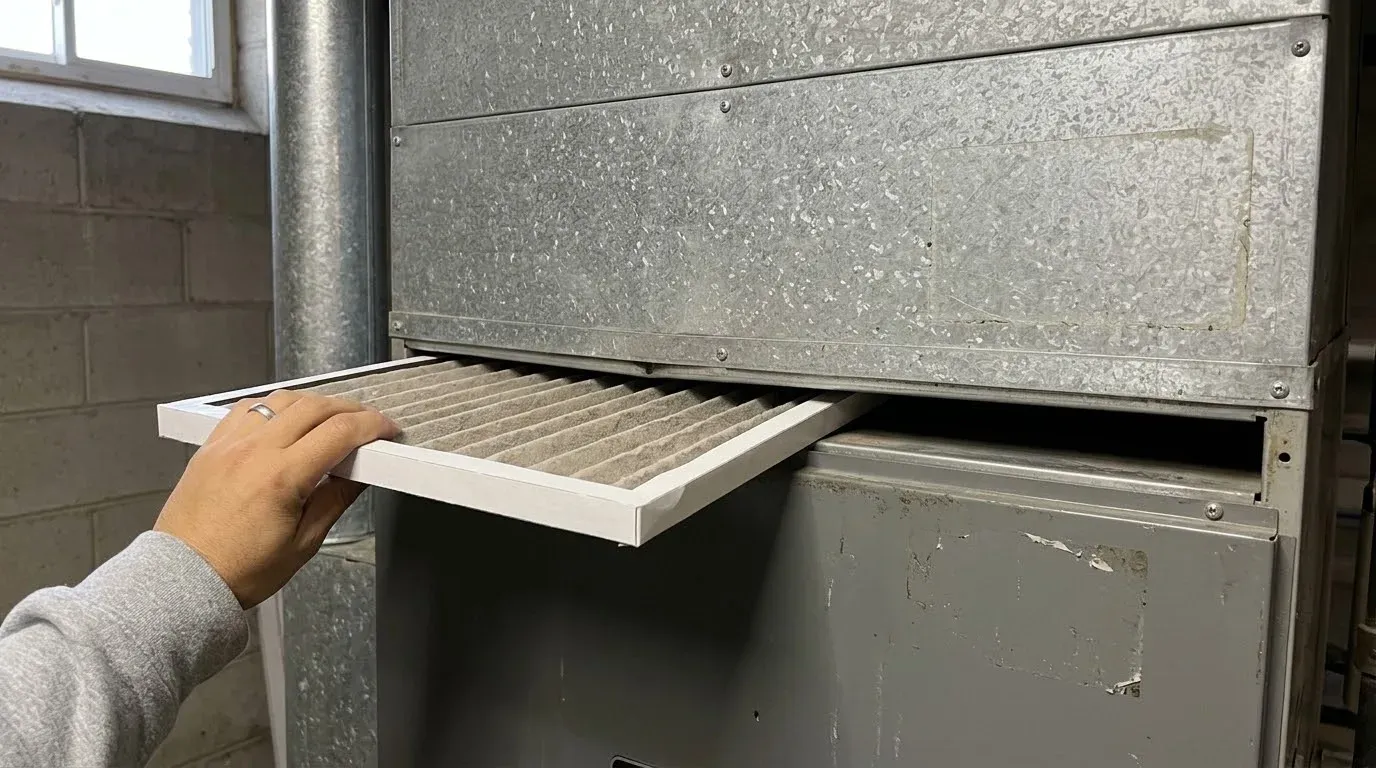
A furnace lives or dies by its filter. ENERGY STAR says to check it every month and change it when it is dirty: a clogged filter chokes airflow, raises the bills and overheats the heat exchanger. Add a yearly service, which HomeAdvisor puts at $100 to $300 nationally. The parts that wear are the blower motor, the ignitor and the flame sensor.
A boiler has no filter and no blower. What it needs is clean, air-free water at the right pressure. Bleed the radiators at the start of each season, as the Department of Energy advises, and have the yearly service check the pressure, the expansion tank, the relief valve and the pump. Its weak point is water. A leaking valve or a pipe that freezes in an unheated room can damage floors and ceilings, which never happens with a duct.
Lifespans are close. Gas furnaces usually run 15 to 20 years. HomeAdvisor puts a well-maintained boiler at about 15 years, and cast iron boilers often run past 20.
How Long Does a Furnace Last? Repair or Replace an Old One (2026) Pricing a replacement because the old furnace is failing? Check first whether it is worth repairing.Switching from one to the other
Converting is where the real money goes, because the heater is the cheap part.
Boiler to furnace. HomeAdvisor prices the swap at $2,000 to $6,000 for removing the boiler and installing the furnace, but that assumes ducts. In a house built for radiators there are none, and retrofitting ductwork runs $30 to $50 per linear foot, because walls and ceilings have to be opened and patched. A whole house can need hundreds of feet. It makes sense mainly when you want central air anyway and a renovation already has the walls open.
Furnace to boiler. This means running supply and return pipes to every room and adding radiators or baseboards, on top of a boiler that already costs more. It rarely pays off on its own. Radiant floor heating in an addition or a remodeled bathroom is the usual way a furnace house gets some hydronic heat.
Where you live shapes the choice too. In the EIA’s 2020 housing survey, 74.4 million US homes heated mainly with a furnace and 9.3 million with a boiler, but boilers heat 27% of homes in the Northeast, where older housing stock and oil heat kept them in place. That is also where boiler technicians and parts are easiest to find, which matters for repairs on a January night.