The house is getting cold, it is 10 p.m. or Saturday afternoon, and the furnace is not doing anything. Before you pay an after-hours rate, take ten minutes. Some no-heat calls end with a technician opening a gas valve or flipping a switch that was already in your reach, and the rest go faster and cheaper when you can tell them exactly what the furnace is doing.
- Normal hourly furnace labor, before night or weekend rates
- $50–$150
- Typical hourly rate for an after-hours no-heat call
- $140–$210
- Minimum distance between a running generator and the house
- 20 ft
- Clear space around a space heater
- 3 ft
Sources: HomeAdvisor national cost data (June 2026), Bob Vila furnace repair cost guide, U.S. Consumer Product Safety Commission, U.S. Fire Administration.
Is it really an emergency?
The honest test is time and temperature. If the house will stay comfortable enough until a normal appointment, an after-hours fee buys you very little. If it will drop low enough to freeze pipes, or there is someone in the house who cannot handle a cold night, it buys you a lot.
Six checks before you call
None of these needs a tool, and none of them opens the furnace beyond its front panel. Work them in order and stop at the first one that brings the heat back. Our furnace not turning on guide goes deeper on each.
1. The thermostat
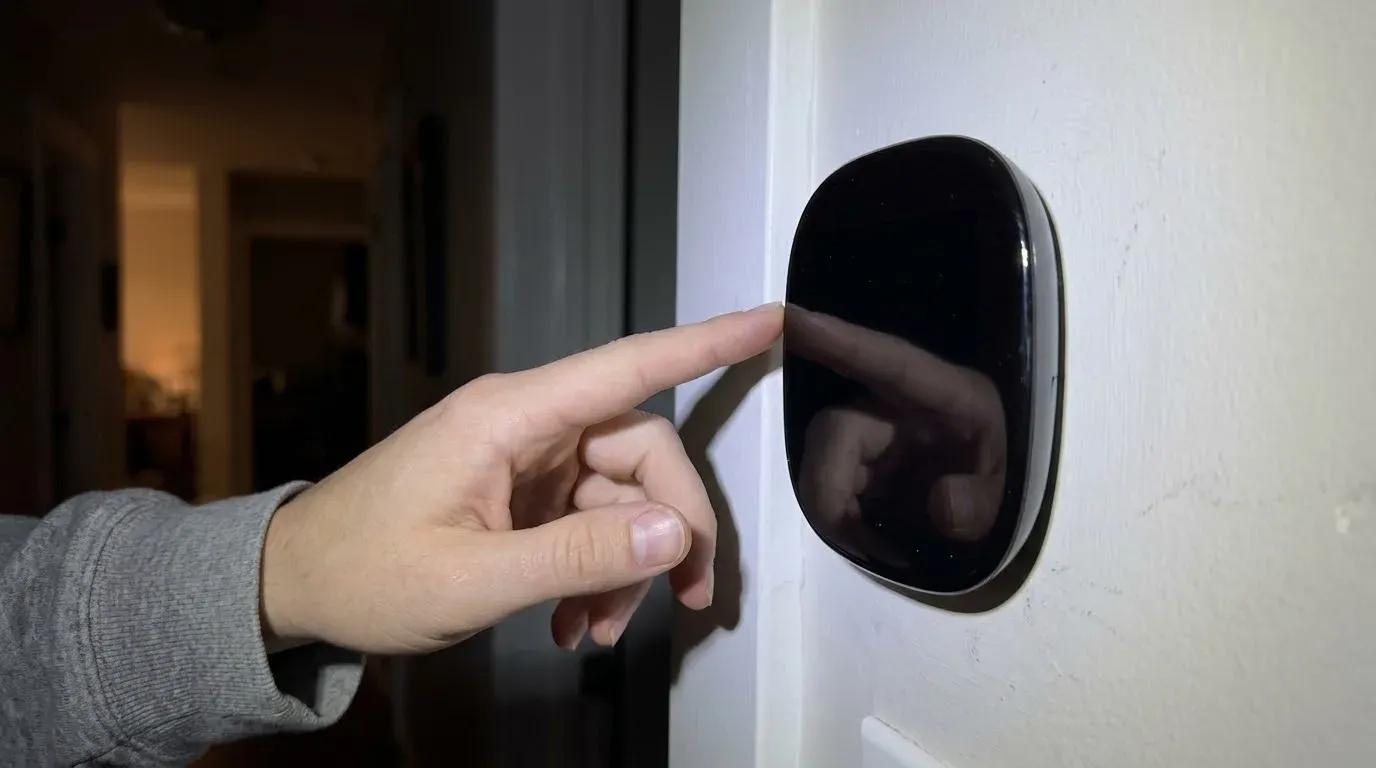
Set it to HEAT, raise the setpoint five degrees above room temperature and wait a couple of minutes. Check for a vacation or eco hold on a smart thermostat.
A blank screen matters. Many thermostats are powered by the furnace itself, so a dark screen often means the furnace has no power at all, which sends you straight to check 2. On a battery thermostat, replace the batteries first.
2. The power
A gas furnace still runs on electricity: the control board, the inducer, the ignitor and the blower all need it. Check three places:
- The furnace switch. It looks like a light switch, on the furnace or on a wall or joist nearby, and it gets flipped off by mistake more often than anyone admits.
- The breaker. Push a tripped breaker fully off, then back on. If it trips again right away, leave it off: that is an electrical fault, not a reset.
- The blower door. A safety switch behind the lower panel cuts all power when the door is not seated. A door put back crooked after a filter change is a classic no-heat call.
3. The gas
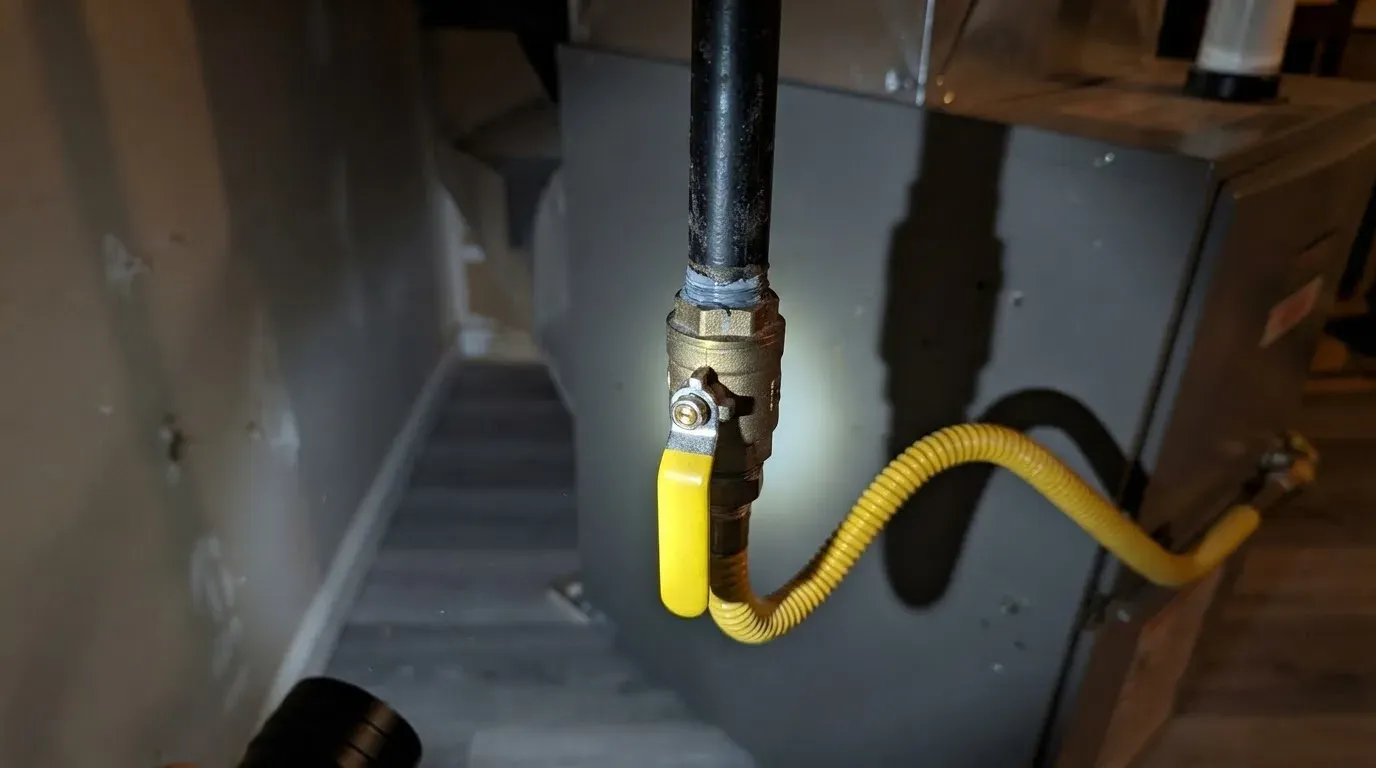
Find the shutoff valve on the gas pipe that runs into the furnace. Its handle should point the same way as the pipe. If it is across the pipe, it is closed, and the furnace will go through its whole startup, click, glow and then give up because no gas arrives. It happens more than you would think: valves get closed for other work and never reopened. If your gas stove or water heater is also out, the problem is the supply, so call the gas utility.
If the valve is open and you smell nothing, leave everything else on the gas side alone.
4. The filter
A clogged filter makes the furnace overheat, and a safety switch then shuts the burners off to protect the heat exchanger. The furnace may run for a few minutes and quit, again and again. Pull the filter: if you cannot see light through it, replace it, or run without it for the night and replace it in the morning.
5. The error light
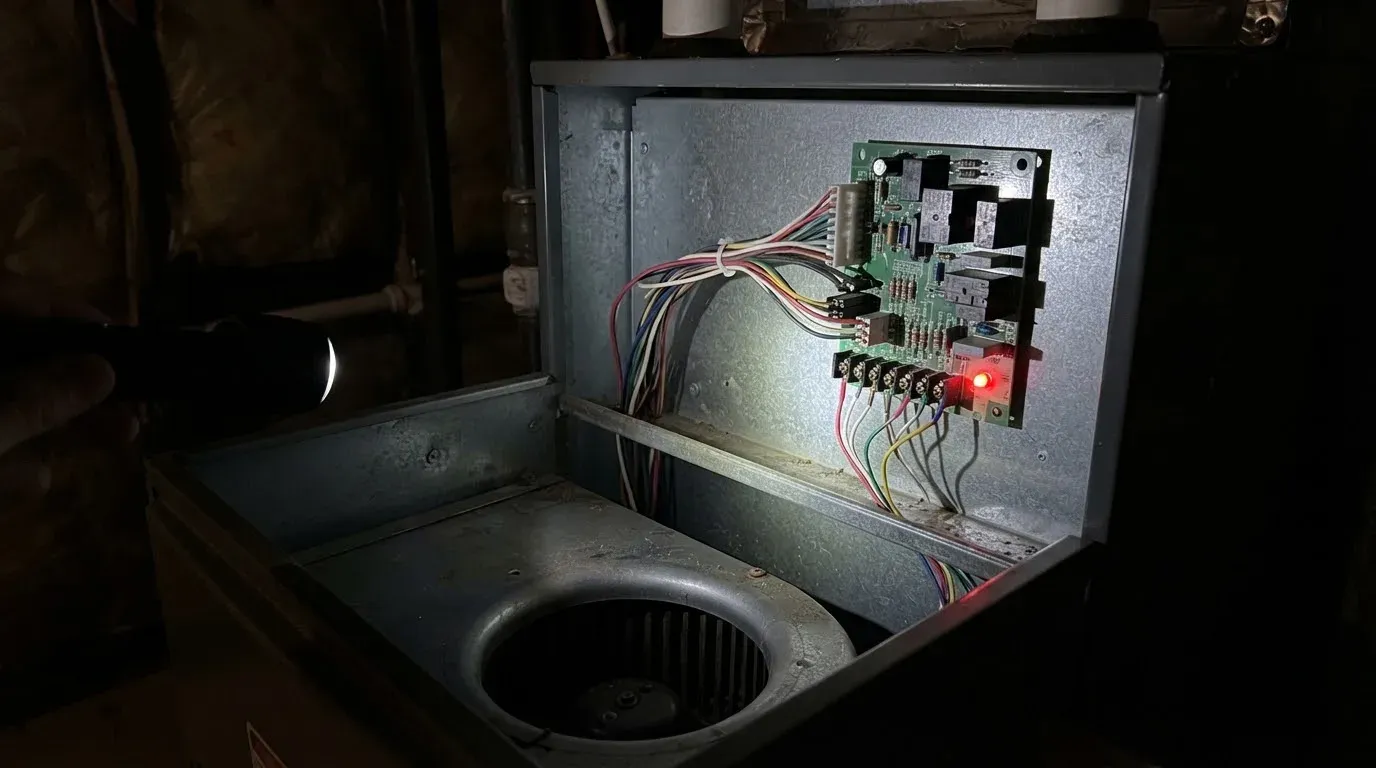
Most modern furnaces have a small LED on the control board, visible through a window in the lower panel. It blinks a code: two flashes, a pause, two flashes, for example. The chart that explains it is printed on the inside of the furnace door.
Write the code down before you do anything else, including resetting. It is the single most useful thing you can tell a technician on the phone, and on many furnaces it disappears once the power is cycled.
6. One reset
If a furnace tries to light several times and fails, it locks itself out. Turning the furnace switch off for a minute and back on clears that lockout. Try it once. If the furnace lights and runs, it may have been a one-off, but book a normal service visit anyway. If it locks out again, stop: repeated resets on a furnace that will not light are how gas collects in the burner area.
What an emergency call costs
The parts on an emergency call cost the same as they do on a Tuesday. The labor does not. Nationally, HomeAdvisor’s furnace repair data puts normal labor at $50 to $150 an hour plus parts, with a trip fee of at least one hour, and tells homeowners to budget extra for weekends, holidays and the middle of the night. Bob Vila’s furnace repair cost guide puts after-hours no-heat labor at about $140 to $210 an hour.
The most common emergency repairs are the parts that stop the startup sequence. A control board runs $200 to $600 installed, an ignitor $150 to $500 and a flame sensor $150 to $250. A blower or inducer motor can run much higher. The full list is in the table at the end of this page.
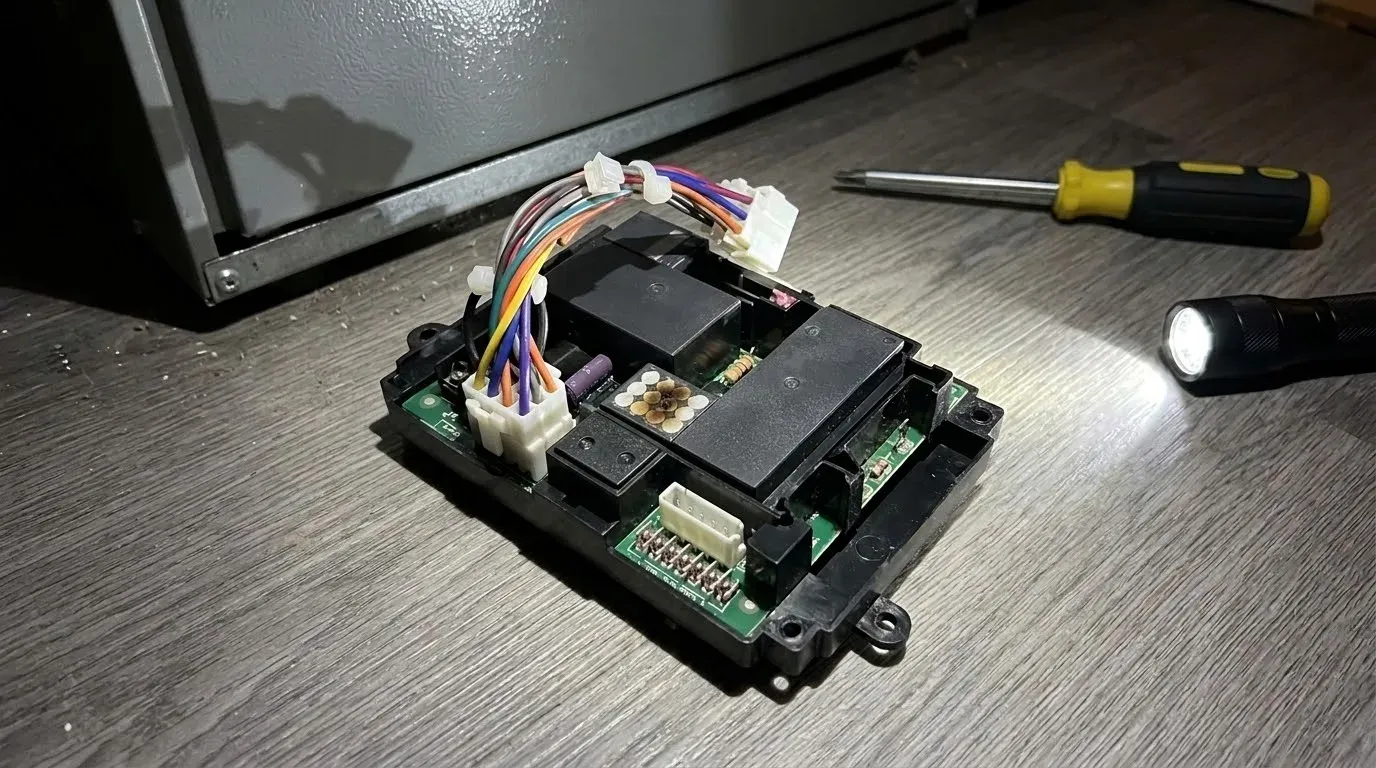
Control boards are also the part most likely to die after a power surge or flickering lights, and they are not always on the truck. If the lights flickered just before the furnace quit, say so on the phone. And if it happens more than once, have an electrician look at the house wiring and ask the HVAC technician about a surge protector for the furnace.
How to make the call
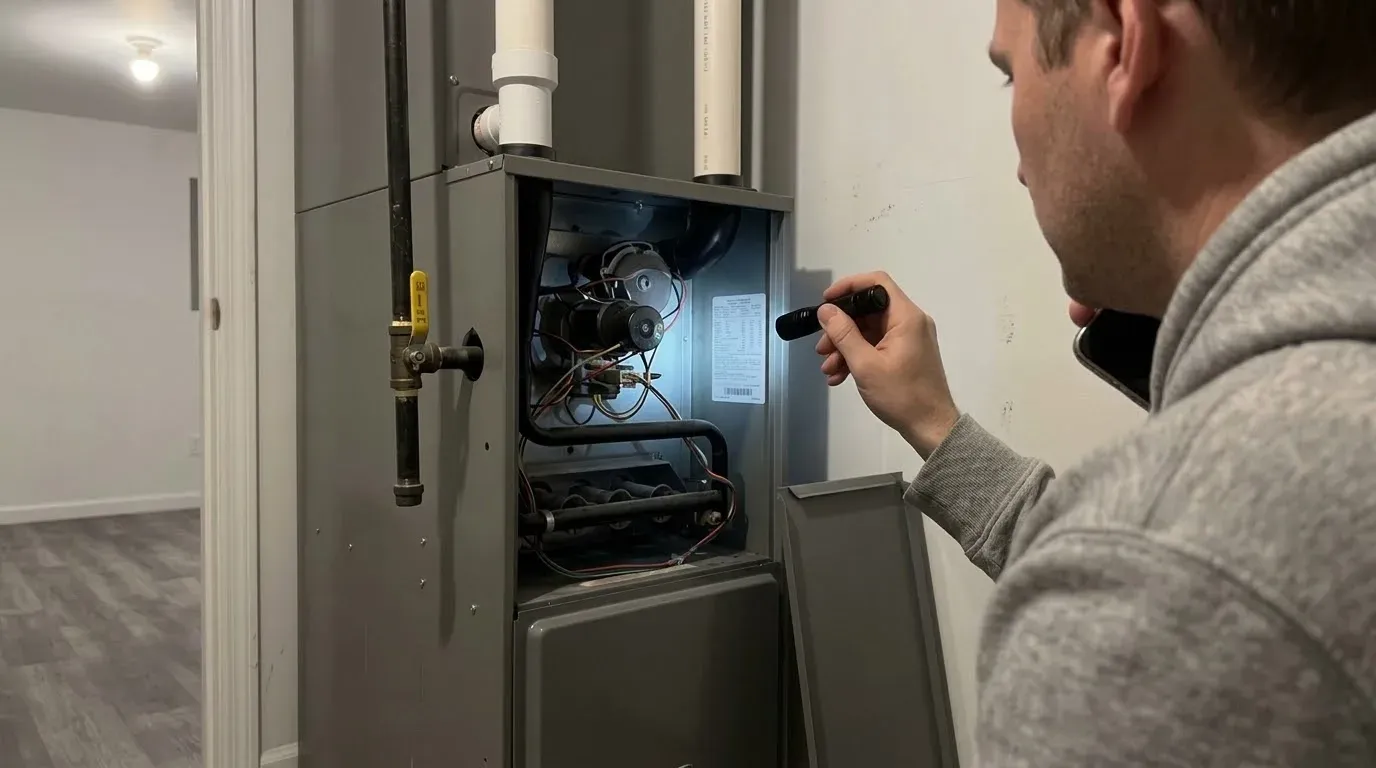
You will get a faster, cheaper visit if the person answering can picture the problem. Have ready:
- The model and serial number from the rating label inside the furnace door.
- The error code you wrote down.
- What the furnace does, in order: nothing at all, the fan runs but no flame, it clicks and glows but does not light, it lights and goes out, or it runs and blows cold.
- What you already checked. It saves them doing it at their rate.
Then ask before they come out:
- What is the trip or after-hours fee, and is it credited to the repair?
- Does the technician carry common parts such as control boards, ignitors and flame sensors?
- Is the company licensed for gas work in your area and insured?
A technician who can get you running tonight with a temporary fix, for example a part that bypasses one failed relay on a board until the replacement arrives, is doing you a favor, as long as it is written on the invoice and followed by the proper repair. What no one should do is bypass a safety device, a limit switch, a rollout switch or the pressure switch, to keep the furnace running.
When the problem is a power outage
A gas furnace does nothing without electricity, so in an outage it is not broken, it is unplugged. The furnace’s draw is modest, a few hundred watts with the ignitor and the inducer running and a little more once the blower starts, which is within reach of a generator or a large portable power station.
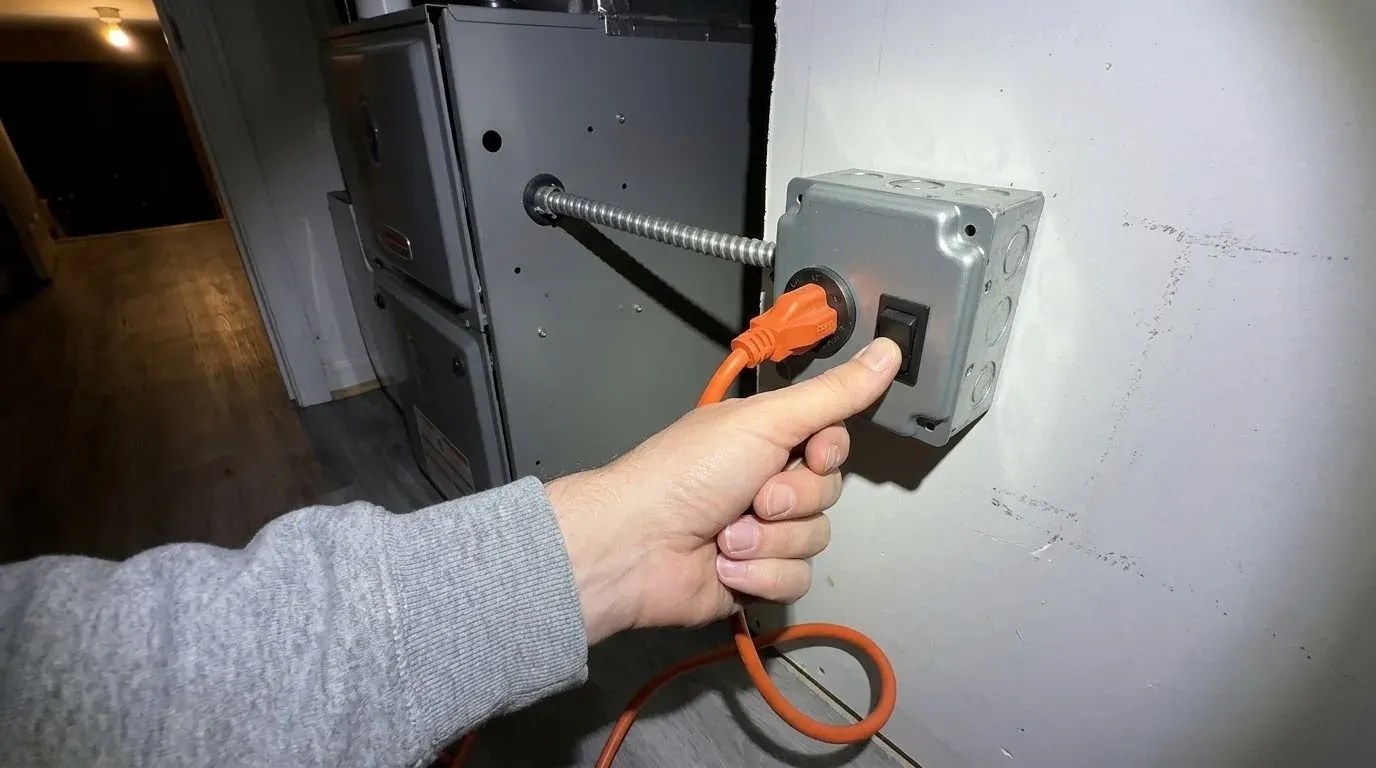
The connection is what matters. The safe way is a transfer switch or a furnace power switch with a built-in inlet, wired in by an electrician, with a normal, off and generator position. In an outage you switch it off, plug in the cord from the generator or power station, and switch it to generator. The thermostat comes back on with the furnace if it is furnace-powered.
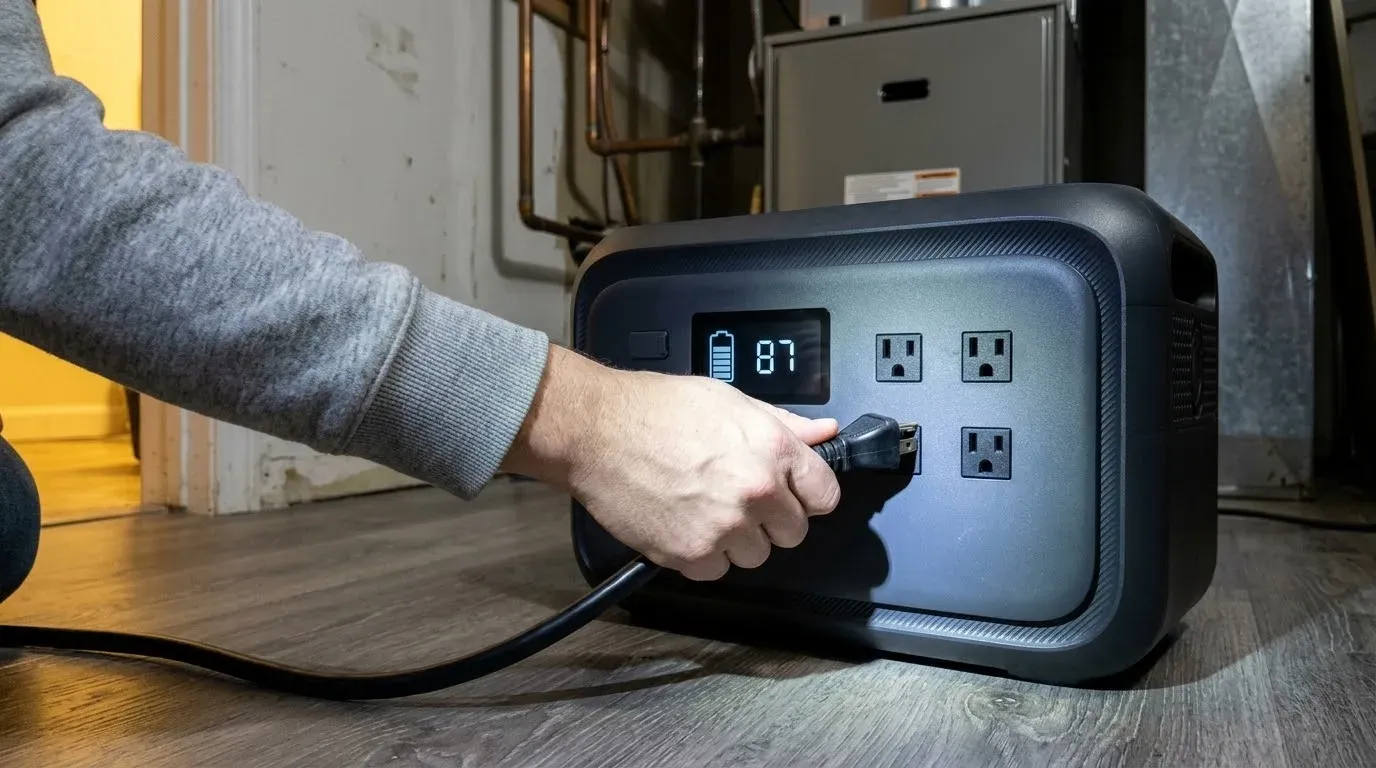
Never backfeed the house by plugging a generator into a wall outlet. It can energize the utility lines and electrocute a line worker, and it can start a fire in the house. And treat a gasoline generator as the carbon monoxide source it is. The U.S. Consumer Product Safety Commission says about 85 people a year in the U.S. die of carbon monoxide from portable generators. It advises running them outside only, at least 20 feet from the house, never in a garage, basement, crawlspace, shed or on a porch, and having battery-backed CO alarms on every level of the home.
Staying warm until help arrives
If you are waiting for a morning appointment, the risks of the night are fire and frozen pipes, not the cold itself.
- Space heaters. Portable heaters cause only 3% of home heating fires but 41% of the deadly ones, according to the U.S. Fire Administration. Keep anything that can burn at least 3 feet away, plug the heater straight into a wall outlet rather than an extension cord, and turn it off when you leave the room or go to bed.
- Never heat the house with the oven or a gas stove. The Fire Administration is explicit about the oven, and a gas burner left running indoors is a carbon monoxide source.
- Close the house down. Shut doors to rooms you are not using, close curtains, and gather everyone in one room with the heater.
- Protect the pipes. On a hard freeze, open the cabinet doors under sinks on outside walls so warm air reaches the pipes, and let a faucet on an outside wall drip.
Signs it cannot wait until morning
And once the heat is back, book the annual inspection that the CPSC and the Fire Administration both recommend. Most emergency calls are a part that was wearing out for months, and October is a cheaper time to find it than a January night.