Water around a furnace looks alarming, and on a lot of modern furnaces the water itself is not the problem. High-efficiency furnaces make water on purpose, as part of squeezing the last of the heat out of the exhaust. The problem is that the water is supposed to drain away out of sight, and something has stopped it. That is usually a cheap fix, and one look at the vent pipe tells you where to start.
- White plastic vent pipes mean a furnace that makes water by design
- PVC
- National average furnace repair in 2026
- $318
- A cracked AC drain pan, replaced
- $200–$600
- Average whole-house humidifier repair
- $230
Source: HomeAdvisor national furnace, AC and humidifier cost data (June 2026).
First, shut it off and dry it out
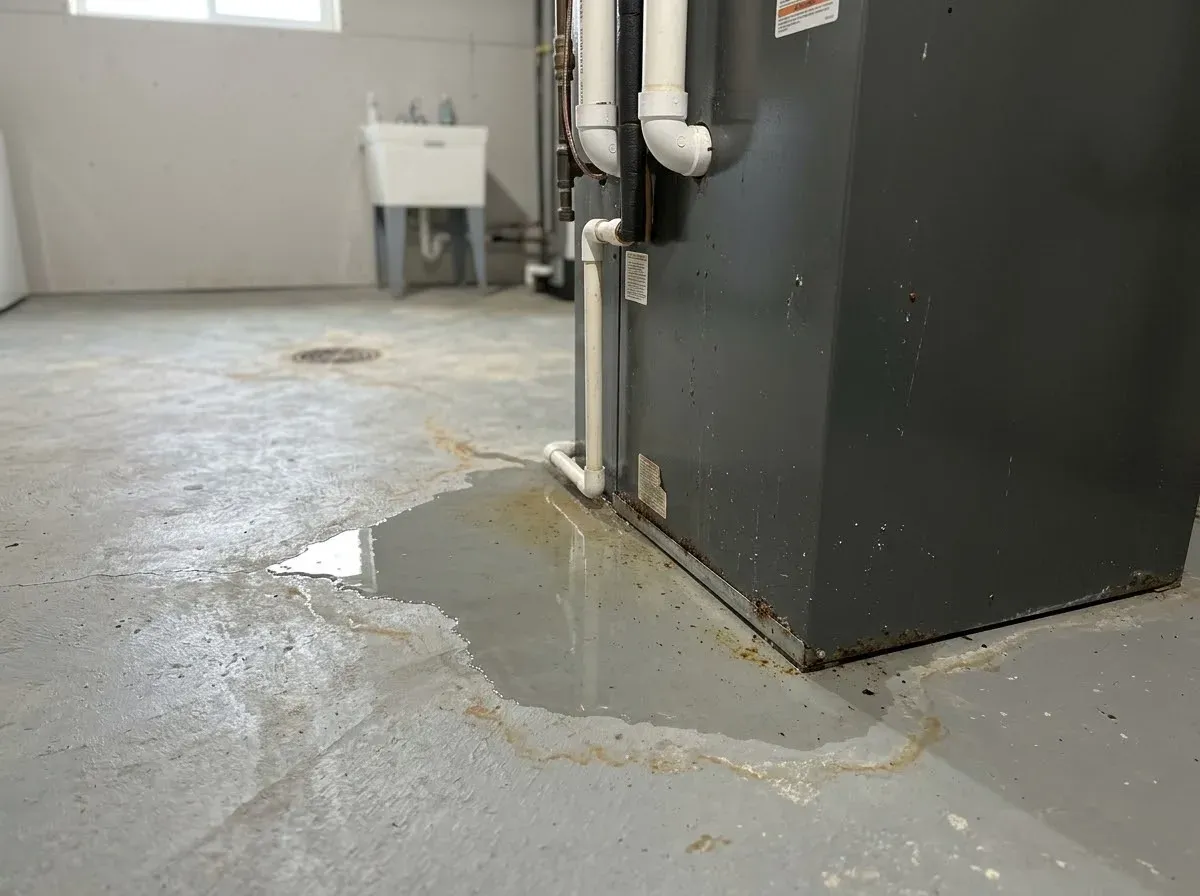
Turn the furnace off at the thermostat, and at the furnace’s service switch or breaker if water is anywhere near the wiring or the control board. Then soak up the water with towels or a wet/dry vacuum. Standing water rusts the cabinet floor, and a control board that gets wet is one of the more expensive parts in the furnace. With the floor dry, the next drop shows you exactly where it comes from.
Which furnace do you have? Look at the vent pipe
This one check splits the problem in two.
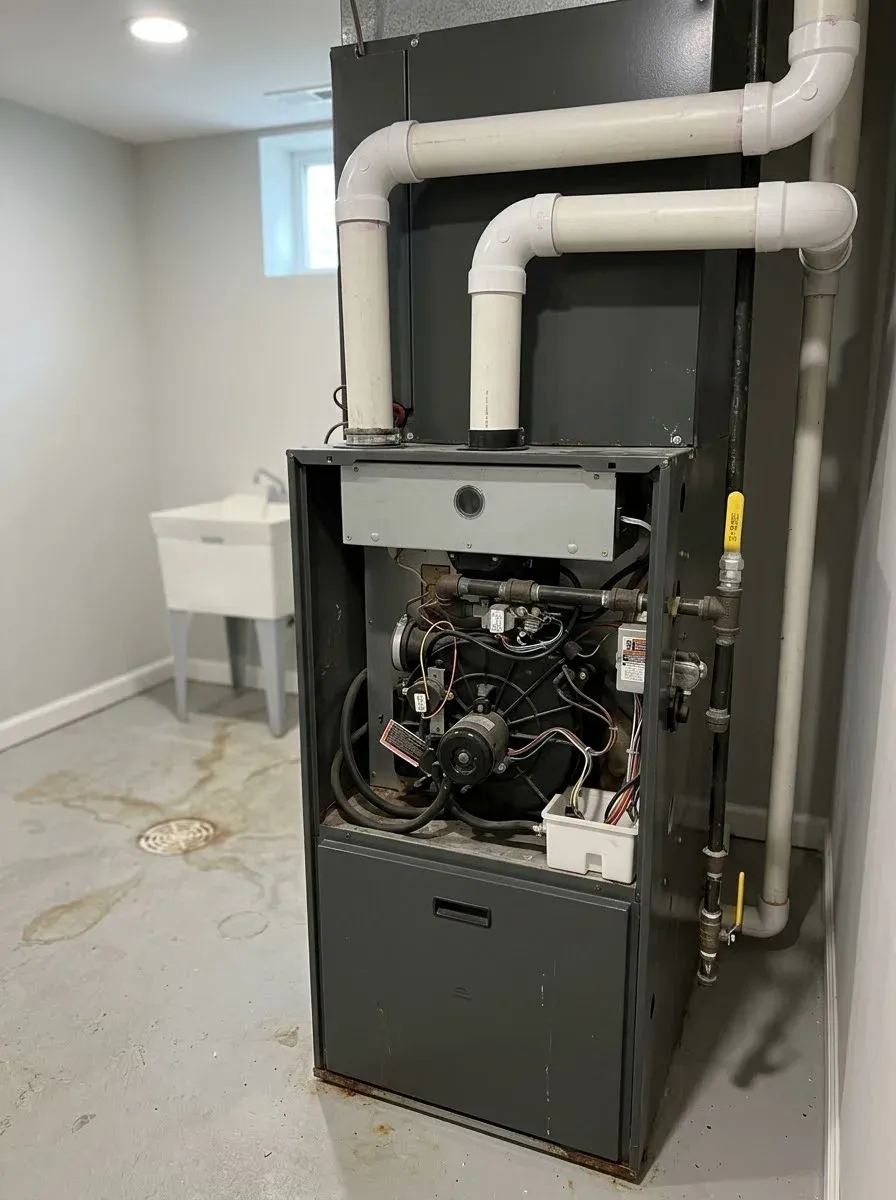
- White plastic (PVC) pipes, usually two, running out through a wall or the roof: a high-efficiency, or condensing, furnace. It cools its exhaust so far that the water vapor in it turns to liquid, gallons of it on a cold day. That water runs through a plastic trap and a drain hose to a floor drain or a small pump. A leak here is almost always in that drain path.
- A metal pipe running up into a chimney or a metal flue: a standard furnace. It does not make water. If there is water around it, something else is leaking onto it: the air conditioner coil, a humidifier, or condensation in the vent.
Where the water comes from, most likely first
Is the condensate trap clogged?
This is the cause on most high-efficiency furnaces, by a wide margin. The trap is a small plastic piece, a U-shaped bend or a little box, inside or beside the lower cabinet where several drain hoses meet. The water it carries is slightly acidic, and over a season or two it grows a film of slime and debris that plugs the trap. The water backs up and spills out, and many furnaces then shut themselves off.
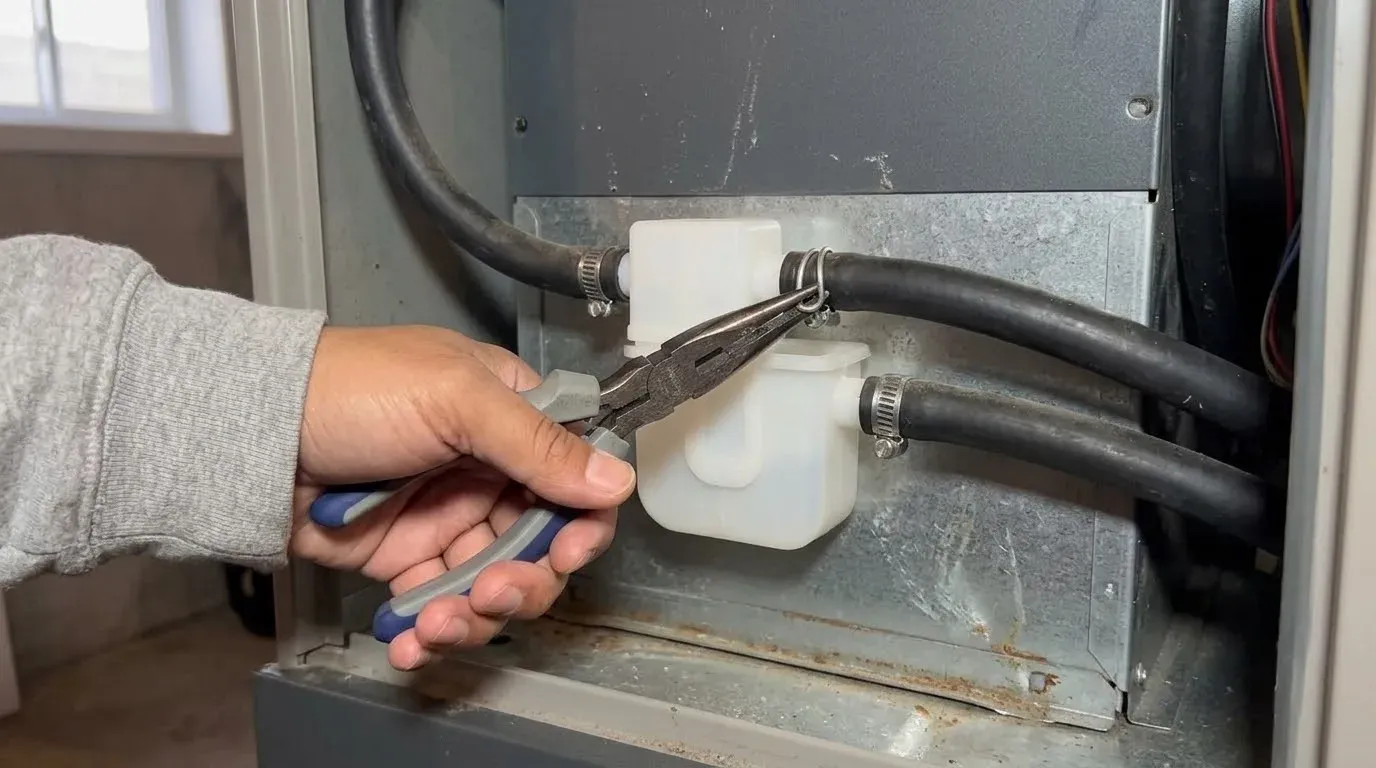
With the power off at the furnace switch:
- Take a photo of how the hoses connect, then loosen the clamps and remove the trap. Many lift out after one or two screws.
- Flush it in a sink with warm water, or a mix of warm water and white vinegar, until it runs clear. Check the small openings for sludge.
- Put it back, tighten every clamp, and pour a cup of water into it before restarting. That water seal is what stops exhaust gas from coming back up through the drain. A dry trap can also keep some furnaces from starting.
Is the drain hose clogged, kinked or sagging?
The flexible hoses that carry water to the trap, and the line from the trap to the drain, clog with the same slime. They can also kink, slip off their fittings, or sag into a low loop that holds water like a dam.
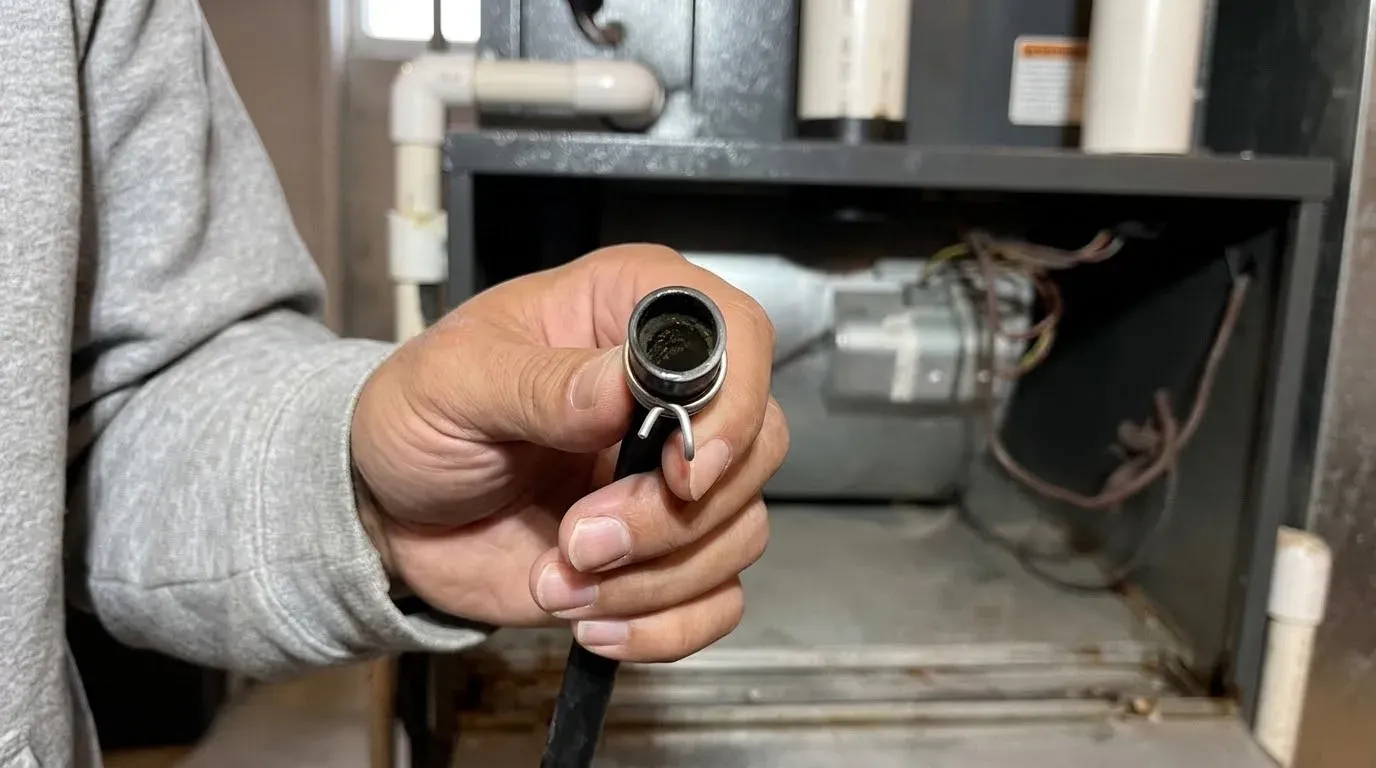
- Disconnect each hose and flush it, or blow it through gently with low-pressure air, with a rag over the far end so the sludge does not land on the electrical parts.
- A wet/dry vacuum held on the end of the drain line, where it empties, pulls a clog straight out.
- Route every hose so it runs downhill all the way, with no belly. Replace any that are cracked or hardened; condensate tubing is an inexpensive part.
- Check the floor drain the line empties into. A slow or backed-up floor drain floods a furnace just as well as a clogged trap.
Has the condensate pump stopped pumping?
When a furnace sits below the nearest drain, a small condensate pump does the lifting: a plastic box on the floor beside the furnace, with a reservoir, a float and a thin tube running up and away. These pumps wear out. The float gums up and sticks, the motor never gets the signal to run, and the reservoir quietly overflows a little every cycle.
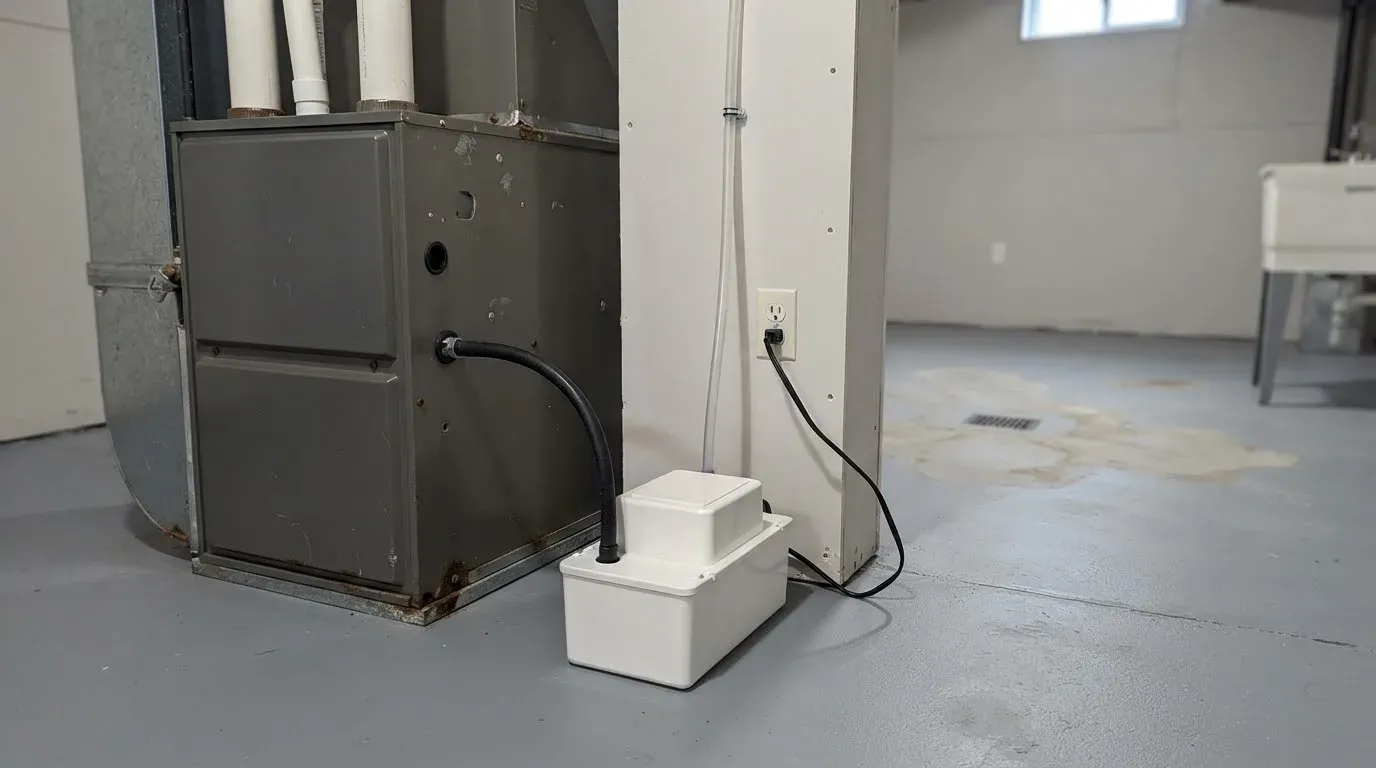
Unplug it, lift the lid, and look. Clean the reservoir and the float, plug it back in, and pour water in slowly: the motor should start before the water reaches the top. If it does not, replace the pump. Many have a safety switch wired to the furnace or the air conditioner that shuts the system down when the water rises too high, so connect the new one the same way.
Is the water coming from the air conditioner?
The indoor coil of a central air conditioner usually sits right on top of the furnace. In cooling mode it pulls water out of the air and drips it into a pan with its own drain line. If that line clogs, the pan cracks, or the coil freezes and then melts, the water runs down onto and through the furnace. The giveaway is timing: if it leaks only when the cooling runs, it is the AC, whatever the vent pipe is made of.
Clear the AC drain line the same way as the condensate line. A cracked drain pan costs $200 to $600 to replace nationally. If the coil is icing up, a dirty filter is the usual cause; replace it and let the ice melt, and if it freezes again, our AC not cooling guide covers the low-refrigerant and airflow causes.
Is a humidifier leaking?
A whole-house humidifier is a box mounted on the ductwork beside the furnace, with its own small water supply line and drain. A clogged pad, a loose supply fitting or a plugged humidifier drain runs water down the side of the furnace to the floor, which looks like a furnace leak. Follow the water up: if it starts at that box, replace the pad, tighten or replace the supply line, and clear its drain. HomeAdvisor puts the average whole-house humidifier repair at $230 nationally, up to about $500. Turn the humidifier off in summer, when it is not needed.
Is it leaking from inside the furnace?
If the trap, the hoses, the pump, the AC drain and the humidifier are all clear and water still appears inside the cabinet, often in the blower compartment and coming from high up at the back, the water is escaping inside the furnace itself.
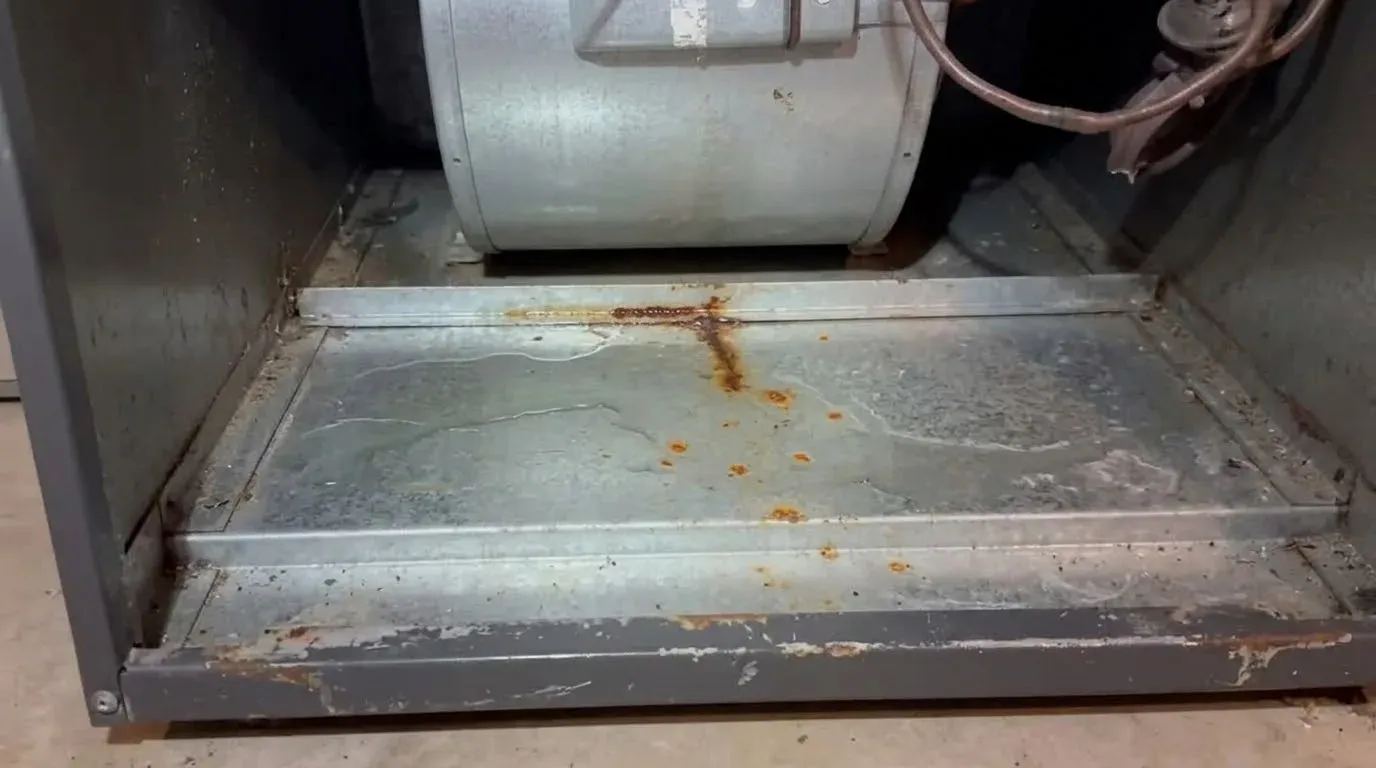
Two parts are the usual suspects:
- A leaking seal or gasket where the collector box, which gathers the condensate from the secondary heat exchanger, meets the inducer or the cabinet. The foam or rubber gaskets there can harden and let water seep out. A technician can replace them.
- A corroded or cracked secondary heat exchanger. Years of acidic condensate against the metal can eat through it. That leaks water, and it can also leak combustion gases, including carbon monoxide, into the air.
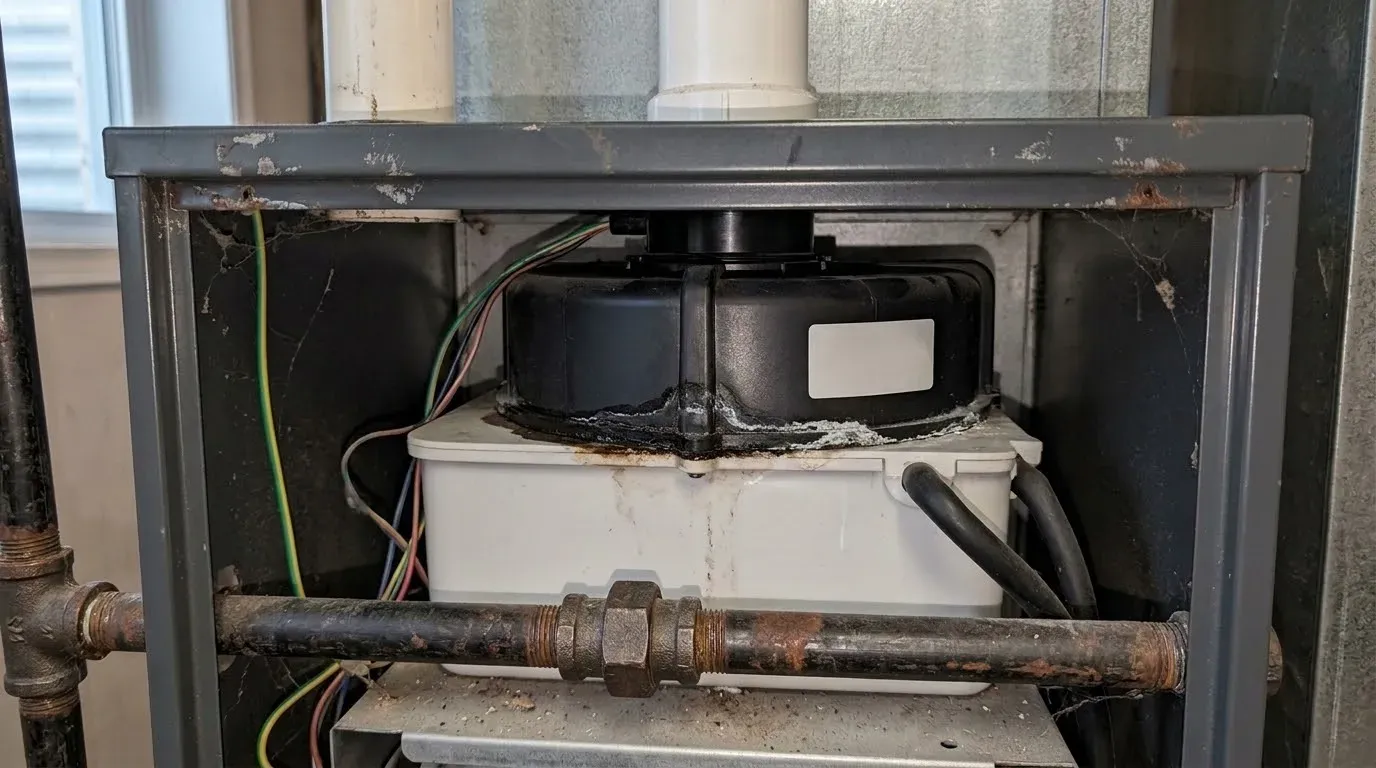
Both are jobs for a technician, and the second is a safety call: turn the furnace off and make sure your carbon monoxide alarms work. A heat exchanger part runs $100 to $1,500 nationally, before the hours of labor to install it. On a furnace that is 15 years old or more, that quote is often the moment to price a replacement instead.
How Long Does a Furnace Last? Repair or Replace an Old One (2026) Quoted a heat exchanger on an older furnace? Here is how to decide between the repair and a new furnace.Standard furnace: is the vent condensing?
A standard furnace with a metal vent does not make water, but its exhaust can condense inside a vent that runs cold: an oversized or unlined masonry chimney, a long run through a cold attic, or a flue shared with a water heater. The water then drips back down into the furnace, usually worst in very cold weather, sometimes with rust stains on the vent connector. That is a venting problem, and a technician needs to check that the vent is sized and lined correctly.
When the water points to a bigger fault
Flushing the condensate trap and the drain line is on the checklist of a yearly furnace tune-up. On a high-efficiency furnace, ask for it by name when you book: a rushed visit can skip it, and it is the step that prevents this leak.