Most burning smells from a furnace are harmless, and a few are a reason to turn it off right now. The difference is in the smell itself and in what it does over time: a normal smell fades every time the furnace runs, and a problem smell holds steady or gets stronger. Name the smell first, then use the table below.
- How long a normal first-of-season dust smell usually lasts
- ~1 hour
- Smell from carbon monoxide: only an alarm can detect it
- 0
- A high-limit switch, replaced, nationally
- $150–$300
- National average furnace repair in 2026
- $318
Sources: HomeAdvisor national furnace repair cost data (June 2026), US Consumer Product Safety Commission.
First: smoke, gas or an alarm?
Three things are not a troubleshooting job:
- You see smoke coming from the vents or the furnace. Get everyone out and call 911.
- You smell rotten eggs or sulfur. That is the odorant added to natural gas and propane. Do not touch light switches or the thermostat. Leave the house and call the gas utility or 911 from outside.
- A carbon monoxide alarm sounds. Get everyone outside, into fresh air, and call 911.
Everything else on this page you can sort out calmly, starting with the most common smell of all.
What each smell means
Is it the first time the heat has run this season?
This is the smell nearly everyone gets in the fall, and it is normal. All summer, while the air conditioner used the same blower and ductwork, fine dust settled on the burners and on the heat exchanger. The first time the furnace lights, that dust burns off and the vents carry a dry, toasty smell through the house.
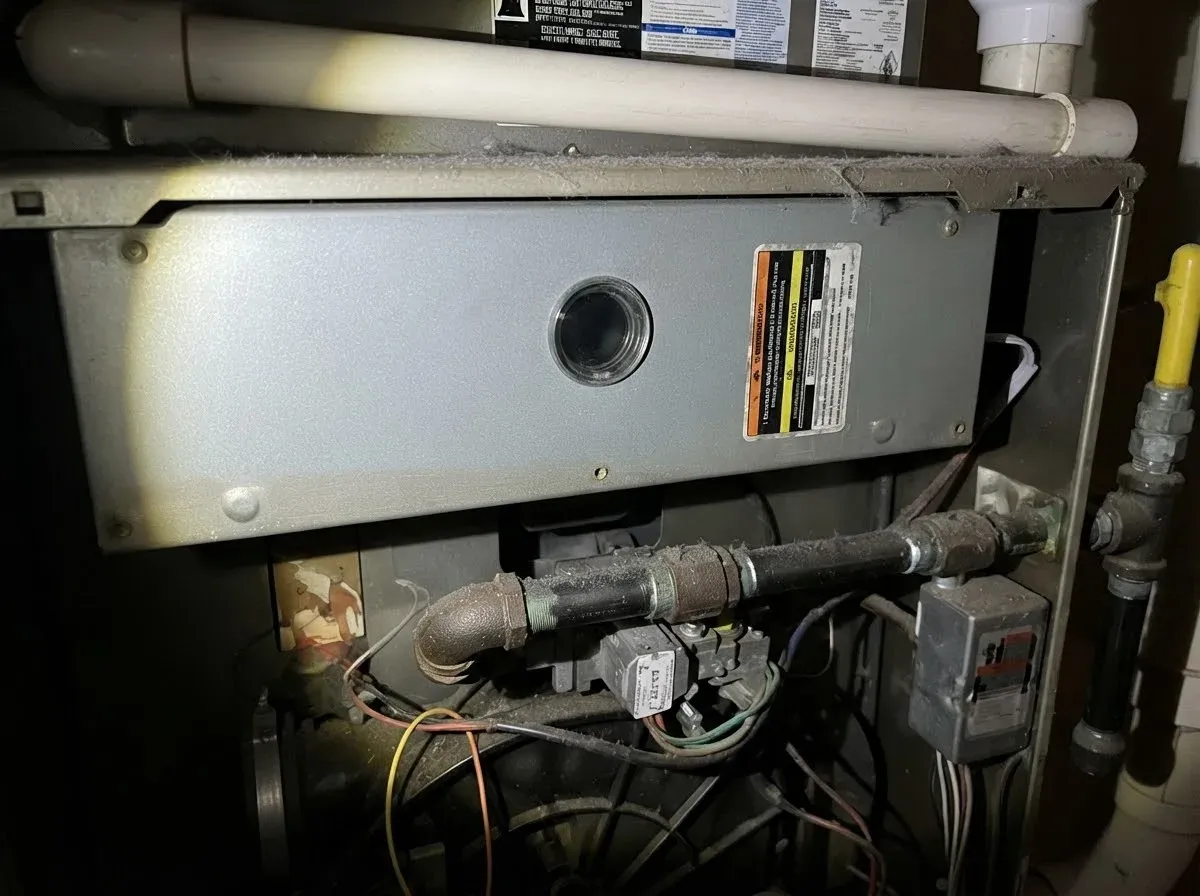
Open a window, let the furnace run, and check that the smell fades over the next hour. It may come back faintly for the first few cycles of the day, getting weaker each time. If it does that, there is nothing to fix. A yearly fall tune-up, where the technician cleans the burners and the cabinet, keeps it short.
Does a dusty smell keep coming back?
If the dusty smell does not fade after a day or two, or comes back every time the heat runs, look at the filter. A filter packed with dust lets more of it through around the edges onto the hot parts, and it chokes the airflow so the heat exchanger runs hotter than it should. A furnace that smells hot and dusty and then shuts off after a few minutes, only to start again later, is often overheating behind a clogged filter and tripping its high-limit switch.
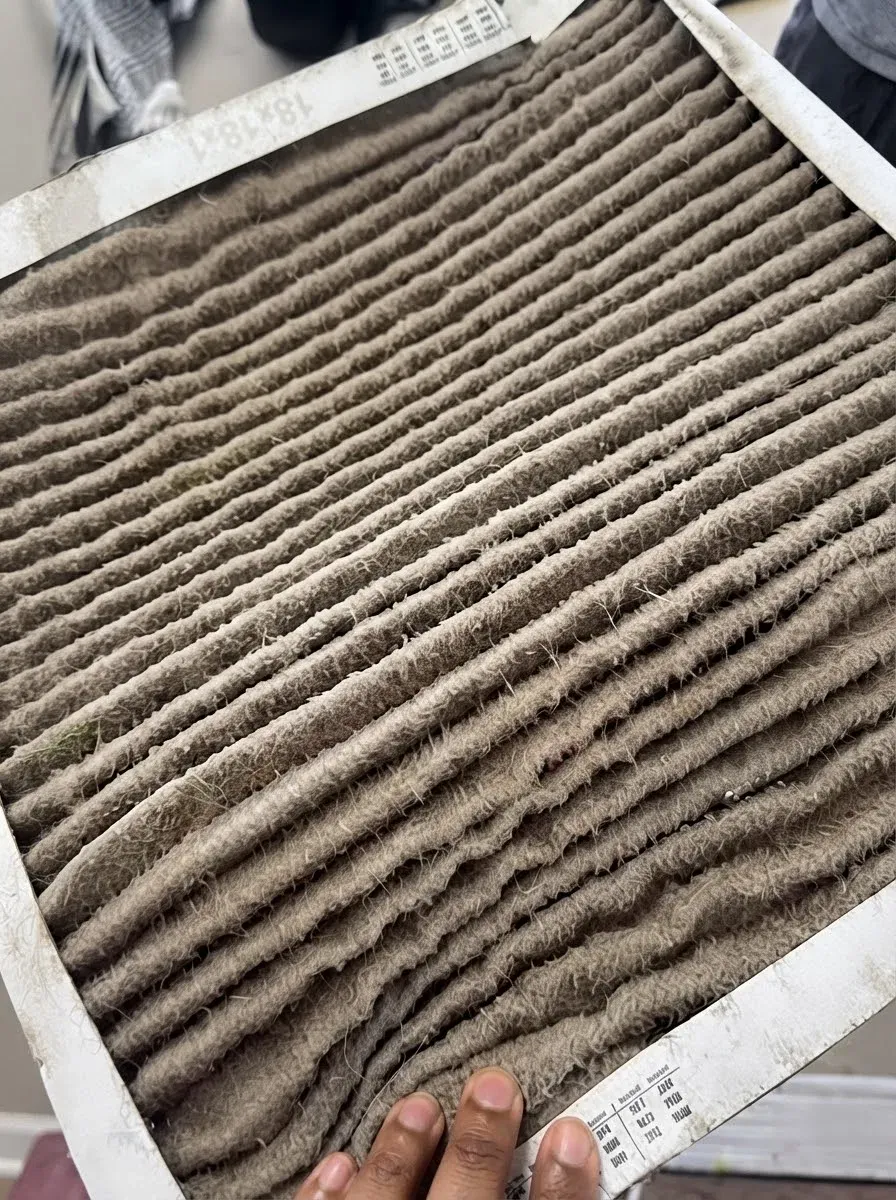
Check the filter against a lamp or a bright window: if no light comes through, replace it, arrow toward the furnace. A monthly look is what ENERGY STAR advises, and dust that never reaches the burners cannot burn on them. Make sure the filter is the right size too: one that is too small leaves a gap that dust goes straight through. If the smell persists with a clean filter, book a cleaning; dust inside the blower compartment or on the heat exchanger needs a technician.
Does it smell like hot plastic or rubber?
A plastic or rubber smell means something is melting, and the first suspects are simple. A small toy, a pen cap, a plastic bag or a sock that fell through a floor register can land on a duct close to the furnace and melt there.
Turn the furnace off at the thermostat. Lift the floor registers, starting with the ones closest to the furnace, and look into the ducts with a flashlight. Remove anything you find, let the duct cool, and run the heat again. If the smell is gone, that was it.
If there is nothing in the registers and the plastic smell continues, the source may be wire insulation, a part or a belt overheating inside the furnace. Treat it like the next cause.
Does it smell electrical, like hot metal or burning wire?
A sharp electrical smell, often described as hot metal or burnt wiring, usually comes from the blower motor or its capacitor overheating as they fail, or from a wire or connection on the control board getting too hot. You may also notice weak airflow at the vents, a humming or buzzing, or a blower that keeps running after the burners stop, which can mean the high-limit switch has tripped from overheating.
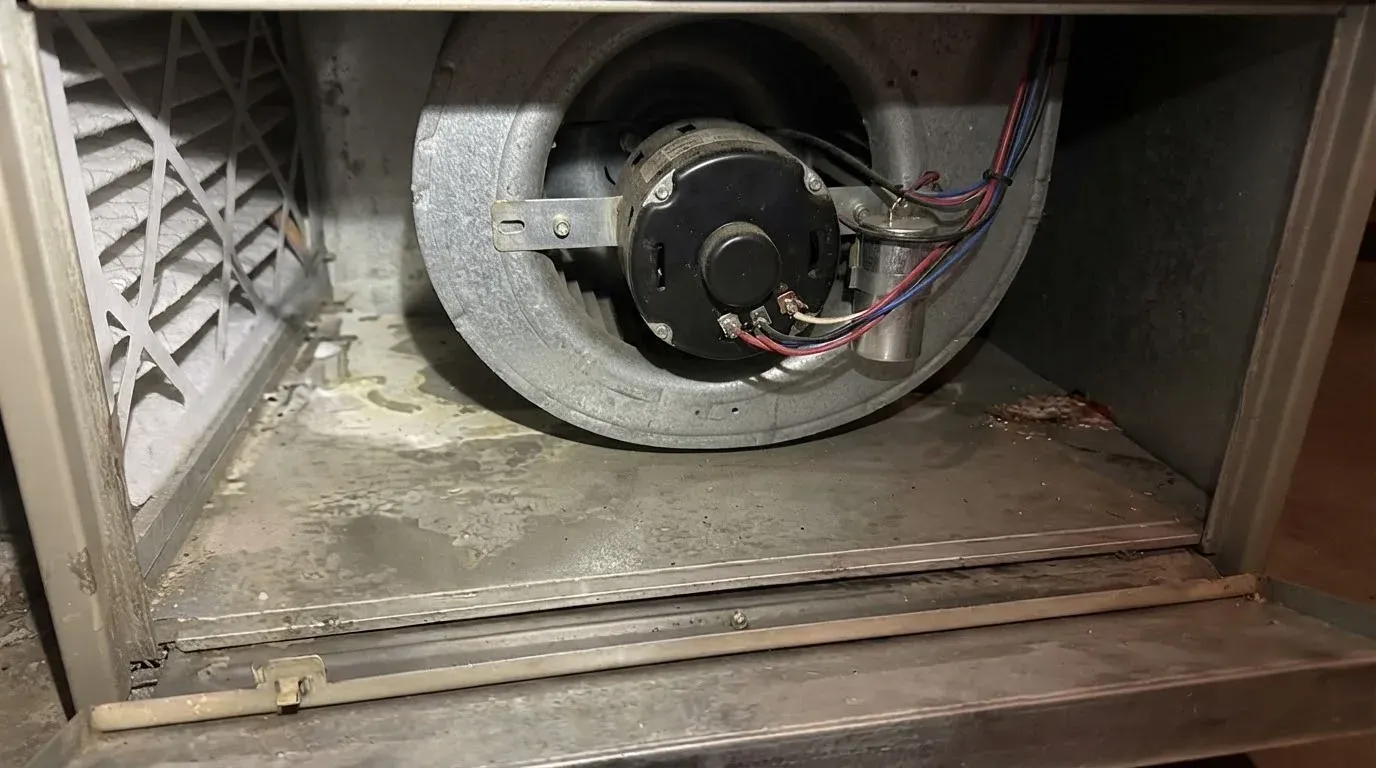
Turn the furnace off at the thermostat, then at the service switch beside the furnace or at the breaker, and call a technician. Do not keep running it to see if the smell goes away: a motor that overheats can fail completely, and overheated wiring is a fire risk. Nationally, HomeAdvisor puts a blower motor at $150 to $2,000 installed, depending on the motor, a control board at $200 to $600, and a high-limit switch or relay at $150 to $300.
If the control board is blinking a code, write down the pattern before you turn the power off. It tells the technician where to start.
Is it a heat pump or an electric furnace?
Electric heat strips, the backup heat in most heat pump air handlers and the main heat in electric furnaces, are bare resistance coils that glow red when they run. Dust collects on them over the summer and burns off the first time they come on, exactly like the burners in a gas furnace.
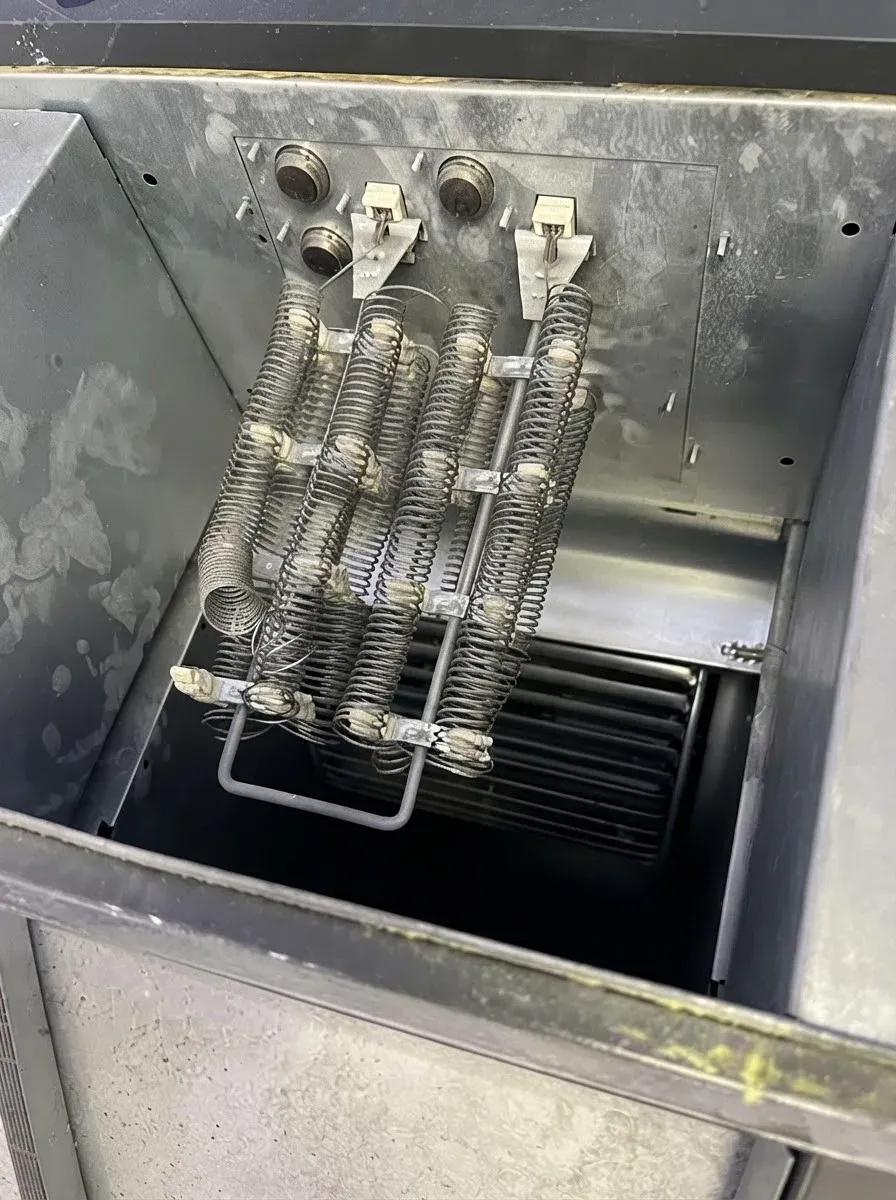
With a heat pump, that first time can come weeks into the season. The strips often run only on the coldest mornings, when the heat pump needs help, or during a defrost cycle, so the smell can appear long after you first turned the heat on. A single burn-off that fades is normal. A smell that returns every time, a buzzing from the air handler, or a tripped heat strip breaker is not, and the strips or their wiring need a technician. Our heat pump not heating guide covers the heat strips and their sequencer in more detail.
Is it oily or smoky, on an oil furnace?
An oil furnace has a faint oil smell at start-up that clears quickly. A strong, lingering oily or smoky smell, soot around the burner or the vent connector, or puffs of smoke when it lights point to a burner, nozzle or venting problem. Turn the furnace off and call an oil-heat technician.
Carbon monoxide has no smell
A burning smell is not how you detect carbon monoxide. CO is colorless and odorless, and the Consumer Product Safety Commission attributes about 170 deaths a year in the US to carbon monoxide from non-automotive consumer products, including furnaces. Every home with a gas, oil or propane furnace needs working CO alarms, on every level and outside the sleeping areas.
Test the alarms when you turn the heat on in the fall. If anyone in the house gets headaches, dizziness or nausea that ease when they go outside, treat it as a carbon monoxide problem: get out, and call 911 or the gas utility from outside.
Emergency Furnace Repair: What to Do Before You Call (2026) Furnace shut down and the house is getting cold? Here is what can wait until morning, and what cannot.Smells that mean shut it off and call
Most of these smells start as dust or a tiring motor. A furnace tune-up, $125 to $200 nationally, cleans the burners and the blower compartment, checks the motor and its capacitor, and tests the safety switches.